Showing posts with label Botany. Show all posts

Sunday, 1 November 2020

Lockdown Walks, a Retrospective. 16th-19th May 2020

16th May 2020

Crich Trig Point.  

I strolled down to the Cromford Canal on my own, and then up through Lea Wood on a grey day, water standing in puddles around. The trees were thick now and there were few splashes of colour in the herb layer. I made my way along a fenced path across a parkland estate, ascending to the village of Upper Holloway, signs proclaiming its status as a 'village in bloom,' Its gardens were bright and alive with vivid cultivated flowers, and the paths and alleys on which I continued my ascent were lined with wild Forget Me Nots and Comfrey and Bluebells.

Bluebells in Upper Holloway. 


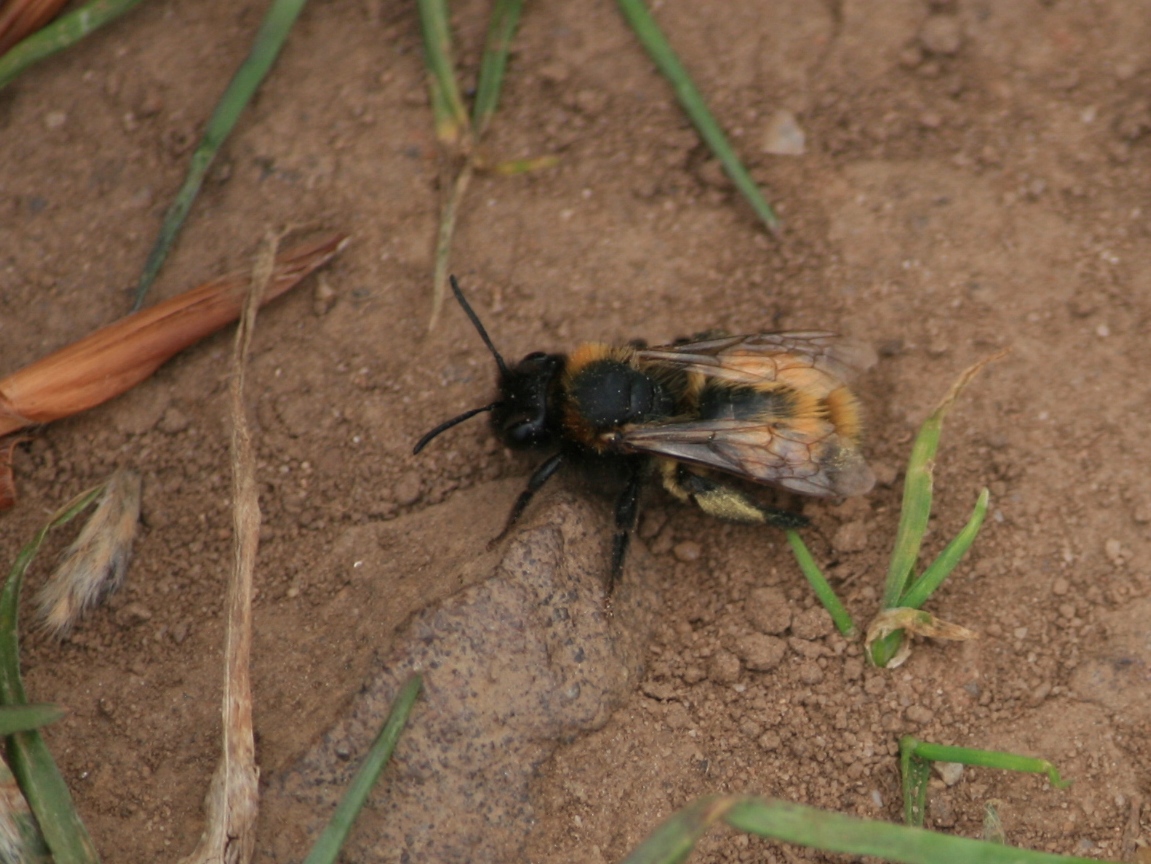
Mining Bee spp. Seen near Upper Holloway. 

After crossing a few sheep fields, as the clouds parted I joined the curving path from the road to the memorial and the trig point. The smell of may blossom filled the air. A Spotted Flycatcher and a pair of Bullfinch were about. I crossed the tracks of the Crich Tramway village, where, in different times, preserved trams take visitors on short rides.

Spotted Flycatcher at Crich. 


Now I must confess I hadn't known what the Pepperpot building which looks down on Matlock and Cromford from its commanding hilltop to the East actually was. A distinct landmark, unknown. It is a memorial to the soldiers of the Sherwood Foresters, a British Army regiment whose soldiers hailed from the Midlands. The men of the regiment served bravely in the First and Second World Wars, the unit's name is inscribed on many a war memorial hereabouts.   The memorial can be seen for several miles, and the views from the hill are commanding. Belper, Derby and the wider countryside spread out below me. I wasn't the only one there. A couple embraced on the grass beside the memorial. A sombre looking man respectfully took down the flags which flew at the site entrance for safe keeping as evening approached. 

View from Crich. 

Sherwood Foresters Memorial. 


I hung out with a handsome crow for a while, and had my lunch, and drank in the expansive vista, and some tea, and then I headed down again, via further woodland, where some fellow walkers were looking for a site used in the filming of the Children's drama 'Stig of the Dump.' I regret only the book was a part of my childhood, the 1981 and the 2002 versions both neatly avoiding me. 


Did Stig of the Dump wander among these Ramsons? 


I reached the Cromford Canal again as the sun was setting, and walked back, fish spotting. A huge, lone Perch, a neatly striped fish with two big dorsal fins more familiar as shoaling juveniles, big enough to be an ambush predator, hung motionless in the water. A few hundred yards on, I watched a Little Grebe fishing in the clear water, astounded by the speed they can do underwater. My word those things are fast. The terrors of the minnows. Clouds of Mayflies were hatching and danced in the evening sun over the water. 

Mallard on Cromford Canal. 

Mayfly Hatch on Cromford Canal. 

As I strolled back over the hills I reflected on how far I had just walked. 


Birds Seen: Canada Goose, Mallard, Tufted Duck, Little Grebe, Buzzard, Moorhen, Black Headed Gull, Lesser Black Backed Gull, Woodpigeon, Jay, Magpie, Jackdaw, Carrion Crow, Raven, Blue Tit, Great Tit, Swallow, House Martin, Long-Tailed Tit, Chiffchaff, Blackcap, Wren, Nuthatch, Blackbird, Song Thrush, Mistle Thrush, Spotted Flycatcher, Robin, House Sparrow, Dunnock, Grey Wagtail, Pied Wagtail, Chaffinch, Bullfinch, Goldfinch. 

Not Birds Seen: Brown Hare, Rabbit, Grey Squirrel, Brown Rat, Perch, Common Blue Damselfly, 

18th May 2020

Wirksworth to Carsington 

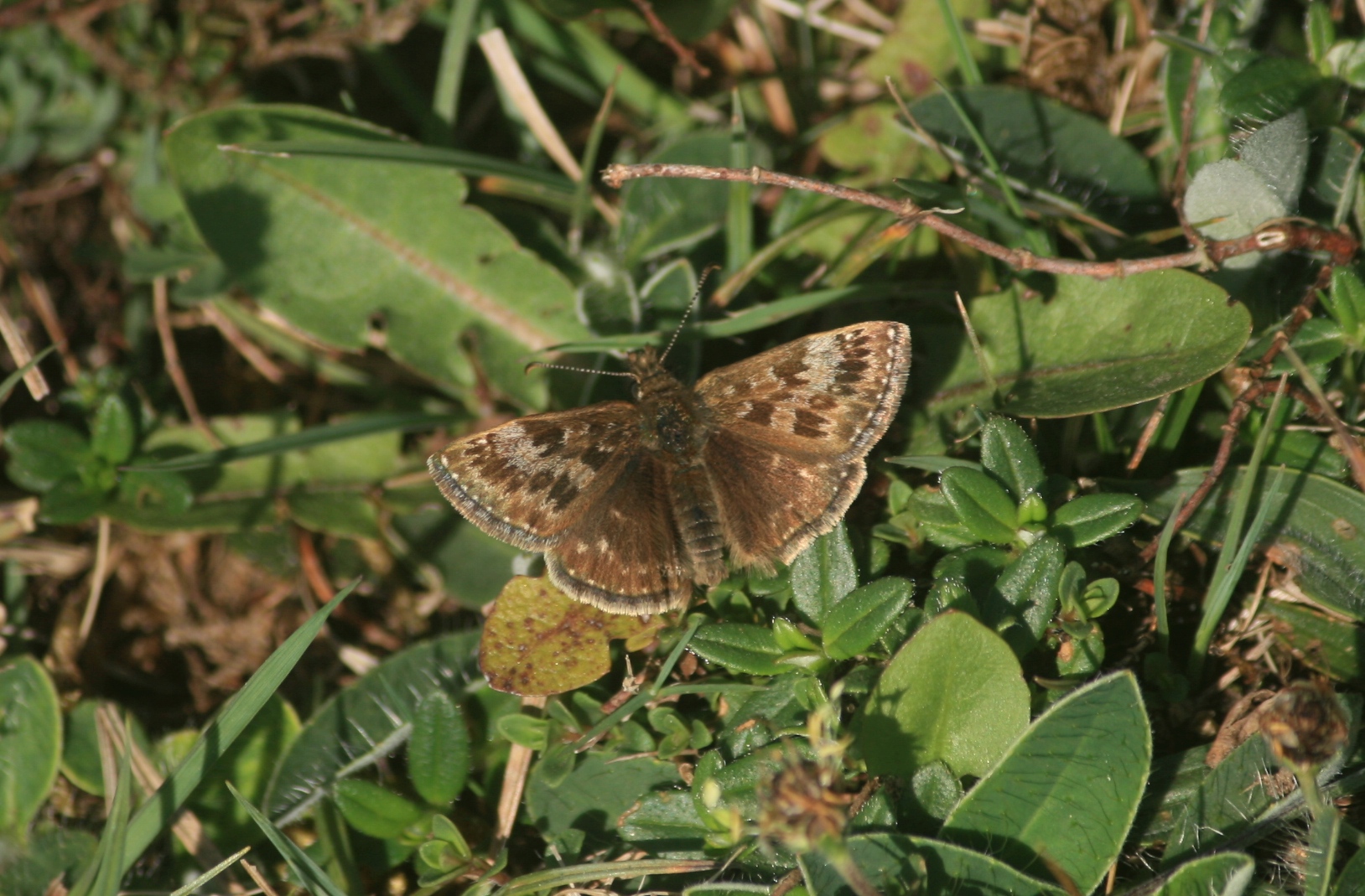
On a greyish, intermittently breezy day, I made my way via Stoney Wood, where abundant Dingy Skipper were on the wing despite the weather. There were a few fledgelings about, as Spring turns into Summer, a brood of robins up on the top path.  I continued down to Carsington, where the visitor facilities remained closed, that now familiar refrain, 'due to the Pandemic.' However a public footpath skirts the South-Eastern bank of the lake, according to my OS Map, and who am I to doubt it. It was curious to see the area around the visitor centre so abandoned, car parks empty and fenced off, Stones Island with its sculptures unattended, and the grass, normally host to families, noisy youngsters and playful dogs, now totally and utterly reclaimed by Canada Geese. Though a few small crowds of humans were pootling about, as well as the odd jogger, the Reservoir seemed to belong largely to fluffy Goslings and Spotted Flycatchers.  Willow Tits had fledged youngsters, encouragingly. This is a scarce species which seems to thrive at Carsington.


This walk was among the first in which no year nor lockdown bird list ticks were had. A Great Crested Grebe floated with some striped 'humbugs,' the distinctive young of this charismatic and familiar  water bird. 

Stoney Wood Bird Sightings: Jay, Jackdaw, Great Tit, Swallow, Nuthatch, Robin + Fledgelings, Goldfinch (Singing) 

Stoney Wood Butterfly Sightings: Dingy Skipper (5), Green Veined White (2) 

Carsington Water Bird Sightings: Canada Goose, Barnacle Goose, Greylag Goose, Mute Swan, Gadwall, Mallard, Great Crested Grebe, Grey Heron, Cormorant, Buzzard, Moorhen, Coot, Oystercatcher, Lapwing, Black Headed Gull, Common Gull, Lesser Black Backed Gull, Woodpigeon, Swift, Great Spotted Woodpecker, Magpie, Jackdaw, Carrion Crow, Willow Tit (+Fledgelings), Blue Tit, Great Tit, Skylark, Sand Martin, Swallow, Long-Tailed Tit, Chiffchaff, Reed Warbler, Whitethroat, Blackbird, Song Thrush, Spotted Flycatcher, Robin, Redstart, Dunnock, Pied Wagtail, Meadow Pipit, Chaffinch, Bullfinch, Goldfinch, Reed Bunting. 

Mammals: Grey Squirrel, Rabbit. 

Butterflies: Large (Cabbage) White, Green Veined White, Brimstone. 

19th May 2020

A Stroll to Bolehill (Contains description of predation) 

A breif hour or so out of the house in beautiful sunshine brought the unexpected. Beneath an old, gnarled Oak tree beside the footpath, a few small birds were feeding on the ground, a typical mixed crowd of tits and finches. A Great Spotted Woodpecker dropped in, I assumed to join them in preying in whatever small insects could be found there. Repeatedly it stabbed the ground, as the smaller birds took flight, chattering, and then it was up, with a small dead bird in its bill. Downy feathers drifted on the breeze. The bird, a Great Tit, was unceremoniously hammered into a crack in the bark by the Woodpecker's bill. The Woodpecker returned twice during the following ten minutes or so to peck at the carcass. An adult Great Tit was in the area with a food parcel for its youngster, one can but hope others survived. Passerine alarm calls abounded throughout.  Woodpeckers are not unknown to take young birds, hammered out nest boxes are a telltale sign of Great Spotted Woodpecker predation, but this was the first time I had witnessed it with my own eyes, and not of nestlings either, but of a fledgeling.

Distant view of the Woodpecker enjoying its meal. 


Plenty of other birds were busy with the business of raising chicks. Blue Tits fed chicks in a nest box on the wall of a house in Bolehill Village. A newly fledged Woodpigeon hassled a weary looking parent for food in a street tree, and robins were busy stuffing invertebrates into the yellow gapes of speckled fledgelings.


Friendly Sheep


I returned to the path beside the farm buildings, Ash Tree Farm or some such, and passed through a field of friendly sheep.  As I crossed the Ecclesbourne Valley Railway, a Sparrowhawk flew over, a kill in its talons. Swifts whistled joyously in the clear blue sky, themselves predators on the aerial 'plankton.' 

Birds Seen: Sparrowhawk, Woodpigeon, Swift, Great Spotted Woodpecker, Magpie, Jackdaw, Carrion Crown, Coal Tit, Blue Tit (+nest w/ young) Great Tit (+Fledgelings, one eaten by GSWP) Swallow, Blackbird, Robin (+Fledgelings) Dunnock, Chaffinch, Goldfinch


Saturday, 24 October 2020

Lockdown Walks, a Retrospective. 9th-15th May

 9th May 2020

Cromford, Groaning Tor, Middleton Top. 

I strolled from Wirksworth up through the National Stone Centre and around Gang Mine Nature Reserve, where the mountain pansies bloomed, vivid yellow. The swifts were now abundant, with plenty of birds screaming and whistling through the heavens and over the undulating mining landscape of lead spoil and ancient workings.


Mountain Pansies at Gang Mine


Bluebells at Rose End Meadows.


I continued via the Dene Quarry footpaths, where I had a fleeting glimpse of a butterfly which may have been a wall, and through a Rose End Meadows, now carpeted with bluebells. Surprisingly, having seen it alive with migrants not too long ago, it was now fairly bird quiet, and I descended via a disconcertingly steep path to the small river beside the Via Gellia, before ascending through wet grassland and woodland to a rocky escarpment, called 'groaning tor' on my OS map. I found it rather impressive. I picked up the path to Middleton, and saw more of the apparently locally ubiquitous Redstarts, and was briefly confused by a horse in a zebra costume. A friend tells me the stripes deter biting flies, hypothesised as one possible advantage of the markings of real zebra.

Horse in a Zebra Costume. 


I reached Middleton, and decided to pick up the 'circular walk from Middleton Top.' This crosses more farmland, young woods of hawthorn, birch and blackthorn, and boasts lovely views across the valley. A Brown Hare was in the farmland, watching attentively, but not fleeing. In the Hawthorn woods the Wood Anemone had begun to go over, some of the white-pink blooms beginning to wilt or brown, but they were still an impressive carpet. I rounded the woods and joined a disused entrance track. after a few wrong turns, and impressive views of some remarkable disused quarry equipment, tunnels hewn into rock, I reached the loops' road section. This section of road could be a challenge to walkers on a busy day when the quarry lorries are on the move.
A tractor appeared to be spraying fertiliser on the fields above. Small Tortoiseshell butterflies, many of then slightly tatty from age basked on the dry stone wall, occasionally taking off to flirt with each other, or even a passing female Peacock Butterfly.

Small Tortoiseshell


I walked across middleton moor and descended once again via the National Stone Centre. 

Birds Seen: Buzzard, Black Headed Gull, Stock Dove, Woodpigeon, Collared Dove, Swift, Great Spotted Woodpecker, Jay, Magpie, Jackdaw, Blue Tit, Great Tit, Skylark, Sand Martin, Swallow, Chiffchaff, Blackcap, Whitethroat, Blackbird, Mistle Thrush, Robin, Redstart, Dunnock, House Sparrow, Pied Wagtail, Meadow Pipit, Chaffinch, Linnet, Goldfinch. 

Mammals: Brown Hare, Rabbit.

Butterflies Seen: Peacock, Brimstone, Green Veined White, Orange Tip, Speckled Wood, Dingy Skipper, Small Tortoiseshell. 


11th May 2020

Wirksworth and Bolehill

I took a bimble up the hill to the trig point on Cromford Moor, and strolled along a trail marked out by blue posts, passing relaxed cattle, moving between regenerating moorland on clearfelled forestry land, and young and mature pine plantation. Willow Warblers and Chiffchaffs were busy among the pines. Swifts zipped about ahead of the weather under an increasingly angry sky, which changed rapidly between blue, and the colour of old lead. I even enjoyed a brief hail shower. 
Cromford Moor is an interesting little patch. Though no access is marked on the OS map it is entirely possible to walk round it, and many do. Worth more of my attention, this spot, I think. 

Birds Seen: Mallard, Buzzard, Black Headed Gull, Herring Gull, Swift, Jackdaw, Carrion Crow, Coal Tit, Great Tit, Swallow, Willow Warbler, Chiffchaff, Whitethroat, Wren, Blackbird, Song Thrush, Robin, Grey Wagtail, Pied Wagtail, Goldfinch. 

12th May. 

Stoney Wood

I took a very brief stroll at Stoney Wood in the afternoon. A beautiful pair of Bullfinch foraged together. Bullfinch are almost always seen in pairs. They are rather romantic like that, foraging together as a pair even during the breeding season. 
Jackdaws flew over carrying nesting material, perhaps for mid season repairs or ahead of a second brood. Corvids breed early. In the low scrub lurked a small, brown, speckled creature, my first fledgeling Robin of the season. Robins, presumably the parents of this little youngster, squabbled with goldfinches over the bird feeders in a neighbouring garden. 

Birds Seen: Black Headed Gull, Woodpigeon, Swift, Jackdaw, Coal Tit, Great Tit, Long Tailed Tit, Chiffchaff, Nuthatch, Blackbird, Robin, Dunnock, Bullfinch, Goldfinch. 

Mammals: Grey Squirrel. 

13th May

Wirksworth-Alport-Idridgehay Envrions. 

A stroll up to Knob Lane was taken in search of Curlew, which I had encountered up here a few days earlier. Not sight nor sound of these melodious and enigmatic waders was had. I took the footpath down into the Amber Valley behind Alport Heights, where a Red Kite, a rather special lockdown 'tick' soared overhead. These magnificent birds are comeback kings, common scavengers even in cities 200 years ago, before they were methodically exterminated, reduced to a tiny population in North Wales by the mid 20th century, where sympathetic landowners allowed them to thrive quietly, then reintroduced, most famously in South Oxfordshire but at several sites in England and Scotland, at the close of the 20th century. When I was a kid they defined the rare and persecuted raptor. Now they are breeding in almost every English county, and there are records of them from Central London. Mobbed by crows this magnificent scavenger floated above the mid Derbyshire Countryside, as if his species had never left. He was a joy to see.


Red Kite near Alport Heights


Moving from the Derbyshire Dales to the Amber Valley, the quality of footpaths rather declined. It is unclear whether this is the result of differing priorities between the councils, or differing landowner attitudes, but the change across this political boundary was notable and distinct. Eventually I found the Ecclesbourne Way, a route promoted by the Ecclesbourne Valley heritage Railway, and walked beside the brook. Agricultural runoff rendered the brook somewhat cloudy, and it proved disappointing in terms of birds, though a magnificent Grey Heron took flight. I ascended again through the beautiful Gibbet Wood, the light of a fading sun peering between the trees, a tiny brook babbling its progress down to the Ecclesbourne. 

I descended via New Buildings and Gorsey Bank, the Dandelion fields now fully gone to seed, spherical 'clocks' of grey fluff replacing the yellow blooms. I continued through Folly Well to Gorsey Bank, and back into Wirksworth


Birds Seen: Grey Heron, Red Kite, Buzzard, Black Headed Gull, Lesser Black Backed Gull, Stock Dove, Woodpigeon,  Collared Dove, Swift, Magpie, Carrion Crow, Blue Tit, Great Tit, Skylark, Swallow, Chiffchaff, Whitethroat, Wren, Nuthatch, Blackbird, Song Thrush, House Sparrow, Pied Wagtail. 

Mammals: Brown Hare, Rabbit, Grey Squirrel. 

14th May 2020

Bolehill Environs

I took a stroll up to Bolehill and around the blue trail once again, on a gloriously sunny evening. Meadow Pipits sang in stereo from every dead tree and stump among the recovering moorland, in the golden light. Their chorus was joined by truck horns and distant rumbles, shattering the tranquility of the moors. It was Thursday, and the truck horns someone's thoughtful contribution to the weekly applause for the NHS and carers.

Meadow Pipit singing on Cromford Moor. 


Birds Seen: Buzzard, Woodpigeon, Sift, Wagpie, Jackdaw, Coal Tit, Blue Tit, Great Tit, Swallow, House Martin, Long Tailed Tit, Willow Warbler, Chiffchaff, Whitethroat, Blackbird, Song Thrush, Robin, Dunnock, Meadow Pipit, Chaffinch, Goldfinch. 

15th May. Wirksworth to Kirk Ireton. 

Natalie and I made our way down through Miller's Green, down to Kirk Ireton via the footpaths associated with Dark Lane, on a bright afternoon. My route through the fields and Half Moon Lane was deemed unduly circuitous. We passed plenty of Pheasants and saw some Red Legged Partridges, and buzzards soared. So many of the passerines we saw were now carrying food parcels to hungry chicks. We could hear the peeps of nestlings too, many of them now well grown. Chiffchaffs and Whitethroats were vociferous. Unfortunately the farmers had been out spraying again, and many of the fields close to Kirk Ireton bore its wilted signature. However this did not seem to have immediately affected the birdsong. 

On the pond near Miller's Green, a carp fishery, were baby Moorhens, and worker Early and Buff Tailed bumblebees, the small 'baby bees' which appear at this time of year, were busy on any thistles. A Nuthatch startled as it flew from a garden feeder past my face, a blue-grey flash across my field of vision. A newly fledged House Sparrow was looking for the power of flight, testing its wings on short hops from the ground near Haarlem Mill, and Swifts wheeled and whistled overhead.


Song Thrush. 


Birds Seen: Greylag Goose, Mallard, Red Legged Partridge, Pheasant, Buzzard, Moorhen, Woodpigeon, Swift, Magpie, Carrion Crow, Blue Tit, Swallow, Chiffchaff, Blackcap, Whitethroat, Wren, Nuthatch, Starling, Blackbird, Song Thrush, House Sparrow, Dunnock, Bullfinch, Greenfinch, Goldfinch. 


Saturday, 10 October 2020

Lockdown Walks: A Retrospective. 5th May. Four Trigs.

 Apologies for the long delay in getting back to blogging, all good things must come to an end, including the longest summer, and I have now returned to work.  So the blog posts will remain relatively infrequent, but will continue. 

So, here goes. 

5th May 2020 Spring Wood, Carsington, Black Rocks, including four Trig Points. 

On a cool breezy day, I strolled out of Wirksworth toward Sprink Woods, at the time an unofficially accessible patch of woodland just across the fields to the South of the town. The trees were very quiet, but the woodland floor bloomed, especially in the patches of felling. Yellow Archangel, Forget Me Not, Wild Garlic, Red and White Campion, and Herb Robert all bloomed in the patches of sunshine. Unfortunately there was also a little litter, something which may have inspired the landowner to close off access to the wood a few days after my walk there.


I reached the Callow Road and proceeded to the Stainsborough Farm trig point, accessible across fields by two open gates. I descended toward Carsington Water, on the way encountering the distressing sight of a newborn lamb stuck fast between two barbed wire fences. I managed to lift out the tiny, wobbly creature, which was as light as one of my cats, and return it to the field from which it came. It doddered about and bleated. I did not see it reunited with its mother, and just got sheep milk poo on my hands and a bit emotional. Online approaches were made to find the farmer, such is the glory of technology, and hopefully the animal was okay.


RAF Hercules fly past. 

Great Northern Diver, Distant but distinctive. 


From the lamb I made my way down to Carsington  Water, by now bathed in sunshine after an overcast morning, and listened to the rhythmic, foot tapping stylings of Reed Warblers at the foot of the Reservoir.  The calm was broken by a very low flying RAF Hercules transport aircraft, whirring through the valley.  The Great Northern Diver, a juvenile which had spent the winter at Carsington, gave wonderful close views, showing its Hulk-like proportions, and the diagnostic neck markings which separate it from the other two species of Diver.  This is the same species of bird referred to in North America as the Common Loon, a reference to its haunting breeding call, a sound we do not hear at these latitudes. This wintering individual would soon return to the Northern sea lochs and fjords in which they breed, places to which the summer comes late. A Willow Tit also at Carsington was my first sighting of this declining woodland species, which thrives at the site, of the lockdown walks. 


Carsington Water from Carsington Pastures. 


I climbed up after my brief flirtation with the lake shore, through the hummocked fields of Carsington Pasture. A grumpy landowner was evidently keen for me to keep to the footpath, having made careful use of signage, and a muckspreader to dissuade me from leaving the path to have a sit down. The views from here were extraordinary, however, vast, across the reservoir. Skylarks and a beautifully plain Garden Warbler sang. Higher still, through the edge of Brassington Town, where people suspiciously eyed the stranger out in Lockdown, I climbed, to a picnic site where Orange Tip butterflies patrolled banks of vibrant blooms, then turned into a field where Early Purple Orchids bloomed, and my first Dingy Skipper butterfly of the season was on the wing.

Orange Tip (male)

Dingy Skipper

Early Purple orchids and Cowslips


The factory which sits beneath Harborough Rocks was noisy again, in contrast to earlier visits in Lockdown where it had been silenced. Meadow Pipits and Skylark were in attendance around the trig point, the second of the day.


St Mark's Fly (Bibio marci)


I returned to the High Peak Trail and, with evening fast approaching, I enjoyed the sight and sound of plentiful Whitethroat and a glorious male Redstart once again close to the turning for the Middleton trig. As I walked away from it to reconnect with the footpath, Meadow Pipits took off in fright but did not leave the area, suggesting the proximity of nests on the ground. I will avoid the area in future so as not to risk disturbing these birds. I reconnected with the Wheatear pair behind Middleton Top Cycle Hire. The light had really begun to fade now, but the possibility of four trigs held rather more pull than perhaps it should, and I yomped to the fourth Trig at Black Rocks, even breaking a sweat, something I usually avowedly avoid while out strolling, to achieve my objective. I reached it with just enough light for a final selfie.  Bats flew in the gloom. I got back to my front door in darkness.


Harborough Rocks Trig Point. 

Moonrise over Middleton

Birds Seen: Canada Goose, Greylag, Gadwall, Mallard, Tufted Duck, Great Northern Diver, Grey Heron, Sparrowhawk, Buzzard, Moorhen, Coot, Oystercatcher, Lapwing, Black Headed Gull, Lesser Black Backed Gull, Stock Dove, Woodpigeon, Collared Dove, Tawny Owl (Heard only) Swift, Kestrel, Magpie, Jack, Rook, Carrion Crow, Raven, Coal Tit, Willow Tit, Blue Tit, Swallow, House Martin, Willow Warbler, Chiffchaff, Reed Warbler, Garden Warbler, Whitethroat, Wren, Blackbird, Song Thrush, Mistle Thrush, Robin, Wheatear, House Sparrow, Dunnock, Pied Wagtail, Meadow Pipit, Chaffinch, Linnet, Goldfinch, Reed Bunting. 

Butterflies: Peacock, Green Veined White, Orange Tip, Brimstone, Dingy Skipper. 

Mammals: Brown Rat, Grey Squirrel, Rabbit, Pipistrelle. 


Tuesday, 4 August 2020

Lockdown Walk Retrospective part 4. Gang Mine, Dene Quarry and Rose End Meadows.

7th April 2020. 

On a glorious summers' day I strolled up through the grounds of the National Stone Centre, counting bees towards Natty's bumblebee survey on the way. We reached the Derbyshire Wildlife Trust reserve at Gang Mine, a site somewhat overused by dog walkers, though the Alpine Pennycress and Mountain Violets continue to flower on the site of an ancient lead mine. Butterflies were out in force today, a highling being four Peacocks (Aglais io) chasing each other. There were also good numbers of bees, including Common Carder and Tawney Mining Bee. 

Unknown wasp species on Daffodil at Stoney Wood

View of Dene Quarry.


Beneath a blue sky I walked the footpath around the active Dene Quarry, which had been somewhat diverted from its course shown on the map. There were plenty of Peacocks up and about. The path down to the Via Gellia had been closed by quarry workings, and quarry vehicles were still busy in spite of Lockdown. In the chalky grassland and farmland I saw my first Redstarts of the year, beautiful birds with orange bellies and black throats in the summer plumage males, and brick red tails in all plumages, from which they get their name (Steart is an old English word for tail).  I proceeded by the Green Lane down to Rose End Meadows. I found the site surprisingly good bird-wise. with the highlight being a brief, and initially obscured view of a Ring Ouzel. Any doubt as to the birds' identity was blown away when he flew directly over my head, his primaries distinctly grey, and the crescent collar at his neck bright white. This scarce passage migrant, a mountain relative of the Blackbird breeds on the Eastern Moors, 20 or so miles to the North. 

By now the sun was setting and the walk by road up Cromford Hill seemed like rather a long slog home. 

Birds Seen: Mallard, Buzzard, Stock Dove,  Woodpigeon, Collared Dove, Great Spotted Woodpecker, Kestrel, Jay, Jackdaw, Magpie, Carrion Crow, Raven, Blue Tit, Great Tit, Sand Martin* Swallow, Long-Tailed Tit, Chiffchaff, Wren, Ring Ouzel* Blackbird, Song thrush, Mistle Thrush, Robin, Redstart* Meadow Pipit, Chaffinch, Bullfinch, Goldfinch

Butterflies seen: Peacock, Small Tortoiseshell, Green Veined White. 

Stoney Wood, 8th April 2020

A nice sunny unofficial survey day in stoney wood. Blackthorn was blooming, white and scented on the steep slope and a glorious cherry tree was in blossom in the lower part of the site. Maintenance was taking place around the StarDisc. Stoney Wood is a community woodland set in a former quarry, regenerating limestone grassland and young woodland on its slopes.

Blackthorn flowers in Stoney Wood.

View of Stoney Wood.


Bird life was a little disappointing, but a Field Vole emerged from a hole under the small wooden bridge and looked up at me, which was something of a highlight, and there were plenty of Tree and Buff-Tailed Bumblebees on the wing. 

Birds Seen: Blue Tit, Great Tit, Chiffchaff, Wren, Robin. 

Butterflies seen: Peacock (9), Small Tortoiseshell (5)

Cherry Blossom in Stoney Wood

Peacock Butterfly in Stoney Wood

Peacock Butterfly in Stoney Wood. 


Back home in the evening a Tawny Owl was singing in the dark, and Woodpigeons, Blue Tits, and Small Tortoiseshells were in the garden. 

Wirksworth, Bolehill, Whatstandwell, Cromford Canal, Wirksworth  9th April 2020

I strolled up a sunny Wash Green, past a year tick singing Blackcap, and several beautiful butterflies, down the long path towards Alderwasley, carefully avoiding the cattle. The route took me through Anemone carpeted woods, where, near Mere brook, a small bat, probably a Pipistrelle, was circling, apparently catching flies, which were abundant, in broad daylight. I found a noisy track, which I didn't enjoy much, through a small community comprised mainly of dogs and diggers, and eventually crossed the Derwent and the A6 at Whatstandwell.

Anemone and Celandine near Mere Brook.


From Here I took up the Cromford Canal towpath, which was surprisingly quiet of humans, and found it alive with the sound of singing Blackcaps, which must have only arrived recently. Only male Blackcaps were seen. The regular residents and chiffchaffs also sang. A  pair of Moorhens had little black fluffball chicks, which were being fed by the adults. Little Grebes were about on the canal as well as Mallards, the sun reflecting off their metallic green heads. 

Moorhens on Cromford Canal

Mallard on the Cromford Canal


I returned via the regular path across farmland, from near the High Peak Junction to Bolehill. No friendly black cat met me this time, and sadly, there were too many squashed toads on the track, presumably killed by farm vehicles. However the roadside ditches were full of the warty amphibians which could also be heard singing. 

It was a Thursday and the applause for the NHS and care workers at 8pm was stunning, loud, car horns, fireworks, and even a shotgun sounded to be in the mix, showing their appreciation. 

At home this evening the Tawny Owls once again provided its midnight symphony of hoots and kee-wicks. 

Birds Seen: Mallard, Pheasant, Little Grebe, Moorhen, Buzzard, Woodpigeon, Jay, Magpie, Jackdaw, Carrion Crow, Blue Tit, Great Tit, Long Tailed Tit, Chiffchaff, Blackcap*, Goldcrest, Wren, Nuthatch, Blackbird, Song Thrush, Robin, House Sparrow, Grey Wagtail, Pied Wagtail, Chaffinch, Goldfinch. 

Butterflies Seen: Peacock, Small White, Small Tortoiseshell, Red Admiral, Brimstone, Orange Tip, Peacock. 

Other Wildlife: Rabbit, Grey Squirrel, Common Toad, Pipistrelle spp. 
Little Grebe on Cromford Canal

Monday, 29 April 2013

Haweswater, no birds, but what a landscape (plus a footnote on the neonic ban)


I spent yesterday tramping across the mud and rock of the Eastern Lake District in search of England’s only Golden Eagle, who makes his home, we are told, in  the Lakeland Valley which contains the Haweswater reservoir. It was wet, and the precipitous scenery rugged beneath the grey sky and broken cloud. Moss and lichen grew in profusion over dry stone walls and on the trunks of the stunted and miniature oaks which dotted the landscape.  The lake lies in a high valley to the East of Windermere.  Beside it sat a couple of female Goosander, a smart, fish-eating duck, and on a tree covered island, a colony of noisy lesser black backed gulls, unusual so far from the coast, had set up their nest sites.


There were clusters of trees, plantations, of Pine and Larch, and a fallen specimen of the latter, in the light woodland, where the sun could penetrate through the bare branches of the deciduous conifers, the most luxuriant tree beard mosses, really lichens, grew abundantly, alongside several true mosses, and the strange pink flowers and soft, pastel-green new growth needles of the still living, horizontal conifers. Beside the larches stood a stand of Scots pine, and these presented a very different woodland, dark, the trees placed in rows, strangely quiet and foreboding. The woods, which helped hold the soil to the hillside and offer a little shelter to walks in the valley, were of course planted, for human use, but add a little diversity to the landscape. The RSPB web site announced they contain Redstarts and even Red squirrels. My friends and I saw a Chaffinch and a Goldcrest and were happy about it. I suspect the Red Squirrels, holding on because the stunted growth and conifer plantations cannot sustain the invasive Greys, and the latter, which only arrive in late April, may still be suffering from migratory setbacks induced by the continuing cold weather of the last few weeks.

In the rain it was a far cry from the previous weekend when we had set off to Leighton Moss, with our hangovers, and seen Osprey, Buzzard and Marsh Harrier on the same day, over the open reed beds in the sunshine an unusual break in the usual grey weather.  We were so lucky that day with all the birds we saw, and at Haweswater we were reminded that you don’t win them all. But what a place, nevertheless.  We found a high place, and ate our lunch while a few buzzards continued to soar about, sometimes generating undue excitement, as perspective distorted our perception of perhaps large buzzards seen head on. At least one Raven flew over us, and meadow pipits, in what looked a nonsensically unequal struggle, mobbed a buzzard incessantly as he crossed the valley, ducking into and landing among some pine trees where he could avoid the annoyance of the relatively tiny, more agile, and apparently mocking passerines.  Meadow Pipits were everywhere, and there were plenty of Wheatears about. The Wheatears’ name is famously a contraction of “white arse” a historic name dropped in Victorian times when it was thought vulgar. Inevitably we delighted in calling them white arses all day. The wheatear is a smart little passerine, with a uniform back, grey in the male and brown in the female, with a little dark ‘bandit’ mask on his face, a black tail, and of course a white rump, conspicuous in flight. It too is a migrant, arriving from Africa to the heaths and moors of Northern Europe.

We pressed on a little, trudging through the mud and mosses, past an abandoned sheep fold, as far as the RSPB viewpoint, but we saw no eagle. Grey mountains and scree slopes towered above us, with tiny oaks clinging to them, seeming to pinch the sky. If Dungeness and Elmley Marshes in the South of England can be called Big Sky RSPB reserves, Haweswater has a small sky, hemmed in by steep, dark mountains. A herd of Red Deer grazed on a hillside. A couple more meadow pipits chirped overhead.  I pressed on a little alone in the hope of catching up with our eagle, and walked through the stands of dead Purple Moor Grass until I reached the RSPB viewpoint, checked out a little more valley, and trudged guiltily through a sphagnum bog. We began to loose the light so I headed back to the crowd, and glanced around for a dipper on a mountain stream. Bird wise this place was incredibly quiet. The continuing, driving rain was doing little to help, and we decided it was time to head back, keeping an eye out as we returned to the vehicle.
We saw no Eagle but what a landscape!

As a footnote to this blog post I think I should at least refer to the recent ban on the use of neonicotinoid pesticides on bee attracting crops, which, thankfully, and not a moment too soon, emerged from the EU at the weekend.  It is wonderful news, and I am heartily relieved that our money-minded government, with their short term thinking were not able to overwhelm the scientific consensus that neonicotinoid pesticides have profound sub lethal effects on bees.  It will not solve the problem, and halt the decline of bees, there are other sources of pollution, as well as land use change, the effect of which on species is seldom instant and according to recent scientific literature it may take decades for land use change to have its knock on effects on species, workers suggesting there may be an extinction debt for lowland grassland butterflies in at least some EU member states.  The detractors of the neonicotinoid ban will continue to point to this as reason to allow them to continue using these pesticides, which affect the navigational abilities and reproduction of bees. The fact remains that the burden of proof falls, all to often, unduly upon our wildlife, and there is simply not time for more work. We need to take action to stem the decline. The costs of losing our pollinators could be massive, economic and human, as well as ecological, given our reliance on so many insect pollinated crops. We are already seeing parallel declines in Pollinator diversity and plant diversity in England and Holland.   I am grateful to all those who campaigned long and hard for this new legislation, and the agricultural community should be too, pollinators are vital to their long term well being and ours. The Neonic ban may not go far enough but it is a great step in the right direction.  

Monday, 25 March 2013

The Last Flurries of Winter


ese past couple of days, still in Lancaster and without any pressing deadlines (how wonderful it feels to be free of pressing deadlines,) I was rather hopeful of getting some good wildlife spotting in. It’d been nearly a week since I last went birding, when incidentally I was able to add Bittern to my Lancashire list, one flying through the evening sunshine over the still brown reed beds at the RSPB’s stunning Leighton Moss.  I was enthusiastic to get out there and find some wildlife, see something I’d not seen before, perhaps.  On my way to drop off my essay, it did occur to me there may have been a fall of migrants, with what I am  I handed in my essay on Friday afternoon, and, no sooner had I done so, than the wind began to pick up, and Lancaster was, not for the first time that day, raked by horizontal, and some might say unseasonal snow.

Unseasonal. With Pheasant tracks.

I cursed climate change for its increasing tendencies toward extremes of weather, and spent the day indoors watching films instead. When I did manage to face up to the unseasonably big freeze, I got in the car and headed up, away from the sea this time, and into the Forest of Bowland, an area of Outstanding Natural Beauty which lies to the East of Lancaster. It took only a few minutes on delightfully names roads (Bay Horse Road! Procter Moss Lane!) to reach the car park in Abbeystead, a small town in Bowland. I wandered into the woods toward Abbeystead Lake. Bird life seemed a little scarce, the woods were quiet, and the footprints in the snow, enchanting to look at though they were almost exclusively those of grey squirrels and pheasants.  However the great tits with their two syllable song, were really going for it, the harbingers of early spring appeared unperturbed by the snow, which was thick on the ground in places. There were a few blue and coal tits about in the branches, but bird life seemed sparse.

Upland stream  in the Forest of Bowland

Upon reaching the lake, which was all pleasantly dramatic, lying in a steep-sided, wooded valley, with the snow white Bowland fells climbing up behind it, I startled up a few nervous mallards. Some teal, too, rested on the dark green water and a couple of Jackdaws passed overhead cawing. I continued round the lake, which was held by an impressive dam, and down into the woods. Robins and chaffinches occasionally flew across the path in front of me. As I walked back up toward the lake I became aware of a few Goosander, unfamiliar before my move up North but near ubiquitous round here it seems, floating about on the water surface, but I wondered where all the birds had gone. It occurred to me they may well have cleared out of these upland woods and headed somewhere at lower altitude, somewhere more sheltered, perhaps.  Walking across a bit of farmland on the way back to the car park revealed not just pheasants but also good numbers of Lapwing and Snipe in the fields, so the true upland waders at least were still on their spring habitat. Some of the lapwings were displaying, whooping and tumbling, using their broad wings to aerobatic advantage. Spring, it seemed, was in the air still somewhere, alongside the wind chill.  I drove home dodging pheasants and snowdrifts. One poor pheasant must have had the fright of his life, caught between a snowdrift, an oncoming vehicle and a Buzzard. Of course I waited until he had disappeared into the hedge beyond the snowdrift before I proceeded. 
Abbeystead Lake, Bowland, Lancs.

Today I headed down to a place near Scorton, on the river Wyre where it is still fast and narrow. I parked up at a picnic site with some bird feeders in it, which clearly hadn’t been filled for some time. A few blue and great tits hopped about in the trees above them, looking awkward and expectant. I walked past and onto the banks of the Wyre, where the tree canopy opened, The sky was blue, but a few flakes of snow fell from it inexplicably. A dipper shot up and down the river and paused on a rock for a moment, allowing me to take a (poor) photograph before returning to a cluster of branches by the waters edge. As it did so a second bird appeared and flew upstream. A pair of dippers, and a lovely new addition to my Lancashire list. These lovely birds are very scarce indeed down South, they are birds of the west and the midlands it seems, specialists of fast flowing streams, dipping under the water to hunt invertebrates and emerging still perfectly dry, smart and distinctive in their smart brown plumage and white breast.

Cinculus cinculus
   

Rounding the corner into the wood what struck me was the snowdrops. The wood was covered in them, and among them daffodils too were springing out of the ground. In stark contrast to the upland wood in Bowland, this wood down near the Wyre was a different matter. The snow had all cleared, as if it had never been there (of course, it might never have been there) and the snowdrops and daffodils still stood proud. March snowfall has been part of these plants evolution, of course. When the channel first separated Britain from the continent, about 12 thousand years ago,  isolating its impoverished fauna, anything which could not tolerate March snow would not have been able to survive. Colder winters abound through our history, the mini ice age of the 18th century, the cold snap of the 1970s, and spring flowers have made it through. Here they formed a glorious white carpet splashed with yellow. Somewhere among the singing great tits I thought I heard a chiffchaff.  Cormorants flew overhead through a blue sky, and a buzzard was patrolling somewhere. Spring wasn’t cancelled, it had just had a minor setback, and it will be interesting to see what effect this late flurry of winter has had on wildlife phenology as the year progresses. 

Snowdrops near Scorton, Lancs.