Showing posts with label Waterfowl. Show all posts

Wednesday, 21 May 2014

Birding in Geneva


As April turned into May, the beautiful Bee Girl and I ended up taking in a spot of urban birding, David Lindo style, in one of Europe’s most iconic cities, as part of a week’s holiday which included visiting a friend who lives beside the beautiful Lac d’Annecy, of which more is to come.  Despite admittedly having its fair share of typically alienating urban hustle and bustle, one is immediately struck by Geneva’s greenery, and its abundant open spaces. Its birds of prey tend to leave quite an impression too.


After arriving, on an afternoon Easyjet flight from Southend and checking into our hotel, we made our way on an evening stroll through the streets and into one of the lakeside parks, Parc du Perle du Lac. The parks were huge, immensely clean, and, conspicuously dog mess free.  The sky was wide and blue, and, as we walked among the old, exotic trees, my eye was caught by a soaring shape above the trees.  I ran, almost compulsively toward the bird of prey, but by the time I had reached it, it was gone, slow flapping away parallel to the lake shore and behind overhanging trees. I was standing on a concrete promenade with the verdant park behind me, and the huge, mountain fringed Lac Leman, expansive and calm, in front of me. Across it, on the far bank, the mountains, including the distant Mont Blanc, climbed skyward.  Though the lower slopes were clearly covered in deciduous woodland in full leaf, the peaks were still shrouded in thick snow. To our right, the jet d’eau, Geneva’s famous fountain, pumped the lakes’ water several metres into the sky, and on the far bank we could see the names of French fashion houses and Swiss watch makers in lights above the hotels.  A Red Crested Pochard floated on the lake, alone, not coming too close to the bank.  The first surprise occurred when a group of tourists, armed with loaves of white bread, began to feed it to the Goosanders. Goosanders, a species of “saw bill” duck with fish eating habits and an awkward waddle on land, are fairly scarce (but increasing) in the UK and regarded as specialised fish eaters, but these francophone-Swiss Goosanders  seemed very happy munching soft, damp white bread like Canada Geese.  The second surprise was not far off, when another large bird of prey flew low over the water. This time I did get the binoculars on it, and childish was the glee on my face when I took them down. It was a Black Kite! Now Black Kites are not uncommon across large swathes of Europe,  often co occurring with Red Kites and usually in much greater numbers, but this was my first, and it was a stunner.  I may have attempted to point it out to bemused passers-by, who paid it little attention.


Natalie and I engaged in a little mountain gazing, and enjoyed watching the Goosanders at close quarters as they waddled awkwardly about on the rocks and jetties below us, calling to mind penguins in zoos. Unlike Penguin enclosures in zoos, they waddled alongside nesting Mute Swans and Mallards. We caught the little yellow boat, part of Geneva’s public transport system, to the other side of the lake, to look for somewhere to have dinner in the old town. As we were arriving, the Bee Girl advised me to look up. About fifty Black Kites were making their way, at height, perhaps toward some roosting site in the greenery around the city, from scavenging in the mountains and around the city streets.   It was with a definite sense of joy that we walked past the lakeside cabins, sailing clubs and boat-restaurants, as the bats pursued insects around the bright lights.


The following morning we would be off to France, to Annecy, another beautiful place beside a lake, now 30 miles or so across the border, but first we took a walk up to the UN buildings, walking again through the Parc du Perle du Lac.  We paused for lunch and became familiar with some of the city's house sparrows. House Sparrows are absent from London today, but in Geneva's bustling city centre they remain common. They were confiding, and we happily shared our lunch with one or two of them! For a moment I even had a handsome house sparrow perched on my shoe!  I miss these charming little urban birds at home. They used to be common, and cities are poorer without them. In the Parc du Perle du Lac I saw my first urban Pied Flycatchers,  a pair which were drinking at a stone water fountain, and, as met one of Geneva’s most endearing, if non-native mammals. Someone had dropped some bread off a high concrete embankment onto the moss-crusted rocks below, and a Chipmunk was nibbling on it.  The animal had stripes running the length of its back, and large dark eyes best described as ‘adorable.’ A small population of Siberian Chipmunks, largely escaped pets, has been established in Geneva for some time.   We watched the nervous little creature, running into and out of its nest hole among the rocks below. Eventually a curious Carrion Crow scared it off, and we continued through the botanical gardens. A plan to visit the UN buildings came to naught, so we were able to stroll through the botanical gardens, where the sounds of free-roaming Peacocks could be heard.  A single Serin sang in one of the conifers, and we saw a butterfly we identified as a Queen of Spain, along with several orange tips.  The Black Kites were constant company, soaring overhead.


We left Geneva that afternoon to return a week later, finally making it to the UN headquarters, and also taking the Telepherique (cable car) to the top of the Mont Saleve, just over the border in France and affording wonderful views of the city. On Mont Saleve I caught sight of another new-to-me mammal, the charming, and globally common Red Squirrel, on the floor of the lush woodland.  We also saw several bees and a few unfamiliar orchids we could not identify. Later found a bench, among the trees on the slope, and reflected on how wonderful the city, and our trip had been, while enjoying the view across the city of Geneva, and the expanse of Lac Leman, as the Crag Martins and Swifts, newly arrived migrants, wheeled and circled in front of us.

Monday, 24 February 2014

Pennington Flash

Here is a blog post I wrote about a week ago following a trip to Pennington Country Park between Wigan and Manchester.

About a fortnight ago I had the privilege of spending an afternoon birding at Pennington Flash Country Park near Leigh, Greater Manchester, during a foray up North to see my dear friend Tom, getting out birding for the first time in a few days.  The site, which sits on the fringe of the great conurbation, between the City of Manchester and Wigan, was created in part by mining subsidence, where collapses enabled the formation of several large pools. An expansive lake, used by boaters, birders and the inevitable duck feeders armed with bags of bread, greeted us when we arrived. A scan of the water revealed distant goosander and Tufty among the Mallards, which was promising, but it was the nature reserve which adjoins it that we were interested in. A number of hides overlook a range of smaller pools, all home to interesting waterfowl.
Shoveller and Goosander at Pennington Flash.


Confident Reed Bunting, close to the appropriately named Bunting Hide. 


The first hide we visited revealed Shoveller engaged in their rather fascinating and rather mesmerising courtship dances, the male and female swimming in close circles, matching each others’ speed while often beak to beak, forming pair bonds that would presumably travel North with them onto their summer breeding grounds.  There were also several Goosander,  which typically winter on inland waters, especially in the North, where they seem to be growing more common.  They are among Britain’s prettiest ducks, the green-headed males sporting bright white flanks, while the females crests are endearingly punky.


Blue tit from Bunting Hide. 

Stock Doves from Bunting Hide.

The highlight of the visit had to be the experience of sitting in what is called the bunting hide, just watching so many birds around the feeders. Mottled and wintery Reed Buntings, smart hen Chaffinches, gaudy male Chaffinches, and fascinatingly pink Bullfinches landed on the tables. A grey squirrel, apparently blind in one eye but seemingly none the worse for its disability, enjoyed the seeds it could pull from behind the bars.  Little, noisy parties of Long Tailed Tits came and went from the hanging peanut feeders, accompanied by Blue Tits and a Coal Tit with an unusually long beak, perhaps regrown following some injury.  A pair of handsome stock doves, in beautiful slate grey plumage with their deep metallic green neck flashes, not dissimilar to woodpigeons but so much (even) more beautiful sat eyeing each other in the trees at the back of the clearing. The clearing was dotted with bird tables and feeders, bringing all the passerines so close. The scarcest bird in this little clearing was a beautiful female Brambling, a winter visitor from Scandinavia and other more boreal climes. It resembles a Chaffinch, with pale orange on the breast and mottled black and brown on the back and crown, with similar wing markings to its cogener, but suffused with orange, and a bright white rump. It fed on one of the bird tables, sadly the one furthest from us but still close enough for a photo for the records.
Partially blind squirrel
After we had sat in the hide a few moments, the birds scattered, and a Sparrowhawk flew through the clearing at speed. The mallards and moorhens which did not flee suddenly paddled or swam into the vegetation, apparently still nervous. The bird of prey disappeared, maneuvering between the trees, and we could not tell whether it had caught anything, but it took the passerines a long time to return, with the feisty blue tits appearing first, and the shy bullfinches taking their time to return to the clearing.
Brambling

This grey day was just the night after the latest round of storms which had affected the country, and especially the North West, and a few trees were down, including one close to bunting hide. Crack willows by the main lake had been snapped, their jagged edges reaching skyward, and elsewhere smaller Birches lay uprooted across the paths. The clouds were coming over in waves, and the wind was light but chilling, a shadow of the destructive force which had brought trees down on top of cars in the town centre just the night before. Despite the sporadic greyness and showers we wandered through the diverse habitats around the pools, adding a pair of kingfisher to our day list, the two bright little birds pursuing each other at speed, zigzagging close to the water surface. We saw a very windswept moorhen picking its way among the patches of gravel which formed islands in the pools, its breast feathers caught in the breeze.
Windswept moorhen


We saw a handsome Goldeneye out on the water of the main lake, and plenty of little grebes and scruffy, first winter grey herons.  Herons seem to have a roost in a cluster of trees beside one of the scrapes, to which the huge, broad winged birds were returning as we watched.   As the sun began to set, the sky cleared and we spent a few moments trying,  fruitlessly, to pick out a Mediterranean gull reported on the sightings board among the confiding, black headed gulls which had gathered amongst the motley collection of wild and feral mallards.


Motley mallards. 
Pennington Flash sits among major conurbations and is well used and much valued by a range of people. As a country park it represents a popular local day out. Despite the breeze we saw a range of dog walkers and other members of the public wandering around the site, but nevertheless it held a range of remarkable wildlife habitats and a surprising array of wildlife, and has become, in  my mind, something of a gem in the Greater Manchester area, and I look forward to seeing it again!

Sunset Gulls.

Saturday, 12 October 2013

Wicken Fen

Please excuse the months it has been since I last blogged. A master’s degree can rather suck up ones free time. Which is a shame, as my field work on Warton Crag would have offered a lot to blog about. However, please forgive. 

the historic wind pump at Wicken Fen.


Having got back to the Home County, perhaps a little reluctantly, after my year in the wonderfully wet and windswept North West, I took a ride up to the Cambridgeshire fens with my folks for a day on the 1st October. We went to the National Trust’s Wicken Fen, one of the oldest Nature Reserves in the country. A small visitors centre, a glorified souvenir shop with the typical National Trust merchandise at typical National Trust merchandise greeted us. We stepped outside into the sedge fen, where a boardwalk led us through the tall reeds to a small windmill, or wind pump, a small reminder of the times when the fens were being drained for agriculture, when these once vast wetlands shrank, consigning much of their wildlife and the way of life of their people to history.  They once stretched across a huge swathe of East Anglia, the reed and sedge regularly harvested for building materials maintaining the open reed beds, and the people fishing and hunting wildfowl. Cranes used to nest here, alongside a huge range of bird life through the seasons. Here at Wicken, a fragment survives. The reeds still grow tall, sometimes rising to head height as I walked along the boardwalks among them, and they are still harvested to keep the site open. Patches of Carr woodland, with silvery Sallow and Alder trees still offer a habitat to passerine birds. The site was saved by the National Trust in 1899, when part of the reserve popular with the botany department at Cambridge University, and used by insect collectors was bought by the nascent heritage NGO.  On summer nights the banks of the loads were lit up by the ‘Edison lighthouses’ of numerous moth trappers. The Cambridgeshire fens once hosted Large Copper and Swallowtail butterflies, the former now gone from the UK, and the latter confined to the Norfolk Broads, despite attempts to reintroduce both species over more recent decades.

The Common Darter on our boat trip


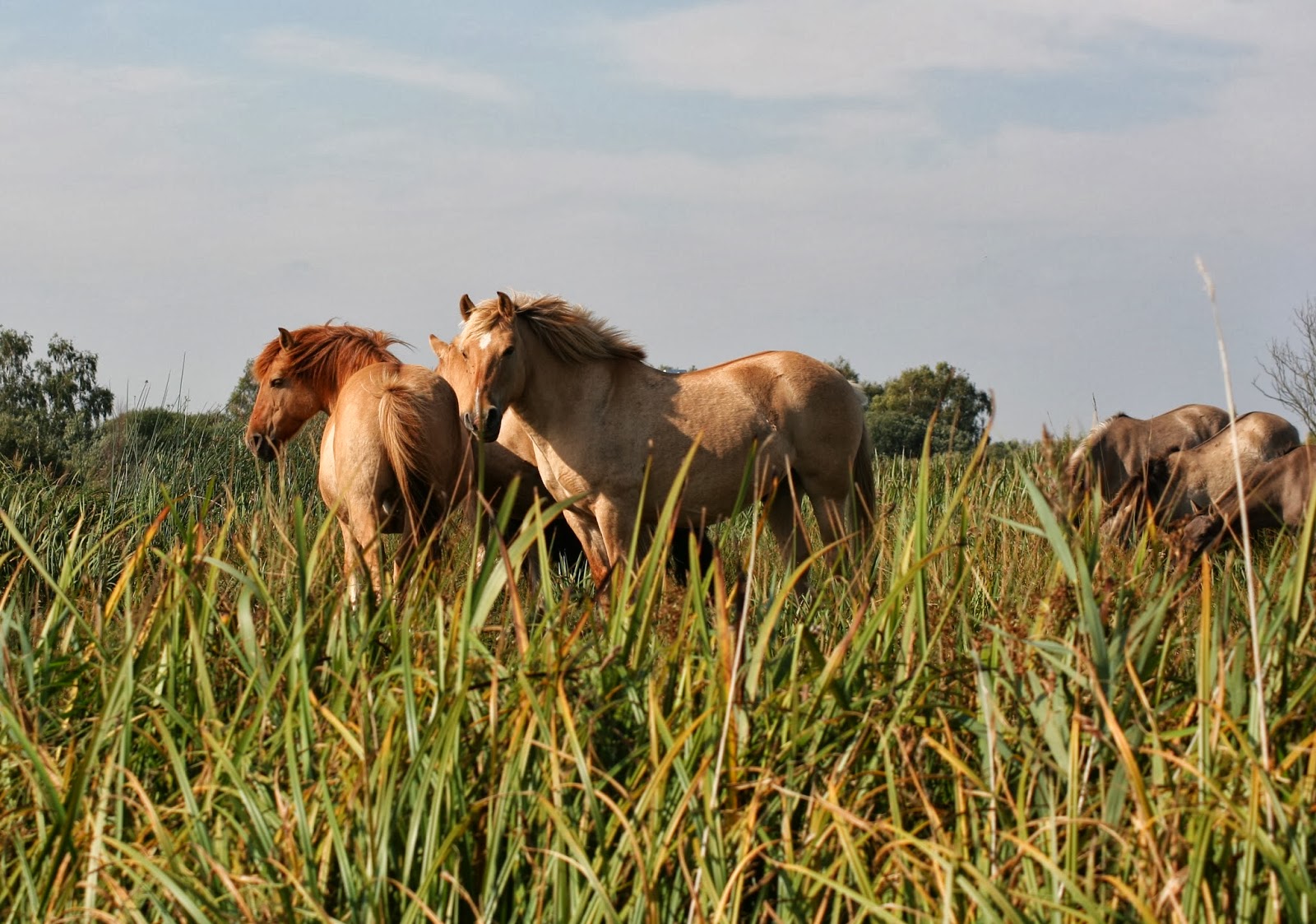
We opted to explore the site initially by taking a boat ride on the lodes, the man-made waterways that cross the site and eventually link it to the river Cam. The electric vessel made its way among the reeds, as our informed guide brought our attention to the Guilder Roses, red with fruit, that grew among the reeds. Where the reed beds gave way to meadows, the highland cattle, which are left apparently in a wild state, in their small groups, and the Konik geldings which manage the vegetation with their grazing looked on curiously. A male Common Darter dragonfly was our companion for part of the journey, sunning himself on the plastic floor of the boat until he was interrupted and chased off by a rival conspecific. While there were few birds about, there were plenty of dragonflies, Southern and Migrant hawkers, the males with electric blue bands on their slender abdomens and in their eyes patrolled the reeds, wheras Common and Ruddy darters sat motionless on the reeds, waiting to take off and snatch smaller insects out of the air, or engage in aerial combat to fend off their rivals. A buzzard wheeled effortlessly on the thermals in the blue sky, and a few late Swallows and House Martins were still on the wing, many of them juveniles, surely days away from the perilous trip South.  As if to provide a counterpoint to the wildlife, American AWACS aircraft were flying over occasionally all day. 

Konik Horses


NATO Boeing 707 AWACS aircraft.


Our boat eventually returned to the visitors centre and we treated ourselves to the inevitable National Trust coffee and cake, before heading back out along the bank of Wicken Lode. A sign at the visitors centre advised us of a couple of scarce birds visible from one of the hides, and a chat with the lady in the centre informed us of their most recent known location. We walked along the short grass beside the load. Roach and sticklebacks shoaled in the crystal clear water, and a Mute Swan hissed at us as we passed. We made in to the hide after an hour’s walk.  It had a view of the open water of ‘the Mere’ as it is known, a small area of still open water fringed by the ubiquitous Phragmites reeds and Carex sedges. Four Cormorants (Phalacocorax carbo) sat on a log that stuck out of the water, and a number of Mallard and Teal dabbled in the shallows in front of us. out across the water was the bird we were looking for. With a Grey Heron (Ardea cinerea) stood beside it, if only to demonstrate the size of the bird, was a Great White Egret (Ardea alba). This is a tall, long-necked and stunning looking heron that is somewhat rare in the UK. Indeed the first breeding pairs in Britain in recorded history bred on the Somerset Levels in 2012.   It stands taller than a Grey Heron, to which it is closely related, and its plumage is bright white, like that of the much smaller Little Egret which colonised the UK in the 1990s.  And here one was, preening itself nonchalently. 

The Great White Egret

I looked through the scope and scanned the bases of the reeds. There was another snipe opposite us, close to the egret, and a couple of smart Godwits, medium-sized waders with very long beaks, wading about and probing in the lake mud. But something at the bottom of the reeds caught my eye. Stripes. Golden stripes, against a dark coloured back, a bird hunkered down among the Phragmites. I wasn’t sure, but I showed the other birders and family members present. We figured it was a Jack Snipe. Seconds later it stood up, and wandered around with the characteristic bobbing motion associated with that species. Two rarities! A couple of smaller waders, periodically flying low across the water as they moved between feeding spots, turned out to be Dunlin, and the ducks were joined by a small party of scruffy looking Shoveller, ducks with massive bills, which arrived with an influx of Teal and Mallards.  We stayed and watched the birds, as the Jack Snipe faded once again into the reeds and his excellent camouflage.

We left the hide not long after the Egret took to the wing and flew off on slow lazy wing beats over the tops of the reeds, assuming the strange, front heavy shape of a heron in flight. we wandered back through the reeds, before setting out, just as the sun was beginning to drop nearer the long, flat fen land horizon. We found a small hide, just a couple of hundred metres from the visitors centre where we could watch a couple of Marsh Harriers, large, scarce birds of prey but increasingly familiar on the wetlands of South Eastern England, hunting over the reeds, wings raised up slightly, riding on the evening thermals. Every so often a coot or moorhen would be flushed from the reeds. These big birds of prey were splended but what happened next was something of a surprise. We wandered out of the hide and onto the board walk, which would take us on a short circuit around the area known as Sedge Fen. I saw ahead of us what looked like another Marsh harrier, sharing the same  profile in flight, so I raised my binoculars to look at it. This bird was moving faster than a Marsh Harrier, and when it stooped after something in the reeds, it moved quicker than any marsh harrier I had seen. Its’ wing tips were black, and its back a very uniform steely grey, apart from a white flash above its tail.  I wasn’t looking at a Marsh Harrier. I was looking at an adult male Hen Harrier, one of the most threatened and rarest breeding birds in Britain. This one wasn't breeding here, the UK population breed in the uplands and fly down to the coast in winter. He was probably passing through to a wintering ground further South; those that winter at Wicken Fen I learned from the informed volunteer at the visitors centre later do not typically arrive until later in the year.

A hen harrier. I had just returned from a year spent beside the Forest of Bowland, last breeding site of Hen Harriers in Britain, without ever seeing one, and here I was in Cambridgeshire, looking at such a beautiful, elegant adult male.

A successful days birding, I thought.


Monday, 29 April 2013

Haweswater, no birds, but what a landscape (plus a footnote on the neonic ban)


I spent yesterday tramping across the mud and rock of the Eastern Lake District in search of England’s only Golden Eagle, who makes his home, we are told, in  the Lakeland Valley which contains the Haweswater reservoir. It was wet, and the precipitous scenery rugged beneath the grey sky and broken cloud. Moss and lichen grew in profusion over dry stone walls and on the trunks of the stunted and miniature oaks which dotted the landscape.  The lake lies in a high valley to the East of Windermere.  Beside it sat a couple of female Goosander, a smart, fish-eating duck, and on a tree covered island, a colony of noisy lesser black backed gulls, unusual so far from the coast, had set up their nest sites.


There were clusters of trees, plantations, of Pine and Larch, and a fallen specimen of the latter, in the light woodland, where the sun could penetrate through the bare branches of the deciduous conifers, the most luxuriant tree beard mosses, really lichens, grew abundantly, alongside several true mosses, and the strange pink flowers and soft, pastel-green new growth needles of the still living, horizontal conifers. Beside the larches stood a stand of Scots pine, and these presented a very different woodland, dark, the trees placed in rows, strangely quiet and foreboding. The woods, which helped hold the soil to the hillside and offer a little shelter to walks in the valley, were of course planted, for human use, but add a little diversity to the landscape. The RSPB web site announced they contain Redstarts and even Red squirrels. My friends and I saw a Chaffinch and a Goldcrest and were happy about it. I suspect the Red Squirrels, holding on because the stunted growth and conifer plantations cannot sustain the invasive Greys, and the latter, which only arrive in late April, may still be suffering from migratory setbacks induced by the continuing cold weather of the last few weeks.

In the rain it was a far cry from the previous weekend when we had set off to Leighton Moss, with our hangovers, and seen Osprey, Buzzard and Marsh Harrier on the same day, over the open reed beds in the sunshine an unusual break in the usual grey weather.  We were so lucky that day with all the birds we saw, and at Haweswater we were reminded that you don’t win them all. But what a place, nevertheless.  We found a high place, and ate our lunch while a few buzzards continued to soar about, sometimes generating undue excitement, as perspective distorted our perception of perhaps large buzzards seen head on. At least one Raven flew over us, and meadow pipits, in what looked a nonsensically unequal struggle, mobbed a buzzard incessantly as he crossed the valley, ducking into and landing among some pine trees where he could avoid the annoyance of the relatively tiny, more agile, and apparently mocking passerines.  Meadow Pipits were everywhere, and there were plenty of Wheatears about. The Wheatears’ name is famously a contraction of “white arse” a historic name dropped in Victorian times when it was thought vulgar. Inevitably we delighted in calling them white arses all day. The wheatear is a smart little passerine, with a uniform back, grey in the male and brown in the female, with a little dark ‘bandit’ mask on his face, a black tail, and of course a white rump, conspicuous in flight. It too is a migrant, arriving from Africa to the heaths and moors of Northern Europe.

We pressed on a little, trudging through the mud and mosses, past an abandoned sheep fold, as far as the RSPB viewpoint, but we saw no eagle. Grey mountains and scree slopes towered above us, with tiny oaks clinging to them, seeming to pinch the sky. If Dungeness and Elmley Marshes in the South of England can be called Big Sky RSPB reserves, Haweswater has a small sky, hemmed in by steep, dark mountains. A herd of Red Deer grazed on a hillside. A couple more meadow pipits chirped overhead.  I pressed on a little alone in the hope of catching up with our eagle, and walked through the stands of dead Purple Moor Grass until I reached the RSPB viewpoint, checked out a little more valley, and trudged guiltily through a sphagnum bog. We began to loose the light so I headed back to the crowd, and glanced around for a dipper on a mountain stream. Bird wise this place was incredibly quiet. The continuing, driving rain was doing little to help, and we decided it was time to head back, keeping an eye out as we returned to the vehicle.
We saw no Eagle but what a landscape!

As a footnote to this blog post I think I should at least refer to the recent ban on the use of neonicotinoid pesticides on bee attracting crops, which, thankfully, and not a moment too soon, emerged from the EU at the weekend.  It is wonderful news, and I am heartily relieved that our money-minded government, with their short term thinking were not able to overwhelm the scientific consensus that neonicotinoid pesticides have profound sub lethal effects on bees.  It will not solve the problem, and halt the decline of bees, there are other sources of pollution, as well as land use change, the effect of which on species is seldom instant and according to recent scientific literature it may take decades for land use change to have its knock on effects on species, workers suggesting there may be an extinction debt for lowland grassland butterflies in at least some EU member states.  The detractors of the neonicotinoid ban will continue to point to this as reason to allow them to continue using these pesticides, which affect the navigational abilities and reproduction of bees. The fact remains that the burden of proof falls, all to often, unduly upon our wildlife, and there is simply not time for more work. We need to take action to stem the decline. The costs of losing our pollinators could be massive, economic and human, as well as ecological, given our reliance on so many insect pollinated crops. We are already seeing parallel declines in Pollinator diversity and plant diversity in England and Holland.   I am grateful to all those who campaigned long and hard for this new legislation, and the agricultural community should be too, pollinators are vital to their long term well being and ours. The Neonic ban may not go far enough but it is a great step in the right direction.  

Sunday, 17 February 2013

RSPB Leighton Moss 17th February 2013


On a day that was truly beginning to feel like spring I took myself up to my favourite wetland in the whole of North Lancashire, the RSPB’s Leighton Moss, which sits in a valley close to Morecambe Bay, in the shadow of Warton Crag, in the Silverdale AONB.  I took with me the excuse of going to look for literature, I am set to do my dissertation project up on Warton Crag, looking at butterflies in the summer.  Before I reached the car park I wondered if there was a big twitch on, such were the numbers of people lugging their scopes up the road. It turned out the only particular rarity in the sky above Leighton Moss was the sun. It had brought the people out on a sunny Sunday afternoon for sure. Although I had arrived alone this would not be a day of birding with solitude, and the reserve hosted quite a volume of people!  The sound of distant shooting also broke my tranquillity a little bit, although my inner hippy was calmed a little when a volunteer reassured me today’s shoot was for Clay Pigeons.


I paused initially at the Moss Passerine Experience, or feeding station as its more popularly known, and watched the handsome Chaffinches, looking very bright and sharply coloured in the sunshine. There was a Brambling about, a close relative of the chaffinch and relatively scarce winter visitor.  Numbers vary from winter to winter, but they are about every year, apparently displaying very little site fidelity, and they are irruptive.  When in small numbers they tend to follow flocks of chaffinches, and this, a smart female with resplendent orange shoulder flashes, was doing just that. She would appear on one of the bird feeders for a couple of seconds before being off in a blur of black, orange and white. Bramblings always have distinctive bright white rumps, which are usually a dull green in Chaffinches.


Also around the feeders were the obligatory pair of bullfinches, the male with his bright, unmistakeable pink breast, perched openly, even allowing for a couple of blurry photographs in one of the trees. The female is just as pretty but a little more subdued in markings. Bullfinches are shy birds and feeding stations like this present an unusual opportunity to get close to them. A feeder with several ports at which the birds could land on it was squabbled over by chaffinches, but the Brambling appeared able to chase them off, and among the assembled spectators getting photos of unusual combinations of passerines on this feeder  became a pastime.  Goldfinch, Robin and Dunnock were also to be seen on the feeders.


I wandered down to the public hide, in the hope of catching up with an Otter or a Bittern, both of which have been seen there, the former apparently this morning according to a lady with a posh scope.  I saw neither, but there were a couple of smart Greater Black Backed Gulls munching on a tasty looking chunk of Perch they’d managed to get their claws into. A few cormorants shared a shingle island with them, and the telescope (hooray I got my new toy back!) picked out some roosting Lapwing behind them. I moved on to the lower hide, from which one of the Marsh Harriers, an old female, could be seen quartering over the reeds. The coots were chasing each other about, and I scanned the distant flocks of Tufted Duck for Scaup, fruitlessly, although there was a female Pochard in amongst them. A pair of Great Crested Grebes bobbed and nodded elegantly at each other. I’ve only seen the famously romantic weed pass in which Grebes indulge once, and was hoping that this amorous duo might perform for the camera, but watching their elegant bobbing and mirroring display was beauty enough. On my return stroll through the reindeer-lichen and Jew’s ear bedecked trees,  I once again made the acquaintance of the friendly, and particularly gorgeous, cock Pheasant who hangs out up there.  He posed for a couple of photos before weight of human traffic on the little causeway, and an alarming pheasant out on the shooting estate next door, sent him scurrying for the shelter of the enormous reed beds.

Freindly Pheasant


Spring was again in the air as robins could be seen doing the tail cocking and chasing but not with real intent thing, indicating breeding birds sussing each other out for mate potential despite their still strong and fiercely territorial instincts.

Once back at the visitors centre I grabbed a cup of coffee, and chatted to one of the staff about the butterflies of Warton Crag. Bring on the summer, there are Scotch Argus and High Brown Fritillary in addition to the lovely little Northern Brown Argus, which I hope to help a little through the application of science this summer, to be seen! Butterflies over coffee aside, I made my way to the Tim Jackson hide, which lies at the Western end of the main reserve. I noticed a Marsh Tit on a branch as I walked through the woods. To my surprise another perched a few feet from it. The first bird darted down and into a small gap in a moss covered log, and appeared to retrieve something. It’s partner then did the same, until a chaffinch chased it away. The chaffinch was chased off by a Dunnock, which retreated when a Nuthatch arrived. The penny soon dropped that someone had placed some sunflower seeds inside the log, and it was on these that these disparate passerines were feeding. The Marsh tits returned breifly until the prettiest blue tits ever chased them off, feisty little birds that they are.  I watched for a few minutes and, even in the dim light of the woods, managed to rattle off a few photos of the passerines as they came and went, usually pursuing each other as they did so. 


Marsh Tit


The Tim Jackson hide revealed a Little Egret and another quartering Marsh Harrier, and the usual selection of ducks.  The low sun through the window made birding tricky and I decided to use the last hour of fading light to check out the pools on the salt marsh from the Eric Morecambe hide. The car park bears dire warnings of car thieves, but I parked up and wandered on anyway. The sun was setting over the flat expanse of salt marsh down to the edge of Morecambe Bay. Another Egret could be seen standing about beside the reeds, and there were numerous handsome pintail about on the water. A Marsh Harrier scattered them, but as the birds settled back in, there was a pair of Avocets among them. These beautiful black and white waders apparently breed here, beside the expansive bay. As the sun dropped below the horizon, lighting up a red sky streaked with cirrus clouds and air trails, I was struggling to separate waders in the settling gloom, but the little cluster still active consisted of two Redshank, two Spotted Redshank and a Greenshank.

I walked back slowly toward the car, with my scope slung over my shoulder. I became aware of a shape, stock still against the horizon, on top of the ridge. It was a deer. I hadn’t seen one here since my and Natalie’s encounter with one at the Moss some time ago. The animal was picked out against the red sky, and it stood stock still, presumably hoping in stillness lay invisibility. It lifted its head and shook its ears. 


Full Species List for 17/02/2013


Mute Swan Cygnus Olor, Whooper Swan Cygnus cygnus, Canada Goose Branta Canadensis, Greylag Goose Anser anser, Mallard Anas Platyrynchos, Teal Anas creccia, Wigeon Anas penelope, Shoveller Anas clypeata, Pintail Anas acuta, Gadwall Anas strepera, Tufted Duck Aythya fuligula, Pochard Aythya ferina, Goldeneye Bucephala clangula, Shelduck Tadorna tadorna, Coot Fulica atra, Moorhen Gallinula chloropus Pheasant Phasianus colchicus, Snipe Gallinago gallinago, Avocet Recurvirostra avocetta, Greenshank Tringa nebularia, Redshank Tringa totanus, Spotted Redshank Tringa erythropus, Black Tailed Godwit Limosa limosa, Curlew Numenius arquata, Lapwing Vanellus vanellus, Little Egret Egretta garzetta, Cormorant Phalacrocorax carbo, Great Black Backed Gull Larus marinus, Black Headed Gull Chroicocephalus ridibundus, Marsh Harrier (Circus aeruginosus) Woodpigeon Columba palumbens, Carrion Crow Corvus corone, Jackdaw corvus monedula, Magpie pica pica Starling (Sturnus vulgaris) Blackbird (Turdus philomelos) Redwing (Turdus illiacus) Robin (Erithacus rubecula) Dunnock (Prunella modularis) Nuthatch Sitta Europea, Blue tit (Cyanistes caeruleus) Coal tit (Paraparus ater) Marsh Tit (Poecile palustris) Great tit (Parus major) Brambling  Fringilla montefringilla, Chaffinch Fringilla coelebs, Bullfinch Pyrrhula pyrrhula, Goldfinch Carduelis carduelis, Greenfinch Carduelis chloris,