Showing posts with label River. Show all posts

Wednesday, 5 February 2014

Falls of Clyde

On Thursday I was lucky enough, while North of the Border, to visit Scottish Wildlife Trust's reserve at Falls of Clyde. It sits beside the New Lanark UNESCO World Heritage Site, designated for its industrial history. Mills were established by Richard Arkwright in the 18th century beside the river Clyde's only waterfalls. Arkwright was certainly not noted for his philanthropy, but his successor at New Lanark, Richard Owen, a reformer and philanthropist turned the mills and the town into something of a social experiment and example of Utopian Socialism, a philosophy which he helped to found. Today the only industry there is a hydroelectric power station.

Today the site is largely a tourist attraction, and reached by a steep set of steps from the public car park, which sits between the village and the car park. Here several crows were mobbing a Buzzard, the only raptor I saw that day. Falls of Clyde is famous for its Peregrines, which are best seen in summer when they are nesting.  I passed among the stone mill buildings to the River Clyde.


In the shallow water where the river is relatively wide through the village of New Lanark itself, a Dipper was bobbing about on a moss covered rock. Throughout the wooded valley could be heard the roar of the waterfalls, ever present, continuous. The Corra Linn falls are the largest on the Clyde, and the riverside path offered views of the falling, churning white water.
Corra Linn on the Falls of Clyde.


The woodland which fringed the river seemed to be mixed in composition, featuring birch, oak and pine trees. When the open country outside the deep gorge could be seen from the path, snow capped peaks looked in the far distance. The woods echoed with passerine contact calls but they seemed reluctant to be seen, although ubiquitous friendly robins, and early singing great tits were seen, as well as a wren, busy in the undergrowth. On the river itself a single female and three smart male Goosander were about, the males resting on the bank yards from the cascading water.

A beautiful place.

Monday, 25 March 2013

The Last Flurries of Winter


ese past couple of days, still in Lancaster and without any pressing deadlines (how wonderful it feels to be free of pressing deadlines,) I was rather hopeful of getting some good wildlife spotting in. It’d been nearly a week since I last went birding, when incidentally I was able to add Bittern to my Lancashire list, one flying through the evening sunshine over the still brown reed beds at the RSPB’s stunning Leighton Moss.  I was enthusiastic to get out there and find some wildlife, see something I’d not seen before, perhaps.  On my way to drop off my essay, it did occur to me there may have been a fall of migrants, with what I am  I handed in my essay on Friday afternoon, and, no sooner had I done so, than the wind began to pick up, and Lancaster was, not for the first time that day, raked by horizontal, and some might say unseasonal snow.

Unseasonal. With Pheasant tracks.

I cursed climate change for its increasing tendencies toward extremes of weather, and spent the day indoors watching films instead. When I did manage to face up to the unseasonably big freeze, I got in the car and headed up, away from the sea this time, and into the Forest of Bowland, an area of Outstanding Natural Beauty which lies to the East of Lancaster. It took only a few minutes on delightfully names roads (Bay Horse Road! Procter Moss Lane!) to reach the car park in Abbeystead, a small town in Bowland. I wandered into the woods toward Abbeystead Lake. Bird life seemed a little scarce, the woods were quiet, and the footprints in the snow, enchanting to look at though they were almost exclusively those of grey squirrels and pheasants.  However the great tits with their two syllable song, were really going for it, the harbingers of early spring appeared unperturbed by the snow, which was thick on the ground in places. There were a few blue and coal tits about in the branches, but bird life seemed sparse.

Upland stream  in the Forest of Bowland

Upon reaching the lake, which was all pleasantly dramatic, lying in a steep-sided, wooded valley, with the snow white Bowland fells climbing up behind it, I startled up a few nervous mallards. Some teal, too, rested on the dark green water and a couple of Jackdaws passed overhead cawing. I continued round the lake, which was held by an impressive dam, and down into the woods. Robins and chaffinches occasionally flew across the path in front of me. As I walked back up toward the lake I became aware of a few Goosander, unfamiliar before my move up North but near ubiquitous round here it seems, floating about on the water surface, but I wondered where all the birds had gone. It occurred to me they may well have cleared out of these upland woods and headed somewhere at lower altitude, somewhere more sheltered, perhaps.  Walking across a bit of farmland on the way back to the car park revealed not just pheasants but also good numbers of Lapwing and Snipe in the fields, so the true upland waders at least were still on their spring habitat. Some of the lapwings were displaying, whooping and tumbling, using their broad wings to aerobatic advantage. Spring, it seemed, was in the air still somewhere, alongside the wind chill.  I drove home dodging pheasants and snowdrifts. One poor pheasant must have had the fright of his life, caught between a snowdrift, an oncoming vehicle and a Buzzard. Of course I waited until he had disappeared into the hedge beyond the snowdrift before I proceeded. 
Abbeystead Lake, Bowland, Lancs.

Today I headed down to a place near Scorton, on the river Wyre where it is still fast and narrow. I parked up at a picnic site with some bird feeders in it, which clearly hadn’t been filled for some time. A few blue and great tits hopped about in the trees above them, looking awkward and expectant. I walked past and onto the banks of the Wyre, where the tree canopy opened, The sky was blue, but a few flakes of snow fell from it inexplicably. A dipper shot up and down the river and paused on a rock for a moment, allowing me to take a (poor) photograph before returning to a cluster of branches by the waters edge. As it did so a second bird appeared and flew upstream. A pair of dippers, and a lovely new addition to my Lancashire list. These lovely birds are very scarce indeed down South, they are birds of the west and the midlands it seems, specialists of fast flowing streams, dipping under the water to hunt invertebrates and emerging still perfectly dry, smart and distinctive in their smart brown plumage and white breast.

Cinculus cinculus
   

Rounding the corner into the wood what struck me was the snowdrops. The wood was covered in them, and among them daffodils too were springing out of the ground. In stark contrast to the upland wood in Bowland, this wood down near the Wyre was a different matter. The snow had all cleared, as if it had never been there (of course, it might never have been there) and the snowdrops and daffodils still stood proud. March snowfall has been part of these plants evolution, of course. When the channel first separated Britain from the continent, about 12 thousand years ago,  isolating its impoverished fauna, anything which could not tolerate March snow would not have been able to survive. Colder winters abound through our history, the mini ice age of the 18th century, the cold snap of the 1970s, and spring flowers have made it through. Here they formed a glorious white carpet splashed with yellow. Somewhere among the singing great tits I thought I heard a chiffchaff.  Cormorants flew overhead through a blue sky, and a buzzard was patrolling somewhere. Spring wasn’t cancelled, it had just had a minor setback, and it will be interesting to see what effect this late flurry of winter has had on wildlife phenology as the year progresses. 

Snowdrops near Scorton, Lancs.

Sunday, 30 September 2012

Introducing Lancaster


On Friday afternoon I took the opportunity to do a bit of exploring along the Canal and beside the River Lune in Lancaster, to see what was about. Although the walk did not turn up anything especially unusual, it was an excellent opportunity to explore my new ‘Local Patch.’ The canal is a green corridor not just for wildlife but also for students travelling between the Universities and the City Centre.  It flows through sheep-infested hills into the heart of the city, and onward into the Lune.  Mallards graze on its banks and Jackdaws squawk in the ancient oaks which dot its pastured banks.    While I was cycling along it I saw a Sparrowhawk,  pursuing small birds unidentified at hedgerow height and over the water.  A pair of Ravens, unfamiliar birds I tend to associate with places far more remote and weather beaten than this, could also be seen in the distance. Ravens! A ten minute ride from my new home!

The River Lune runs through Lancaster, and separates it from its seaside neighbour Morecambe.  Negotiating the awkward Lancaster one way system on my bike, I eventually made it to the Lune near the large metal supports of the pedestrian Millenium Bridge, and turned left, following the riverside path past construction sites, and some of Lancaster’s decaying industrial heritage, the river front lined for the first half mile or so with derelict factories. As I pass under an arched railway bridge, the city passed behind me and I was in the wild. A fence separated me from fields in which cows and horses grazed.  The sky was grey and drizzle fell intermittently, which negated any possibility of seeing any butterflies or dragonflies about, but there were plenty of gulls on the bank of the Lune, as well as the occasional handsome Cormorant drying his wings, or a fishing Grey Heron.

I followed the path beside the muddy tidal river to Freemans’ Pools, a patch of land managed by the Lancashire Wildlife Trust for the benefit of wildlife, and took the opportunity to sit by the river for a while.  There were cormorants fishing, curlews probing in the mud, and Black-headed and Lesser Black Backed Gulls, fishing actively in the water or roosting beside it. A couple of noisy skeins of geese flew over my head, presumably transiting between some farmers field in which they graze, or mudflats lost under rising tide, and their roosting site. Their harsh calls suggested they were probably Greylags. They flew in loose V formations at height and circled about above me before flying on in the direction of Lancaster and the Universities.   At the time it was being used apparently by no more than a few gulls and a pair of Mute Swans. Access directly onto the reserve was not possible but I was able to get a good view from the fence. With winter approaching it seemed likely that these ponds would soon be well used by wintering wildfowl.  The footpath continued toward Aldcliffe and I followed it, passing a few arable fields, before entering a patch of farmland, which the path crossed. Many of the fields had been flooded and the sheep stood on islands they shared with Lapwings, Curlew and Black Headed Gulls, while Mallards swam about between them.  The floodwaters had also taken over the main bridleway, but fortunately a raised path on top of a muddy bank ran parallel to it, and I did not have to face the awkward choice between turning back and riding my bike through deep water.

I saw a couple of swallows, surely among the last of the year here, and a charm of Goldfinch flew over, chirping. Eventually I reached the main road at the Village of Aldcliffe, up a steep slope. I looked around at the tree-lined hills. The sun was beginning to set and had found a gap between the clouds, the evening light illuminating the hillsides, and the leaves which, around here, are already beginning to turn gold, brown and red, and I thought that I could get into local birding here.

The same evening I headed down to Bolton to listen to a couple of Punk bands in a bar down there, before going on to Manchester and visiting Martin Mere- more on that to follow- but on the way I had another moment. Driving in the near-darkness along one of the small B-roads, I was lucky enough to see a handsome, attractively mottled and downy-looking Tawny Owl fly through my view.
Yes. This place will be good for birding.

Saturday, 23 June 2012

More Mancunian Birding Adventures


The day after the day spent with Peregrines I took the opportunity to catch up with an old friend. Cheryl and I met in Greece working for the HOS and she had recently returned to town after some time away. We decided, in lieu of a proper plan for the day, to head down initially to the Irwell to have a look at the Peregrines. As we wandered down toward the river a couple of tweeting passerines flew over us, which transpired to be Goldfinches.  Reaching the river, we could, with bins, still see a couple of the slate grey juveniles up on their ledge. Here at ground level the feral pigeons still went about their business, oblivious to the predators perched high above them. Still fed by their parents, the juveniles seemed to be having it fairly easy, and did not seem bothered by the meals-on-wings service beneath. A couple of Black headed gulls hawked about above the water, and some Canada Geese and their Goslings sat contentedly on the bank.  We stood, and did a bit of urban birding.


A Mancunian Feral Pigeon

As we stood watching the raptors, a blue shape flew low across the water like a shot. A kingfisher? I thought so, although I couldn’t find it again. An orange shape in the bushes could have been the front of a kingfisher, but turned out to be that of a robin. Where we stood, literally, was in the centre of a city, one of England’s biggest, in the shadow of tower blocks and shopping centres. The water must’ve absorbed several shopping trolleys, and only one bank was vegetated, with Elder, Willowherbs and Buddleia, and this trampled to mud in places by the Geese who roost there. The other bank, made of concrete, plunges directly into the water. There was nothing about this place to make it a wildlife site, nothing tangible, it was just another grotty urban water course, brown and polluted.

A grey wagtail rose out from under the bridge and fluttered off across a hotel car park, flashing its yellow belly and the white edges on its tail to us as it climbed away. Perhaps it was nesting down there. The real star birds, however, were on the water. With dark brown heads, and substantial punky crests, a two Goosander, possibly two females or juvenile birds, swam out from beneath us and hauled themselves out alongside the Canada Geese.  The Goosander is a species of duck, a merganser, with a shape which calls to mind that of a cormorant. Its beak had tooth-like structures which grasp the fish on which it feeds, and is a lot thinner and narrower than the beak of a mallard or similar dabbling duck.  These two were lazy, and just hauled up next to the Canada geese. The Goosander is a bird I associate with wide bodies of water in winter. It occurred to us they might have escaped from some private collection, but according to the RSPB Goosander breed on the Irwell and at other places in the area.  Yet here they are, hanging out near a Peregrine nest in the middle of a city.


Goosanders and Canada Geese in Urban Manchester

It was heartening to see these birds thriving here in the city. It is a city somewhat impoverished with green spaces, although not around the outskirts as the rest of my visit would prove. Urban birding, David Lindo style, can reveal some interesting species. Positive management for wildlife in Manchester and other cities undoubtedly makes a contribution, as does the unlikely ability of some species to adapt to urban conditions.  It is worth noting that the Peregrines are here in part as a result of great efforts by the RSPB and other institutions.

After our urban experience Cheryl and I met up with my good friend Tom and headed off to the Chorlton Water Park on the bus. Despite the wonderful wildlife I was starting to get the mild crazies I do from being in a built up area for so long. The bus to Chorlton took about twenty minutes and we walked through the leafy residential streets to the River Mersey. Crows and anglers hung out on its banks and the ubiquitous Canada Goose was about but this river, despite its green banks, is somewhat less well managed than the Irwell on the edge of Salford. The emergent and marginal vegetation looked to have been cleared with a mower, leaving only stark, ugly sloping banks. There seemed to be no rhyme or reason to this nonsensical management.  Marginal vegetation is vital to most of the characteristic riverside wildlife, such as dragonflies which need the stems to haul themselves from the water, and water voles who use it as both food and shelter. It also helps to reduce the power of flowing water and minimise the risk of flooding. Mindless vandalism would be a good word to describe the management of this stretch of the Mersey, or perhaps it is part of a plot with the Manchester rain to cause heavy flooding in Liverpool.

For the sake of completeness, dire management on the River Mersey.

And Better. Chorlton Water Park LNR.

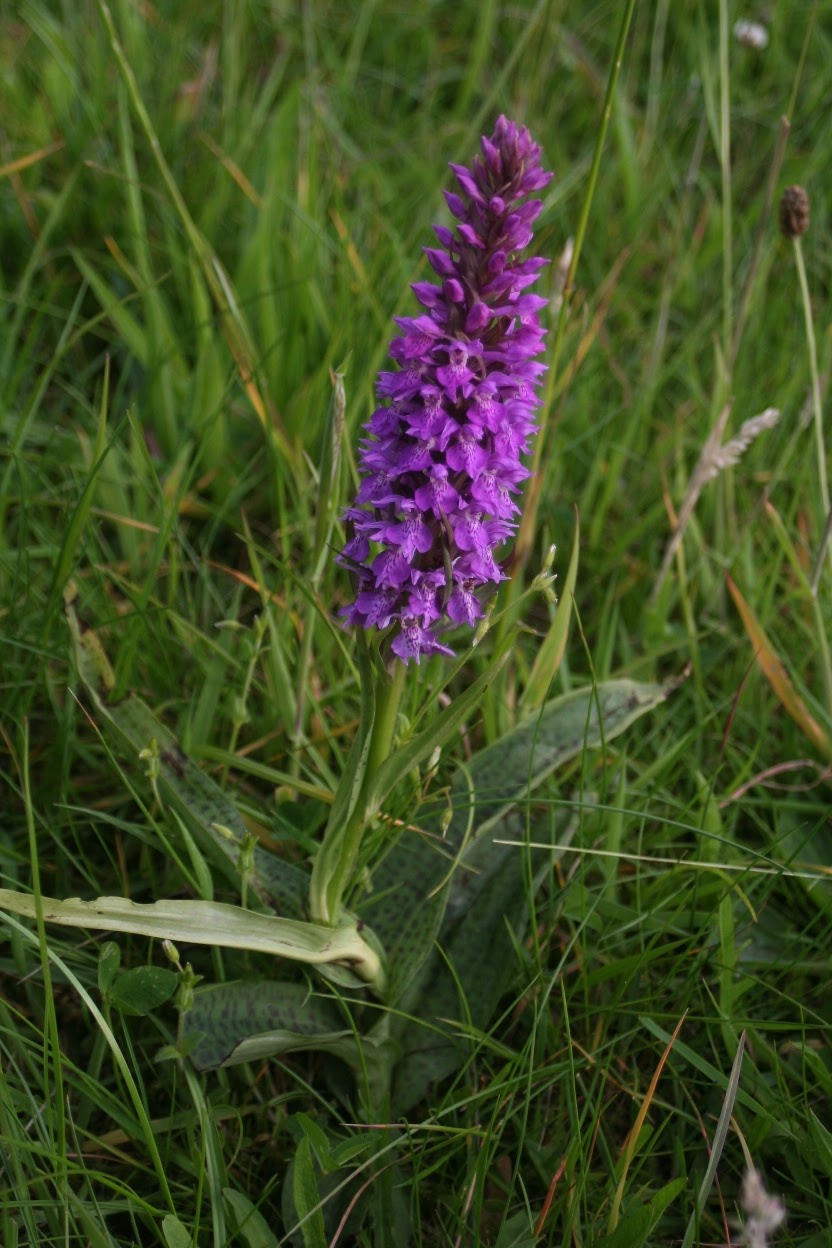
An exit to the right took us into Chorlton Water Park, where woodland fringed a pleasant, clear park lake. A flotilla of Canada geese occupied the open water. There were a couple of Great Crested Grebes about, a few coots, moorhens, mallards.  The water was quiet as would be expected at this time of year. The male mallards which were present had begun their transformation into camouflaged “eclipse” plumage, to hide them during their moult. The margins of the lake were intact, and, despite the obligatory passing idiots allowing their dogs into the water, management here was good. A walk round the lake, beer in hand, enjoying the rare burst of sunshine that afternoon, was lovely. Tadpoles, some almost developed into froglets swum, or clung to vegetation and stones, in the clear water. The margins at one corner of the lake were fringed with reeds, in which a Sedge Warbler sang frantically.   From the bushes whitethroats, too, could be heard. The banks were covered in wild flowers here, and Common Spotted Orchids grew among the usual clover and Ox Eye Daisies, attended by Silver Y Moths, and a couple of unidentified blue butterflies. They made a floral feast for the eyes. Common Spotted Orchids have spotted leaves and stunning purple inflorescences. 
Common Spotted Orchid

A few Swifts and Sand Martins whistled about in front of us over the water.  A kestrel hovered somewhere and a grey heron flew past on broad, slow wingbeats. On the water we could see a large, white looking duck. On closer inspection it proved to have a Green head and a narrow red beak. A male Goosander! Unfortunately he was too distant to give us a decent picture, but remarkable to encounter this species twice in  one day.

As we walked down to the river, in the fading light and heading towards the pub,  a large bird of prey rose up from in the nature reserve, pursued by a mobbing Carrion Crow. It was a Buzzard. Another bird of prey which was until so recently so scarce, is now thriving on the urban fringe. It felt like countryside here, so the bird did not look out of place, but at the water park nature reserve it was easy to forget how close we were to the city still.

Yeah, there’s a fair bit to see up in Manchester. An unlikely birding destination. We walked back to Chorlton and the bus stop through the woods, where well managed rides lined with silver birch took us to an old track which led back into town.

Thursday, 17 May 2012

Beautiful Staffordshire

I would like to apologise for the delay, I've been a little under the weather these past few days and have been slow to update. But here goes.


Staffordshire is beautiful. I might be biased because a particular lovely young lady lives there, but the woodland wildlife I met there last week was something else. It’s the beginning of summer and as such the migrants are properly starting to arrive and get on with their business. The resident wildlife is on the go too, butterflies are on the wing,  and birds are singing, proclaiming territories and gathering food for nestlings. So it was at Coombes Valley on Wednesday, when I made a return visit.  No sooner had I arrived than I had encountered my first Small Copper butterfly of the year, a very handsome little creature indeed, with deep orange on his forewings, his brown hindwings flushed with an iridescent orange sheen. He sunned himself breifly on the dandelion infested meadow.


Coombes Valley is a woodland nature reserve, a mixture of young and ancient woodland, clinging to the walls of a steep sided valley, with a flood meadow set at the bottom, lying beside a small, fast flowing river. Where the river bends, sits a bench overlooked by a pair of nest boxes, and it was here that we saw our first Pied Flycatchers. We’d been sitting a moment or  two, fretting about our forgotten lunch, when a very smart little bird landed on a twig just a couple of metres away. It was black and white, with a bright white underside. A male Pied Flycatcher! It took off and appeared to perform a little aerial dance in front of us, in pursuit of flies. It was there for a few seconds and then disappeared among the branches of a hawthorn.

We waited a little longer, and saw, to our surprise, peering out of a hole in a tree, an adult Great Spotted woodpecker. He, and he was a male by the red patch on the back of his head, slowly, cautiously left his hole, and clung to the side of the tree which he had made his home. Waiting for a few minutes, he appeared to change his mind and disappeared back into his hole. Perhaps he was incubating a clutch of eggs and waiting for his mate to return from foraging, so it could be his turn. A Grey Wagtail, all flicking tail and smart yellow, darted about over the babbling brook, and a chaffinch sang its brief, repeated song in a tree above us.  A few moments later the Pied Flycatcher returned, with the female, browner but no less smart and charming, following behind. The male let me take a couple of record photos from a distance. It was, as the RSPB is fond of saying, a “moment.”

After we waited a bit longer in the hope of getting a better photo of the pied fly, we decided to head up into the woods. In the canopy birds sang, robins, pied flycatchers, great tits and willow warblers. A bird with a reddish tail, probably a female redstart, shot up into the canopy and out of sight as we rounded a corner on the muddy woodland trail. We stood and waited for it for ages. We only caught brief glimpses of Coombes Valley’s other resident passerine attraction, unfortunately, but we seemed to encounter a pied flycatcher every couple of hundred yards. The second was in a clearing when I seemed to startle a male and saw his striking black and orange underside as he flew away at speed, again into the canopy.

Among the whole host of woodland birds we saw at Coombes Valley were Nuthatch, Blue, Great and Coal tits, and a very obliging treecreeper. A treecreeper is an odd little brown bird, both adorable and reminiscent of an ageing woodland wizard at once. It has a greyish white underside and a dark, streaked back, and clings close to trees, creeping up the bark against which it is remarkably camouflaged.  This one broke all the rules, and almost posed for a photo, his curved beak full of grubs and spiders, clinging to a tree just metres away. We watched him for several minutes, and even as we walked towards him he barely flinched, just moving up the tree and around the trunk out of view.


As we left the woods and joined the flood meadow at the valley bottom, where whitethroats and blackcaps sang, replacing the true woodland species, a dark shape flew over, and it was distinct from all the other crows. It was bigger, and it had a diamond shaped tail. I’ve not seen many of my favourite Corvid and avian Goth in England, having met most of them in Scotland and Greece, but this was a raven, and a beautiful example at that. It crossed the valley and disappeared over the trees, slowly. There is something about the shape of a raven, its long wings, its slightly back facing primary feathers, that big tail, which just places it in a league of beauty above other crows, imposing and splendid.
Natty brought my attention to what appeared to be an owl pellet on the ground, which was attended by at least four beetles. Some of these had a striking pattern of orange markings, around a shape a bit like a cross on their wing cases.  I recalled the Sexton Beetle, which buries dead animals for its larvae to feed on, and wondered if this was it, confused by the animal remains in the owl pellet. Another beetle was round, with a flattened body, matt black wing cases and an orange thorax. I have no idea. If any of my readers can help I would be interested to hear from them.  


To conclude a day of wonderful wildlife encounters, Natty and I walked back to the nearby town of Leek through the grassland and copses, the beautiful rolling Staffordshire countryside, down a barely signposted footpath, taking us through fields of cows, and pigs,over a disused railway line, into the smart pleasant town, just as the night fell, and in time to find the fish and chip shop closed! The following day, we would head out into the Staffordshire Moorlands again, to the amusingly named Tittesworth Reservoir, to meet some more unexpected wildlife.