Showing posts with label Wirksworth. Show all posts

Sunday, 28 March 2021

Wanderings in the Strangest Summer- Some local-ish walks.

 August 1st 2020.

I went to Matlock Bath by mistake.  Not long after the great and, as it transpired, temporary lifting of restrictions. I was not ready to encounter humans in such densities,  and I swiftly realised my mistake, and took a wander homeward.


I walked down by the river,  through the parks beside the rushing Derwent in the sunshine, where a dipper bobbed about. I climbed back up onto the road, and wandered along it, past the old Mill building.  I picked up the Cromford Canal Towpath, eerily quiet in comparison to the bustle of Matlock Bath Promenade, following it to the High Peak Junction, where I wandered through the sheep field, encountering a beautiful fledgeling Redstart, beginning to moult into the winter plumage of an adult male. Its sibling was not far away. In moult they bore a curious resemblance to Common Rock Thrushes, but smaller, perching on the dry stone walls, perhaps to scale with Alpine boulders. These tiny birds, just a couple of months old, were preparing for a long and perilous journey to subsaharan Africa. Also preparing to leave were the massed House Martins and Sand Martins which zipped about around the oak tree beside the camp site, where a few brave campers took advantage of the recent reopening.


Selected sightings (no list made) Kestrel, Woodpigeon, Mallard, Dipper, Black Headed Gull, Redstart, Pied Wagtail, House Martin, Swallow, House Martin. 

Cutthroat Bridge, Derwentside, 6th August 2020

I parked up in the layby beside Cutthroat Bridge, a bridge over a small beck, named for a grizzly robbery which took place there in 1635, where a man was left dead, or deprived of speech, depending on which version you read, by mysterious assailants. A second murder, the dumped body of a Mancunian gangster in the 1990s, adds to its grim mystique.  Counterintuitively, the place had quite a calm, wild energy about it, a gentle summer breeze, the heather in flower, and a Kestrel hovering.

Calluna blooming on the Derwent Moors. 


 I strolled uphill, among the flowering Ling Heather, Calluna vulgaris, and the Cross-Leaved Heath, Erica tetralix, the latter now beginning to go to seed. This was Grouse country, and sadly would all to soon be rumbling with the sound of guns as the toffs and London city boys hit the moors to shoot fledgelings out of the sky for shits and giggles. I passed a number of Grouse shooting butts, well maintained, almost luxurious with gravel floors and embossed door numbers. Nice of them, I thought, to provide so many public toilets so close to the Inglorious 12th.  Even in this magnificent, rugged landscape The moors bore the angular scars of controlled burns, in which floristic diversity is sacrificed for maximum densities of grouse for shooting.

Red Grouse on the Derwent Moors. 

Fox Moth larva on the Derwent Moors


As I ascended the moor, I could not help but acknowledge that, despite my distain for grouse shooting, this place was extraordinarily beautiful. Expansive views opened up, of the Derwent reservoirs, a Hobby pursued some hirundines around the granite outcrops. Meadow Pipits were busy, shuttling back and forth with food parcels. The views were enthralling, almost defying description, a vast landscape of hills and shining water. 


I reached the National Trust's land at the Derwent Estate, where I encountered my only actual Red Grouse of the walk, a female, who raised a head above the heather and looked at me quizzically. I walked on to a trig point, scrambling up the rocks for a selfie with it, and enjoyed a commanding view, now taking in part of the city of Sheffield, and viewed the Dark Peaks from their heart. On my return the sun was beginning to dip, and the reservoirs shone, bright glare of their mirror surface.


Yes, a place of remarkable beauty. And in sharp contrast to my ill advised trip to Matlock Bath, I saw barely a soul today. Just space and lakes and heather.


View of the Derwent Reservoirs from Derwent Edge. Or something. Who cares what a place is really called anyway. 


Birds Seen: Buzzard, Kestrel, Hobby, Raven, Great Tit, Swallow, Long-tailed Tit, Chiffchaff, Wren, Meadow Pipit. 

Lathkill Dale 7th August 2021

On a very hot, sunny day Natty and I strolled down from Over Haddon into Lathkill Dale. We found the River Lathkill dry, it had retreated underground, into its cave system, the disused mines beneath its course. The marginal vegetation like Hemp Agrimony had begun to wilt in the heat and dry. Only the deep, bathing pools, historic fishponds downriver held water, and here Swans and Mallards ignored swimmers and dogs. The site was busy but not the nightmare of antisocial behaviour reported on in recent weeks. Perhaps more people were staying away. Birds were few and far between, but a Buzzard gave us close views as it flew among the trees.

River Lathkill on one of its few excursions onto the surface. 


Curiously a number of big Nyphalid butterflies were gathered on the trunk of a beech tree, apparently
feeding on sap. Several trees held Commas and Red Admirals engaging in this behaviour.

Comma and two Red Admirals feeding on tree sap. 


Butterflies Seen: Ringlet, Gatekeeper, Red Admiral, Comma, Large White, Small Copper, Meadow Brown, Speckled Wood, Green Veined White. 


Sunday, 15 November 2020

Lockdown Walks, a Retrospective. 21st-25th May.

 21st May 2020

Feeling a touch of sunstroke from my long walk in the heat the previous day, something like the mother of all hangovers, I remained at home today, and enjoyed seeing a Cinnabar Moth in the back garden, a smart, day flying red and black creature. Their larvae, black and yellow striped creatures, feed on Ragwort, and can be seen through the summer months. A Large White butterfly had laid some eggs on my Brussels Sprouts, and I will aim to be the best custodian of them I can be. 

1430-1530

Natty and I visited her bee transects up at the National Stone Centre, a patch of greenery cut by examples of the dry stone waller's craft, surrounding Britain's only museum dedicated to building stone. The sun was hot and high and the Comfrey was in bloom. 

There were some butterflies on the wing including some lycaenids, Common Blues, and a bright orange Small Copper, on a patch of grass beside the Stone Centre car park, my first of the year. A larger Satyrid butterfly which flew by may have been a Wall.


Small Copper Butterfly. 


Bees: Early Bumblebee (worker) Garden Bumblebee (Worker, queen) Buff/White tailed bumblebee (workers) Common Carder Bee (workers) Honeybee (workers) 

Butterflies: Orange Tip (2) Common Blue (2) Small Copper (1)

Birds: Swift, Blue Tit, Great Tit, Chiffchaff, Blackcap, Whitethroat, Blackbird, Goldfinch. 

Gang Mine. 

The mountain Pansies, and tiny white flowers were in bloom on the lead spoil. There were surprisingly few bees, but a beautiful pheasant was standing on the path, confidingly, and hirundines darted about. 

Birds: Pheasant, Black Headed Gull, Woodpigeon, Kestrel, Magpie, Carrion Crow, Blue Tit, Sand Martin, Swallow, Long-Tailed Tit, Chiffchaff, Whitethroat, Blackbird, Mistle Thrush, Robin, House Sparrow, Dunnock, Pied Wagtail.


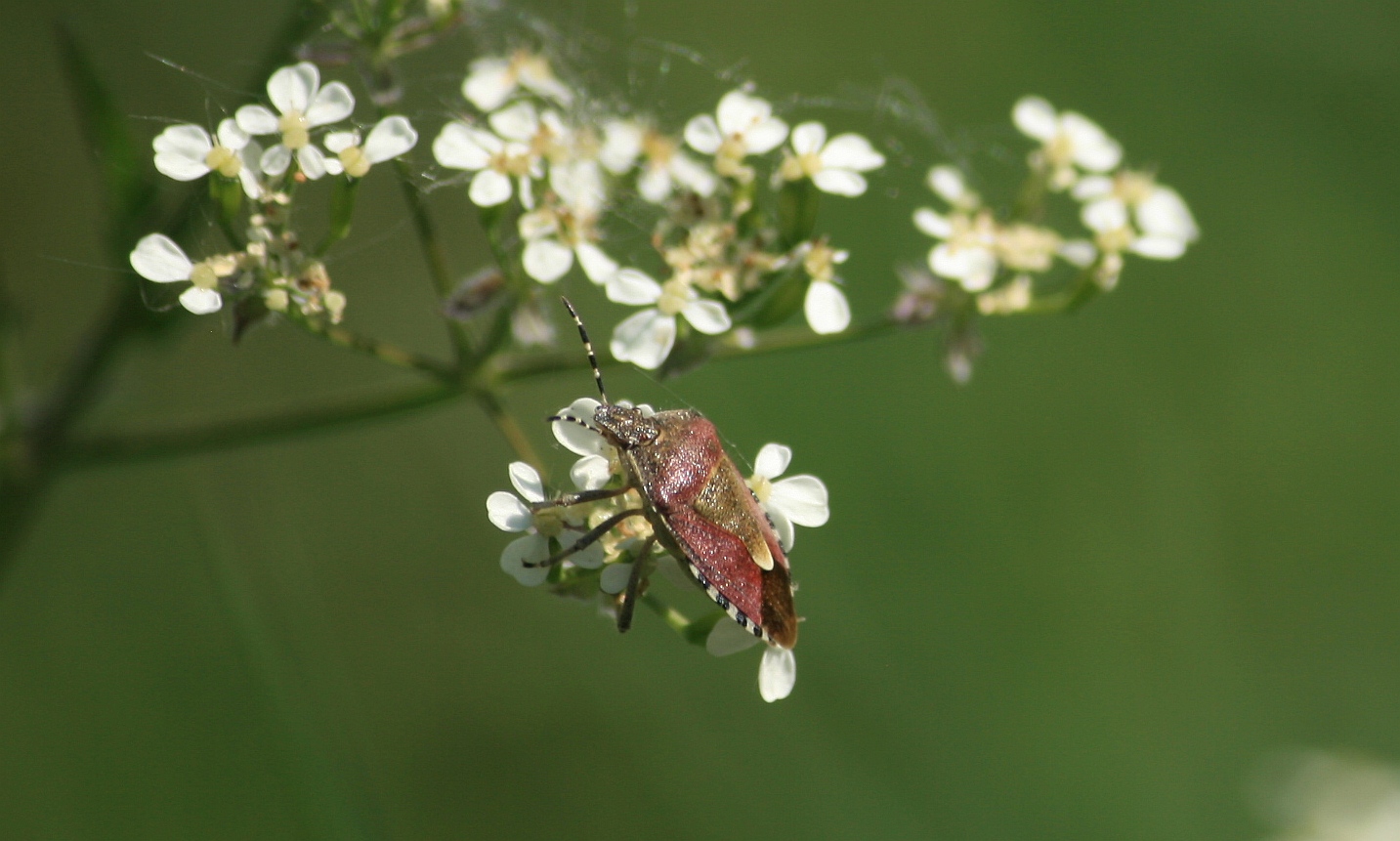
Sheildbug at Gang Mine

Small Heath Butterfly at Gang Mine. 


Butterflies: Small Heath (5) Orange Tip (1) Dingy Skipper (1) Green Veined White (1) Small Copper (1) 

Mammals: Rabbit, Grey Squirrel. 

24th May 2020

Bolehill Envrions

Natalie, Lizzie and I took a wader down to Cromford Canal from Wirksworth, taking the steep ascent to Bolehill. There were plenty of hirundines as swifts cavorting in the blue blazing sky. We took the farm track by the toad pond, so alive a few weeks ago but now near bone dry, and avoided four noisy dogs on the footpath, which yapped in a mildly confrontational manner. 
The Gorses in the cattle field were unusually quiet, but there was a fledgeling Meadow Pipit, my first fledgeling of this species this year. A flock of Goldfinch was busy on the farm track but included no juveniles; I would be interested to know if this collective feeding behaviour is common in the breeding season, or whether these birds were all failed or late breeders. When we reached the canal we found visitor numbers slightly up, but the only canal birds we saw were a single drake Mallard and a flyover Grey Wagtail. 
The climb up the Cromford incline was shallow but seemed unending. The precipitous gritstone cliffs were beautifully bathed in shimmering sunshine. In a small pond some Goldfish seemed to have been dumped, but alongside them some tadpoles persisted and Smooth Newts displayed courtship behaviour, the females gently pursued by the crested and amorous males.  Blue Tits nested in a hole in a concrete gatepost. 
I parted company with Natty and Lizzie, who took the quickest route home, and and headed up Black Rocks. The heat had brought out crowds, and some large groups were gathered up there, though they all seemed thoroughly civilised and there was no litter. There were a gorgeous family of Treecreepers, with little dumpy fledgelings, clinging to trunks above Black Rocks. 
A Cuckoo sang on the descent from the trig point, distinctive, distant, though it would not reveal itself. I stared urgently at a passing Sparrowhawk and at a Stock Dove. . A pair of Jays made food runs to nestlings of their own over my head as I waited in hope, but the Cuckoo remained unseen. I made my way back down to Wirksworth, as mother and foal Shetland Pony played in the evening sun.


Micropigs.


Birds: Mallard, Pheasant, Sparrowhawk, Black Headed Gull, Stock Dove, Woodpigeon, Cuckoo (Heard only) Swift, Kestrel, Jay (feeding), Magpie, Jackdaw, Blue Tit (nesting), Great Tit (nesting), Swallow, Chiffchaff, Wren, Treecreeper (+fl) Blackbird, Robin, Dunnock, Grey Wagtail, Pied Wagtail, Meadow Pipit (fl) Chaffinch, Goldfinch. 

25th May 2020

Stoney Wood

On a glorious sunny afternoon, \I went for my occasional Stoney Wood Bimble, where I counted the butterflies. The Stardisc, a sculpture which sits at the top of Stoney Wood, an illuminated, round star map, was receiving a little TLC from its creator, who was cleaning and respraying the stars. 

The continuing heatwave seemed to be keeping the birds down, but Blue Tits and Robins were busy feeding fledgelings. 

Birds Seen: Woodpigeon, Swift, Jackdaw, Blue Tit, Swallow, Willow Warbler, Whitethroat, Blackbird, Robin, Goldfinch.

Butterflies: Orange Tip (1) Dingy Skipper (5) Large White (1) Common Blue (6) Green Veined White (2) Small Heath (2)


Common Blue ovipositing on Lotus corniculatus at Stoney Wood.


Cromford Moor


In the afternoon I returned to Cromford Moor, which was surprisingly busy with people, in the hope of reconnecting with the singing Cuckoo, of which there was not sight nor sound. A rabbit afflicted by Myxomatosis was a sad sight, blind and stumbling. At such a point I wished I were not so squeamish and knew how to euthanise a rabbit, but I do not, and for fear of adding to its suffering I continued on my way. 
A beautiful Green Tiger Beetle was a welcome diversion from lapine tragedy, amd scuttled rapidly across the sand on the clearfell area. A splendid little predator, bright metallic green and orange iridescences in the evening sun.


Green Tiger Beetle at Cromford Moor. 


Birds Seen: Buzzard, Woodpigeon, Collared Dove, Swift, Kestrel, Jay, Magpie, Jackdaw, Great Tit, Willow Warbler, Chiffchaff, Blackbird, Dunnock, Chaffinch, Bullfinch, Goldfinch. 


Saturday, 14 November 2020

Lockdown Walks, a Retrospective.

 20th May 2020

Aiming for Idridgehay. 

On a very hot day, I decided to take a stroll to the South of Wirksworth, in the direction of Idridgehay, following Prathall Lane to its end. As Prathall lane becomes Taylors lane it crosses out of Derbyshire Dales Local Authority area and enters the Amber Valley. Here, curiously, there seems to be a change in the standard of footpaths. Whether this is down to different landowners or local authorities I do not know. Some of the wooded footpaths, winding their way past pheasant release pens, were almost impassable, but Anemones bloomed and Buzzards circled overhead. 


In the searing summer heat I made my way South, toward Idridgehay, picking up the road past the wedding venue at Shottle Hall, and then crossed the main road. A pair of Lapwings off the farmland whooped and tumbled, mobbing a passing Red Kite, perhaps the same bird I had seen a couple of days earlier.


I crossed the main road, and made my way down to the Ecclesbourne Valley Railway, crossing the tracks by footpath beside a beautifully restored signal box, and continued down to the River Ecclesbourne a little South of Idridgehay. Here, a beautiful pair of Mandarin Duck floated with their fluffy ducklings. Unlike many ducks, male Mandarins do display some parental care. As hole nesters, the bright male can safely incubate without his bright colours giving away the nest location to predators.


Mandarins. Not the ones actually seen on the Ecclesbourne, but some seen in Kent in about 2016, probably. Included for beautifulness. 


 I gave the Mandarin family a little space, as they seemed somewhat nervous,  and continued on my way, by road and by footpath, past a pond where Mayflies danced in the afternoon sun. I reached a field, and was warned by a sign that there was a 'Bull and Cows with Calves' in the field. Now I am not one to take undue risks around Cattle, but a Bull with cows and calves is usually happy to play the contented father, and seldom feels he has anything to prove. This Bull, however, was not 'with' cows and calves. This Bull was some distance from the rest of the herd, apparently shunned by them, unconnected by genetics or familiarity to any of them. This Bull had a lot to prove, and he bellowed aggressively. He trotted towards me, head slightly bowed, he did not charge but his vocalisations and his trot were warning enough. I made it to a bridge on the other side of the field. The Bull stood, and bellowed some more, whether in frustration or satisfaction I do not know. He was not the first confrontational oddity I was to encounter today. As I  continued walking I was met at a style by a lady of late middle age, dressed like someone who might live on a trailer park in an American movie, with a voice like the Queen. 

Our conversation went something like this: 

She: Excuse me, are you from the press? 
Me: From the press? why do you think I am from the press?
She: Are you from the press?
Me: Let's say I am from the press. Is there a story? 
Her husband: Let's see your press card. 
Me: Okay, I am not from the press. Why do you ask?
She: We've had some problems. 
Me: With the press? 
She: Are you from the Council? 
Me: Why would I be from the council? No, I am just out for a walk. (her husband is satisfied with this explanation and wanders off)
She: Where is your car? 
Me: It's at home. I am out for a walk not for a drive. 
She: I own this. I am the owner of everything. 
Me: Do you own that Bull?
She: There was a sign about the Bull. Why would you put yourself at risk from the Bull? 
Me: I was on a public footpath. A designated right of way. If you put the Bull there I did not put myself at risk, you put me at risk. 
She: Are you from the Police? 
Me: What? Do I look like I am from the Police? [I do not look like I am from the Police] Why would I be from the Police? 
She: I own this. I am the owner of everything. 
Me: Yes but why do you keep asking if I am from the legitimate democratic authorities?

I left the eccentric landowner and her eccentric Bull to their own devices, and wondered whether she was concealing some mystery. Her estate is indeed a beautiful, lush place to walk. I have endeavoured to obscure its location and identity, for obvious reasons. 
I continued, the day advancing apace, back to Wirksworth, grabbing a pint on the way from a hole in a pub wall in Kirk Ireton. Near Miller's Green a snuffling in the leaves beside the road alerted me to my first living hedgehog sighting of the year. Once again I arrived back at Wirksworth in darkness. 


Birds Seen: Mandarin Duck, Pheasant, Grey Heron, Red Kite, Buzzard, Lapwing, Curlew, Black Headed Gull, Tawny Owl (H) Swift, Kestrel, Magpie, Jackdaw, Carrion Crow, Raven, Blue Tit, Great Tit, Swallow, House Martin, Long-Tailed Tit, Chiffchaff, Whitethroat, Wren, Blackbird, Song Thrush, Robin, House Sparrow, Chaffinch, Goldfinch. 

Mammals Seen: Rabbit, Grey Squirrel, Pipistrelle, Hedgehog. 

Butterflies: Red Admiral, Speckled Wood, Small Tortoiseshell, Peacock, Large (Cabbage) White, Green Veined White. 


Sunday, 1 November 2020

Lockdown Walks, a Retrospective. 16th-19th May 2020

16th May 2020

Crich Trig Point.  

I strolled down to the Cromford Canal on my own, and then up through Lea Wood on a grey day, water standing in puddles around. The trees were thick now and there were few splashes of colour in the herb layer. I made my way along a fenced path across a parkland estate, ascending to the village of Upper Holloway, signs proclaiming its status as a 'village in bloom,' Its gardens were bright and alive with vivid cultivated flowers, and the paths and alleys on which I continued my ascent were lined with wild Forget Me Nots and Comfrey and Bluebells.

Bluebells in Upper Holloway. 


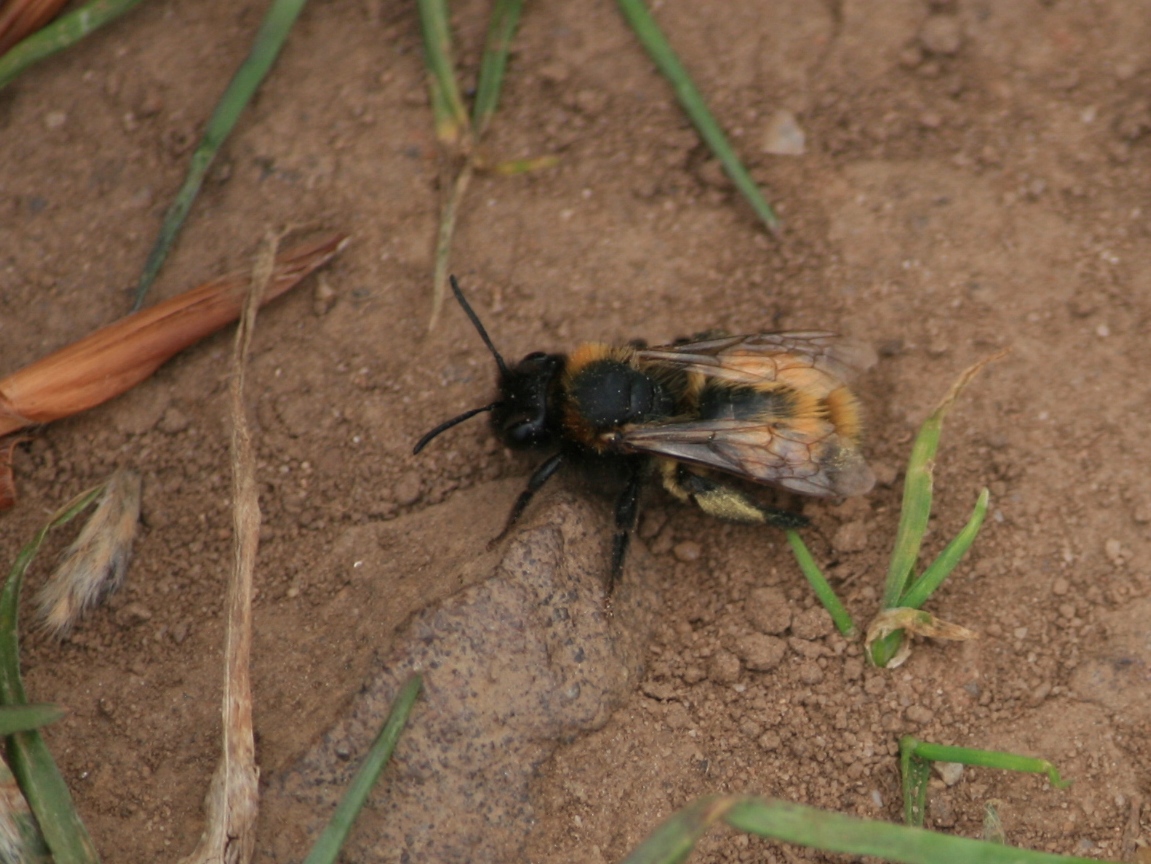
Mining Bee spp. Seen near Upper Holloway. 

After crossing a few sheep fields, as the clouds parted I joined the curving path from the road to the memorial and the trig point. The smell of may blossom filled the air. A Spotted Flycatcher and a pair of Bullfinch were about. I crossed the tracks of the Crich Tramway village, where, in different times, preserved trams take visitors on short rides.

Spotted Flycatcher at Crich. 


Now I must confess I hadn't known what the Pepperpot building which looks down on Matlock and Cromford from its commanding hilltop to the East actually was. A distinct landmark, unknown. It is a memorial to the soldiers of the Sherwood Foresters, a British Army regiment whose soldiers hailed from the Midlands. The men of the regiment served bravely in the First and Second World Wars, the unit's name is inscribed on many a war memorial hereabouts.   The memorial can be seen for several miles, and the views from the hill are commanding. Belper, Derby and the wider countryside spread out below me. I wasn't the only one there. A couple embraced on the grass beside the memorial. A sombre looking man respectfully took down the flags which flew at the site entrance for safe keeping as evening approached. 

View from Crich. 

Sherwood Foresters Memorial. 


I hung out with a handsome crow for a while, and had my lunch, and drank in the expansive vista, and some tea, and then I headed down again, via further woodland, where some fellow walkers were looking for a site used in the filming of the Children's drama 'Stig of the Dump.' I regret only the book was a part of my childhood, the 1981 and the 2002 versions both neatly avoiding me. 


Did Stig of the Dump wander among these Ramsons? 


I reached the Cromford Canal again as the sun was setting, and walked back, fish spotting. A huge, lone Perch, a neatly striped fish with two big dorsal fins more familiar as shoaling juveniles, big enough to be an ambush predator, hung motionless in the water. A few hundred yards on, I watched a Little Grebe fishing in the clear water, astounded by the speed they can do underwater. My word those things are fast. The terrors of the minnows. Clouds of Mayflies were hatching and danced in the evening sun over the water. 

Mallard on Cromford Canal. 

Mayfly Hatch on Cromford Canal. 

As I strolled back over the hills I reflected on how far I had just walked. 


Birds Seen: Canada Goose, Mallard, Tufted Duck, Little Grebe, Buzzard, Moorhen, Black Headed Gull, Lesser Black Backed Gull, Woodpigeon, Jay, Magpie, Jackdaw, Carrion Crow, Raven, Blue Tit, Great Tit, Swallow, House Martin, Long-Tailed Tit, Chiffchaff, Blackcap, Wren, Nuthatch, Blackbird, Song Thrush, Mistle Thrush, Spotted Flycatcher, Robin, House Sparrow, Dunnock, Grey Wagtail, Pied Wagtail, Chaffinch, Bullfinch, Goldfinch. 

Not Birds Seen: Brown Hare, Rabbit, Grey Squirrel, Brown Rat, Perch, Common Blue Damselfly, 

18th May 2020

Wirksworth to Carsington 

On a greyish, intermittently breezy day, I made my way via Stoney Wood, where abundant Dingy Skipper were on the wing despite the weather. There were a few fledgelings about, as Spring turns into Summer, a brood of robins up on the top path.  I continued down to Carsington, where the visitor facilities remained closed, that now familiar refrain, 'due to the Pandemic.' However a public footpath skirts the South-Eastern bank of the lake, according to my OS Map, and who am I to doubt it. It was curious to see the area around the visitor centre so abandoned, car parks empty and fenced off, Stones Island with its sculptures unattended, and the grass, normally host to families, noisy youngsters and playful dogs, now totally and utterly reclaimed by Canada Geese. Though a few small crowds of humans were pootling about, as well as the odd jogger, the Reservoir seemed to belong largely to fluffy Goslings and Spotted Flycatchers.  Willow Tits had fledged youngsters, encouragingly. This is a scarce species which seems to thrive at Carsington.


This walk was among the first in which no year nor lockdown bird list ticks were had. A Great Crested Grebe floated with some striped 'humbugs,' the distinctive young of this charismatic and familiar  water bird. 

Stoney Wood Bird Sightings: Jay, Jackdaw, Great Tit, Swallow, Nuthatch, Robin + Fledgelings, Goldfinch (Singing) 

Stoney Wood Butterfly Sightings: Dingy Skipper (5), Green Veined White (2) 

Carsington Water Bird Sightings: Canada Goose, Barnacle Goose, Greylag Goose, Mute Swan, Gadwall, Mallard, Great Crested Grebe, Grey Heron, Cormorant, Buzzard, Moorhen, Coot, Oystercatcher, Lapwing, Black Headed Gull, Common Gull, Lesser Black Backed Gull, Woodpigeon, Swift, Great Spotted Woodpecker, Magpie, Jackdaw, Carrion Crow, Willow Tit (+Fledgelings), Blue Tit, Great Tit, Skylark, Sand Martin, Swallow, Long-Tailed Tit, Chiffchaff, Reed Warbler, Whitethroat, Blackbird, Song Thrush, Spotted Flycatcher, Robin, Redstart, Dunnock, Pied Wagtail, Meadow Pipit, Chaffinch, Bullfinch, Goldfinch, Reed Bunting. 

Mammals: Grey Squirrel, Rabbit. 

Butterflies: Large (Cabbage) White, Green Veined White, Brimstone. 

19th May 2020

A Stroll to Bolehill (Contains description of predation) 

A breif hour or so out of the house in beautiful sunshine brought the unexpected. Beneath an old, gnarled Oak tree beside the footpath, a few small birds were feeding on the ground, a typical mixed crowd of tits and finches. A Great Spotted Woodpecker dropped in, I assumed to join them in preying in whatever small insects could be found there. Repeatedly it stabbed the ground, as the smaller birds took flight, chattering, and then it was up, with a small dead bird in its bill. Downy feathers drifted on the breeze. The bird, a Great Tit, was unceremoniously hammered into a crack in the bark by the Woodpecker's bill. The Woodpecker returned twice during the following ten minutes or so to peck at the carcass. An adult Great Tit was in the area with a food parcel for its youngster, one can but hope others survived. Passerine alarm calls abounded throughout.  Woodpeckers are not unknown to take young birds, hammered out nest boxes are a telltale sign of Great Spotted Woodpecker predation, but this was the first time I had witnessed it with my own eyes, and not of nestlings either, but of a fledgeling.

Distant view of the Woodpecker enjoying its meal. 


Plenty of other birds were busy with the business of raising chicks. Blue Tits fed chicks in a nest box on the wall of a house in Bolehill Village. A newly fledged Woodpigeon hassled a weary looking parent for food in a street tree, and robins were busy stuffing invertebrates into the yellow gapes of speckled fledgelings.


Friendly Sheep


I returned to the path beside the farm buildings, Ash Tree Farm or some such, and passed through a field of friendly sheep.  As I crossed the Ecclesbourne Valley Railway, a Sparrowhawk flew over, a kill in its talons. Swifts whistled joyously in the clear blue sky, themselves predators on the aerial 'plankton.' 

Birds Seen: Sparrowhawk, Woodpigeon, Swift, Great Spotted Woodpecker, Magpie, Jackdaw, Carrion Crown, Coal Tit, Blue Tit (+nest w/ young) Great Tit (+Fledgelings, one eaten by GSWP) Swallow, Blackbird, Robin (+Fledgelings) Dunnock, Chaffinch, Goldfinch


Saturday, 24 October 2020

Lockdown Walks, a Retrospective. 9th-15th May

 9th May 2020

Cromford, Groaning Tor, Middleton Top. 

I strolled from Wirksworth up through the National Stone Centre and around Gang Mine Nature Reserve, where the mountain pansies bloomed, vivid yellow. The swifts were now abundant, with plenty of birds screaming and whistling through the heavens and over the undulating mining landscape of lead spoil and ancient workings.


Mountain Pansies at Gang Mine


Bluebells at Rose End Meadows.


I continued via the Dene Quarry footpaths, where I had a fleeting glimpse of a butterfly which may have been a wall, and through a Rose End Meadows, now carpeted with bluebells. Surprisingly, having seen it alive with migrants not too long ago, it was now fairly bird quiet, and I descended via a disconcertingly steep path to the small river beside the Via Gellia, before ascending through wet grassland and woodland to a rocky escarpment, called 'groaning tor' on my OS map. I found it rather impressive. I picked up the path to Middleton, and saw more of the apparently locally ubiquitous Redstarts, and was briefly confused by a horse in a zebra costume. A friend tells me the stripes deter biting flies, hypothesised as one possible advantage of the markings of real zebra.

Horse in a Zebra Costume. 


I reached Middleton, and decided to pick up the 'circular walk from Middleton Top.' This crosses more farmland, young woods of hawthorn, birch and blackthorn, and boasts lovely views across the valley. A Brown Hare was in the farmland, watching attentively, but not fleeing. In the Hawthorn woods the Wood Anemone had begun to go over, some of the white-pink blooms beginning to wilt or brown, but they were still an impressive carpet. I rounded the woods and joined a disused entrance track. after a few wrong turns, and impressive views of some remarkable disused quarry equipment, tunnels hewn into rock, I reached the loops' road section. This section of road could be a challenge to walkers on a busy day when the quarry lorries are on the move.
A tractor appeared to be spraying fertiliser on the fields above. Small Tortoiseshell butterflies, many of then slightly tatty from age basked on the dry stone wall, occasionally taking off to flirt with each other, or even a passing female Peacock Butterfly.

Small Tortoiseshell


I walked across middleton moor and descended once again via the National Stone Centre. 

Birds Seen: Buzzard, Black Headed Gull, Stock Dove, Woodpigeon, Collared Dove, Swift, Great Spotted Woodpecker, Jay, Magpie, Jackdaw, Blue Tit, Great Tit, Skylark, Sand Martin, Swallow, Chiffchaff, Blackcap, Whitethroat, Blackbird, Mistle Thrush, Robin, Redstart, Dunnock, House Sparrow, Pied Wagtail, Meadow Pipit, Chaffinch, Linnet, Goldfinch. 

Mammals: Brown Hare, Rabbit.

Butterflies Seen: Peacock, Brimstone, Green Veined White, Orange Tip, Speckled Wood, Dingy Skipper, Small Tortoiseshell. 


11th May 2020

Wirksworth and Bolehill

I took a bimble up the hill to the trig point on Cromford Moor, and strolled along a trail marked out by blue posts, passing relaxed cattle, moving between regenerating moorland on clearfelled forestry land, and young and mature pine plantation. Willow Warblers and Chiffchaffs were busy among the pines. Swifts zipped about ahead of the weather under an increasingly angry sky, which changed rapidly between blue, and the colour of old lead. I even enjoyed a brief hail shower. 
Cromford Moor is an interesting little patch. Though no access is marked on the OS map it is entirely possible to walk round it, and many do. Worth more of my attention, this spot, I think. 

Birds Seen: Mallard, Buzzard, Black Headed Gull, Herring Gull, Swift, Jackdaw, Carrion Crow, Coal Tit, Great Tit, Swallow, Willow Warbler, Chiffchaff, Whitethroat, Wren, Blackbird, Song Thrush, Robin, Grey Wagtail, Pied Wagtail, Goldfinch. 

12th May. 

Stoney Wood

I took a very brief stroll at Stoney Wood in the afternoon. A beautiful pair of Bullfinch foraged together. Bullfinch are almost always seen in pairs. They are rather romantic like that, foraging together as a pair even during the breeding season. 
Jackdaws flew over carrying nesting material, perhaps for mid season repairs or ahead of a second brood. Corvids breed early. In the low scrub lurked a small, brown, speckled creature, my first fledgeling Robin of the season. Robins, presumably the parents of this little youngster, squabbled with goldfinches over the bird feeders in a neighbouring garden. 

Birds Seen: Black Headed Gull, Woodpigeon, Swift, Jackdaw, Coal Tit, Great Tit, Long Tailed Tit, Chiffchaff, Nuthatch, Blackbird, Robin, Dunnock, Bullfinch, Goldfinch. 

Mammals: Grey Squirrel. 

13th May

Wirksworth-Alport-Idridgehay Envrions. 

A stroll up to Knob Lane was taken in search of Curlew, which I had encountered up here a few days earlier. Not sight nor sound of these melodious and enigmatic waders was had. I took the footpath down into the Amber Valley behind Alport Heights, where a Red Kite, a rather special lockdown 'tick' soared overhead. These magnificent birds are comeback kings, common scavengers even in cities 200 years ago, before they were methodically exterminated, reduced to a tiny population in North Wales by the mid 20th century, where sympathetic landowners allowed them to thrive quietly, then reintroduced, most famously in South Oxfordshire but at several sites in England and Scotland, at the close of the 20th century. When I was a kid they defined the rare and persecuted raptor. Now they are breeding in almost every English county, and there are records of them from Central London. Mobbed by crows this magnificent scavenger floated above the mid Derbyshire Countryside, as if his species had never left. He was a joy to see.


Red Kite near Alport Heights


Moving from the Derbyshire Dales to the Amber Valley, the quality of footpaths rather declined. It is unclear whether this is the result of differing priorities between the councils, or differing landowner attitudes, but the change across this political boundary was notable and distinct. Eventually I found the Ecclesbourne Way, a route promoted by the Ecclesbourne Valley heritage Railway, and walked beside the brook. Agricultural runoff rendered the brook somewhat cloudy, and it proved disappointing in terms of birds, though a magnificent Grey Heron took flight. I ascended again through the beautiful Gibbet Wood, the light of a fading sun peering between the trees, a tiny brook babbling its progress down to the Ecclesbourne. 

I descended via New Buildings and Gorsey Bank, the Dandelion fields now fully gone to seed, spherical 'clocks' of grey fluff replacing the yellow blooms. I continued through Folly Well to Gorsey Bank, and back into Wirksworth


Birds Seen: Grey Heron, Red Kite, Buzzard, Black Headed Gull, Lesser Black Backed Gull, Stock Dove, Woodpigeon,  Collared Dove, Swift, Magpie, Carrion Crow, Blue Tit, Great Tit, Skylark, Swallow, Chiffchaff, Whitethroat, Wren, Nuthatch, Blackbird, Song Thrush, House Sparrow, Pied Wagtail. 

Mammals: Brown Hare, Rabbit, Grey Squirrel. 

14th May 2020

Bolehill Environs

I took a stroll up to Bolehill and around the blue trail once again, on a gloriously sunny evening. Meadow Pipits sang in stereo from every dead tree and stump among the recovering moorland, in the golden light. Their chorus was joined by truck horns and distant rumbles, shattering the tranquility of the moors. It was Thursday, and the truck horns someone's thoughtful contribution to the weekly applause for the NHS and carers.

Meadow Pipit singing on Cromford Moor. 


Birds Seen: Buzzard, Woodpigeon, Sift, Wagpie, Jackdaw, Coal Tit, Blue Tit, Great Tit, Swallow, House Martin, Long Tailed Tit, Willow Warbler, Chiffchaff, Whitethroat, Blackbird, Song Thrush, Robin, Dunnock, Meadow Pipit, Chaffinch, Goldfinch. 

15th May. Wirksworth to Kirk Ireton. 

Natalie and I made our way down through Miller's Green, down to Kirk Ireton via the footpaths associated with Dark Lane, on a bright afternoon. My route through the fields and Half Moon Lane was deemed unduly circuitous. We passed plenty of Pheasants and saw some Red Legged Partridges, and buzzards soared. So many of the passerines we saw were now carrying food parcels to hungry chicks. We could hear the peeps of nestlings too, many of them now well grown. Chiffchaffs and Whitethroats were vociferous. Unfortunately the farmers had been out spraying again, and many of the fields close to Kirk Ireton bore its wilted signature. However this did not seem to have immediately affected the birdsong. 

On the pond near Miller's Green, a carp fishery, were baby Moorhens, and worker Early and Buff Tailed bumblebees, the small 'baby bees' which appear at this time of year, were busy on any thistles. A Nuthatch startled as it flew from a garden feeder past my face, a blue-grey flash across my field of vision. A newly fledged House Sparrow was looking for the power of flight, testing its wings on short hops from the ground near Haarlem Mill, and Swifts wheeled and whistled overhead.


Song Thrush. 


Birds Seen: Greylag Goose, Mallard, Red Legged Partridge, Pheasant, Buzzard, Moorhen, Woodpigeon, Swift, Magpie, Carrion Crow, Blue Tit, Swallow, Chiffchaff, Blackcap, Whitethroat, Wren, Nuthatch, Starling, Blackbird, Song Thrush, House Sparrow, Dunnock, Bullfinch, Greenfinch, Goldfinch. 


Thursday, 22 October 2020

Lockdown Walks, a Retrospective.

 6th May 2020

I took a brief afternoon stroll in Stoney Wood, the little local greenspace in a disused quarry I have visited many times, for an informal bird and butterfly survey. Here I witnessed predation, nature, in all its shocking glory. 

The prey, fast, agile, and undeniably beautifully marked, was flying at treetop height, and clearly very aware of the danger it was in, jinked and turned aerobatically, in a desperate attempt to escape the snapping mandibles. The predator, faster, but not as agile, hung briefly in mid air, before locking on again with its sharp vision, darted and snapped again, and missed again. They prey had almost reached cover, but changed direction, and this loss of speed afforded the predator another chance, and this time, with an audible snap, the sharp bill found its mark. The Spotted Flycatcher returned to its perch in the scrub with the Peacock Butterfly flapping desperately in its tight grip. The bird struck the insect against a branch several times, until the manic struggling ceased. Then it shook its head violently, and the four jewelled wings of the butterfly fluttered to the ground like falling leaves, and the bird devoured the body, a small, sad morsel but of course a substantial meal to the tiny bird. 

Peacock Butterfly. Not the one in this story but one in Cambridgeshire in August.


This horror aside, the weather was still glorious and there were plenty of butterflies on the wing, including several Dingy Skipper, and Robins, Whitethroats and Willow Warblers, insect killers all, sang melodiously to the summer sky. 

Birds Seen: Black Headed Gull, Stock Dove, Woodpigeon, Swift, Jackdaw, Blue Tit, Great Tit, Willow Warbler, Chiffchaff, Whitethroat, Blackbird, Spotted Flycatcher*, Dunnock, Goldfinch. 

Butterflies: Orange Tip, Peacock (alive and dead) Green Veined White, Dingy Skipper. 


Orange Tip Butterfly near Kirk Ireton.


8th May 2020

 Wirksworth to Carsington via Kirk Ireton

I strolled along footpaths from Summer Lane, where the housing on the Southern fringe of Wirksworth gives way to farmland. I crossed the open fields and climbed up to half moon lane, which was quiet and offered beautiful views over the Ecclesbourne Valley. The roadside vegetation was well grown and butterfly infested. A Sparrowhawk soared as racing pigeons took their daily exercise from someone's loft. Swallows and Martins wheeled above a farmyard. I arrived in Kirk Ireton, and was surprised to find the human population out and about, celebrating VE day in the streets, a dose of normality, but still a surprise. 

After a couple of wrong turns, I think I had been aiming for the Trig Point called The Mountain, I found myself unexpectedly stood beside Carsington Water, not far from the Millfields car park. A beautiful Garden Warbler sang on the Hawthorn, and the Black Headed Gull colony was typically noisy. A few Lapwings and a single Redshank waded in the shallows. A pair of feral Barnacle Geese were on the gull colony island and one appeared to be incubating.  Long Tailed Tits foraged in the shrubs, gathing beakfulls of insects for their waiting chicks.


Long Tailed Tit at Carsington Water. 


I returned via Kirk Ireton once again, through sunny fields full of butterflies and horses, and filled my empty water bottle with takeaway beers from the pub there. I sat in a field on the way back and raised a glass to the men and women of 1945.


Garden Warbler at Carsington Water


Returning in near darkness I saw hares close to where the footpath crosses the Alderwasley Hall School site. The vegetation here was a sad sight, the farmer appeared to have sprayed herbicide on nearly everything, and wildflowers and nettles alike drooped forlornly. I crossed the Ecclesbourne Brook and returned to Wirksworth through Miller's Green. A pond, signposted as a fishery, beside the road reminded me how I was still discovering this town, I had not known it existed. 

Birds Seen: Canada Goose, Barnacle Goose, Greylag Goose, Gadwall, Mallard, Tufted Duck, Pheasant, Great Crested Grebe, Sparrowhawk, Moorhen, Coot, Lapwing, Redshank, Black-Headed Gull, Lesser Black Backed Gull, Swift, Stock Dove, Woodpigeon, Collared Dove, Magpie, Jackdaw, Carrion Crow, Blue Tit, Great Tit, Swallow, House Martin, Long Tailed Tit, Chiffchaff, Blackcap, Garden Warbler, Whitethroat, Blackbird, Mistle Thrush, Robin, Pied Wagtail, Chaffinch, Greenfinch, Goldfinch. 

Butterflies seen: Green Veined White, Orange Tip, Speckled Wood, Red Admiral, Small Tortoiseshell, Peacock. 

Mammals Seen: Rabbit, Brown Hare. 

Tuesday, 25 August 2020

Lockdown Walks-A Retrospective. 2nd May 2020

 Middleton Moor, 2nd May 2020

We strolled from the front door once again, walking up via Stoney Wood, and the Middle Peak Quarry, up through the sheep fields to the Middleton Moor trig point. The now familiar Redstart pair were there again, and several Whitethroats sang. The Trig Point boasts fascinating views, to Heague Windmill, Belper and Derby, to Black Rocks and Alport heights, and over Carsington Water.  The sky rang to the sound of Skylarks, and the Cowslips still bloomed, a green carpet studded with pale lemon yellow flowers.

Middleton Moor.


  A highlight was a pair of Wheatears close to Middleton Top. A friend of mine had reported them to be a few days previously so it was great to connect with them at last. Wheatears are a charismatic summer visitor to the uplands, a long distance migrant which winters in Africa. In the breeding season it has a circumpolar distribution; some individuals of this species cross the Atlantic twice a year, all return to Africa for the winter, from Atlantic Canada and Alaska. The English name is a Bowdlerisation of its old name White-arse, so called on account of its distinctive white rump, a moniker which Victorians deemed too crude.

Wheatear.


Orange tip butterflies were abundant in the Dale, and the first of the leggy St Mark's flies, named for the date on which they tend to appear, were on the wing near Middleton Top.

View from Middleton Moor.


Birds Seen: Buzzard, Lesser Black Backed Gull, Woodpigeon, Collared Dove, Magpie, Jackdaw, Blue Tit, Great Tit, Skylark, Swallow, Chiffchaff, Blackcap, Whitethroat, Blackbird, Robin, Redstart, Wheatear, House Sparrow, Dunnock, Meadow Pipit. Chaffinch, Linnet, Goldfinch. 

Wirksworth to Harborough Rocks, 3rd May 2020

I strolled up in the afternoon, on a largely overcast day, to the High Peak Trail via Stoney Wood and the Middlepeak Quarry, saying hello to my familiar Redstart again as I passed. I passed two Carsington turnings and took a side path into the woods, eventually finding myself among mighty earthworks at the foot of towering wind turbines. I met Lizzie and Natty there, who confirmed the footpaths ahead were impassible, indeed I later found they were in the process of being diverted. We returned to the High Peak Trail and continued, until we reached the permissive path up Harborough Rocks. We passed the mouth of the cave there, a huge, open space in the rock, apparently used by our ancient ancestors, and occasionally occupied by singing Pagans. The rocks are usually popular with climbers but today they were quiet.

View from Harborough Rocks


We carried on up to the Trig Point atop Harborough Rocks. The view was impressive as any of the local trigs, with the Peak District spread out to the North and West. 

Whitethroats and a Garden Warbler sang in the bushes beside the High Peak Trail.   St Mark's flies were very abundant, especially in the disturbed habitat around the Wind Turbines.

St Mark's Fly (Bibio marci)


Birds Seen: Pheasant, Buzzard, Black Headed Gull, Kestrel, Magpie, Jackdaw, Raven, Great Tit, Blue Tit, Long Tailed Tit, Willow Warbler, Chiffchaff, Blackcap, Garden Warbler, Whitethroat, Wren, Blackbird, Robin, Redstart, Meadow Pipit, Goldfinch. 

Wirksworth to Near Alport, 6th May 2020

Today I took the 'exit' from Wirksworth near the Leisure Centre, and strolled up through a field, now with fresh, flighty cattle, crossed through the bluebell wood near Hardhurst Farm, and joined Hay Lane, where Swallows and House Martins were back to nest under the eaves, and several linnets, their chests flushed red in the sunshine as if they wore strawberries, resplendent in the sunshine. 

Nearing the 'heights,' at the junction of Hay and Knob Lane, I heard the distinctive bubbling calls of Curlew, a threatened upland breeding bird. I struck out down a footpath, following the sound. I passed through fields and a small woodland to near the Bull pub. A pair of Curlew could be seen in arcing, nervous flight, bubbling away in alarm. The cause of their distress was a pair of Buzzards circling on the thermals. 

Returning, I found Curlews, perhaps the same individuals, down in a field by Knob Lane, probing in the grass and earth with their decurved bills for worms. For a man from Essex, seeing Curlews in Summer in Derbyshire is always something of a treat, and it strikes a curious chord in the memory. For me these are a bird of the winter wetlands, the grey of open mudflats and winter skies a more typical backdrop to the sight of one of these large, long billed waders than green fields and blue skies. They are a bird of the mud and salicornia and biting cold, a predator of ragworms and not earthworms. Their feeding behaviour, walking and probing with their long bills is strikingly similar despite the great difference between their summer and winter habitats. To me their call has always been a sound of the estuaries, of the Blackwater, the Crouch and the Thames, and not a sound of the hills. A world away in a few months and a hundred miles. 

On account of my unscheduled trip down Knob Lane to homesick nostalgia I did not climb to Alport heights this time, instead returning down to Gorsey Bank, passing New Buildings where a Treecreeper was feeding young in a tree-hole. The Dandelions and Gorse have begun to go over, but Forget-me-Nots, Bluebells and Red and White Campion were in flower.

Red Campion and Forget me Nots


Birds Seen: Mallard, Pheasant, Buzzard, Curlew, Black Headed Gull, Woodpigeon, Swift, Kestrel, Magpie, Carrion Crow, Great Tit, Swallow, House Martin, Long Tailed Tit, Willow Warbler, Chiffchaff, Whitethroat, Wren, Nuthatch, Treecreeper, Blackbird, Song Thrush, Mistle Thrush, Robin, House Sparrow, Grey Wagtail, Pied Wagtail, Chaffinch, Linnet, Goldfinch. 

Butterflies Seen: Orange Tip, Peacock, Small White, Green Veined White, Speckled Wood. 

Odonata: Large Red Damselfly

Mammals: Grey Squirrel, Field Vole, Rabbit. 


Orange Tip Butterfly.