Showing posts with label Canal. Show all posts

Sunday, 28 March 2021

Wanderings in the Strangest Summer- Some local-ish walks.

 August 1st 2020.

I went to Matlock Bath by mistake.  Not long after the great and, as it transpired, temporary lifting of restrictions. I was not ready to encounter humans in such densities,  and I swiftly realised my mistake, and took a wander homeward.


I walked down by the river,  through the parks beside the rushing Derwent in the sunshine, where a dipper bobbed about. I climbed back up onto the road, and wandered along it, past the old Mill building.  I picked up the Cromford Canal Towpath, eerily quiet in comparison to the bustle of Matlock Bath Promenade, following it to the High Peak Junction, where I wandered through the sheep field, encountering a beautiful fledgeling Redstart, beginning to moult into the winter plumage of an adult male. Its sibling was not far away. In moult they bore a curious resemblance to Common Rock Thrushes, but smaller, perching on the dry stone walls, perhaps to scale with Alpine boulders. These tiny birds, just a couple of months old, were preparing for a long and perilous journey to subsaharan Africa. Also preparing to leave were the massed House Martins and Sand Martins which zipped about around the oak tree beside the camp site, where a few brave campers took advantage of the recent reopening.


Selected sightings (no list made) Kestrel, Woodpigeon, Mallard, Dipper, Black Headed Gull, Redstart, Pied Wagtail, House Martin, Swallow, House Martin. 

Cutthroat Bridge, Derwentside, 6th August 2020

I parked up in the layby beside Cutthroat Bridge, a bridge over a small beck, named for a grizzly robbery which took place there in 1635, where a man was left dead, or deprived of speech, depending on which version you read, by mysterious assailants. A second murder, the dumped body of a Mancunian gangster in the 1990s, adds to its grim mystique.  Counterintuitively, the place had quite a calm, wild energy about it, a gentle summer breeze, the heather in flower, and a Kestrel hovering.

Calluna blooming on the Derwent Moors. 


 I strolled uphill, among the flowering Ling Heather, Calluna vulgaris, and the Cross-Leaved Heath, Erica tetralix, the latter now beginning to go to seed. This was Grouse country, and sadly would all to soon be rumbling with the sound of guns as the toffs and London city boys hit the moors to shoot fledgelings out of the sky for shits and giggles. I passed a number of Grouse shooting butts, well maintained, almost luxurious with gravel floors and embossed door numbers. Nice of them, I thought, to provide so many public toilets so close to the Inglorious 12th.  Even in this magnificent, rugged landscape The moors bore the angular scars of controlled burns, in which floristic diversity is sacrificed for maximum densities of grouse for shooting.

Red Grouse on the Derwent Moors. 

Fox Moth larva on the Derwent Moors


As I ascended the moor, I could not help but acknowledge that, despite my distain for grouse shooting, this place was extraordinarily beautiful. Expansive views opened up, of the Derwent reservoirs, a Hobby pursued some hirundines around the granite outcrops. Meadow Pipits were busy, shuttling back and forth with food parcels. The views were enthralling, almost defying description, a vast landscape of hills and shining water. 


I reached the National Trust's land at the Derwent Estate, where I encountered my only actual Red Grouse of the walk, a female, who raised a head above the heather and looked at me quizzically. I walked on to a trig point, scrambling up the rocks for a selfie with it, and enjoyed a commanding view, now taking in part of the city of Sheffield, and viewed the Dark Peaks from their heart. On my return the sun was beginning to dip, and the reservoirs shone, bright glare of their mirror surface.


Yes, a place of remarkable beauty. And in sharp contrast to my ill advised trip to Matlock Bath, I saw barely a soul today. Just space and lakes and heather.


View of the Derwent Reservoirs from Derwent Edge. Or something. Who cares what a place is really called anyway. 


Birds Seen: Buzzard, Kestrel, Hobby, Raven, Great Tit, Swallow, Long-tailed Tit, Chiffchaff, Wren, Meadow Pipit. 

Lathkill Dale 7th August 2021

On a very hot, sunny day Natty and I strolled down from Over Haddon into Lathkill Dale. We found the River Lathkill dry, it had retreated underground, into its cave system, the disused mines beneath its course. The marginal vegetation like Hemp Agrimony had begun to wilt in the heat and dry. Only the deep, bathing pools, historic fishponds downriver held water, and here Swans and Mallards ignored swimmers and dogs. The site was busy but not the nightmare of antisocial behaviour reported on in recent weeks. Perhaps more people were staying away. Birds were few and far between, but a Buzzard gave us close views as it flew among the trees.

River Lathkill on one of its few excursions onto the surface. 


Curiously a number of big Nyphalid butterflies were gathered on the trunk of a beech tree, apparently
feeding on sap. Several trees held Commas and Red Admirals engaging in this behaviour.

Comma and two Red Admirals feeding on tree sap. 


Butterflies Seen: Ringlet, Gatekeeper, Red Admiral, Comma, Large White, Small Copper, Meadow Brown, Speckled Wood, Green Veined White. 


Sunday, 1 November 2020

Lockdown Walks, a Retrospective. 16th-19th May 2020

16th May 2020

Crich Trig Point.  

I strolled down to the Cromford Canal on my own, and then up through Lea Wood on a grey day, water standing in puddles around. The trees were thick now and there were few splashes of colour in the herb layer. I made my way along a fenced path across a parkland estate, ascending to the village of Upper Holloway, signs proclaiming its status as a 'village in bloom,' Its gardens were bright and alive with vivid cultivated flowers, and the paths and alleys on which I continued my ascent were lined with wild Forget Me Nots and Comfrey and Bluebells.

Bluebells in Upper Holloway. 


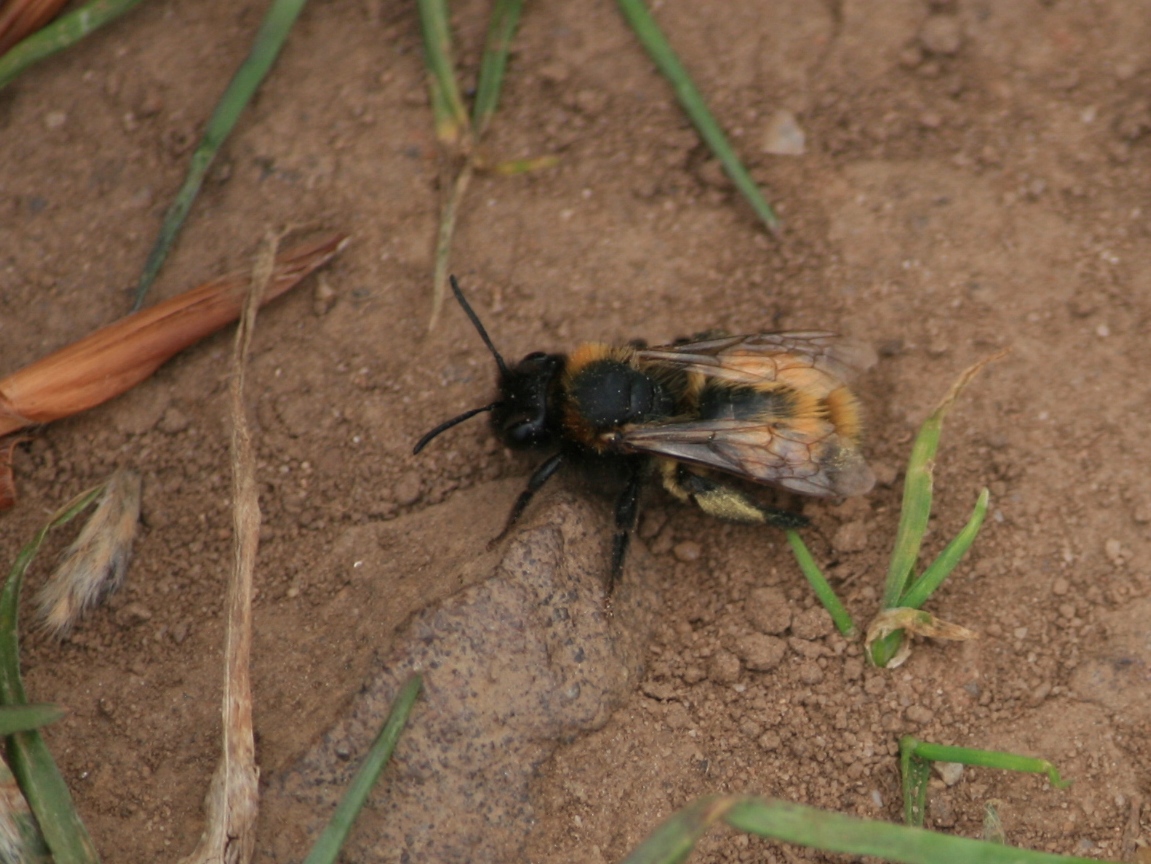
Mining Bee spp. Seen near Upper Holloway. 

After crossing a few sheep fields, as the clouds parted I joined the curving path from the road to the memorial and the trig point. The smell of may blossom filled the air. A Spotted Flycatcher and a pair of Bullfinch were about. I crossed the tracks of the Crich Tramway village, where, in different times, preserved trams take visitors on short rides.

Spotted Flycatcher at Crich. 


Now I must confess I hadn't known what the Pepperpot building which looks down on Matlock and Cromford from its commanding hilltop to the East actually was. A distinct landmark, unknown. It is a memorial to the soldiers of the Sherwood Foresters, a British Army regiment whose soldiers hailed from the Midlands. The men of the regiment served bravely in the First and Second World Wars, the unit's name is inscribed on many a war memorial hereabouts.   The memorial can be seen for several miles, and the views from the hill are commanding. Belper, Derby and the wider countryside spread out below me. I wasn't the only one there. A couple embraced on the grass beside the memorial. A sombre looking man respectfully took down the flags which flew at the site entrance for safe keeping as evening approached. 

View from Crich. 

Sherwood Foresters Memorial. 


I hung out with a handsome crow for a while, and had my lunch, and drank in the expansive vista, and some tea, and then I headed down again, via further woodland, where some fellow walkers were looking for a site used in the filming of the Children's drama 'Stig of the Dump.' I regret only the book was a part of my childhood, the 1981 and the 2002 versions both neatly avoiding me. 


Did Stig of the Dump wander among these Ramsons? 


I reached the Cromford Canal again as the sun was setting, and walked back, fish spotting. A huge, lone Perch, a neatly striped fish with two big dorsal fins more familiar as shoaling juveniles, big enough to be an ambush predator, hung motionless in the water. A few hundred yards on, I watched a Little Grebe fishing in the clear water, astounded by the speed they can do underwater. My word those things are fast. The terrors of the minnows. Clouds of Mayflies were hatching and danced in the evening sun over the water. 

Mallard on Cromford Canal. 

Mayfly Hatch on Cromford Canal. 

As I strolled back over the hills I reflected on how far I had just walked. 


Birds Seen: Canada Goose, Mallard, Tufted Duck, Little Grebe, Buzzard, Moorhen, Black Headed Gull, Lesser Black Backed Gull, Woodpigeon, Jay, Magpie, Jackdaw, Carrion Crow, Raven, Blue Tit, Great Tit, Swallow, House Martin, Long-Tailed Tit, Chiffchaff, Blackcap, Wren, Nuthatch, Blackbird, Song Thrush, Mistle Thrush, Spotted Flycatcher, Robin, House Sparrow, Dunnock, Grey Wagtail, Pied Wagtail, Chaffinch, Bullfinch, Goldfinch. 

Not Birds Seen: Brown Hare, Rabbit, Grey Squirrel, Brown Rat, Perch, Common Blue Damselfly, 

18th May 2020

Wirksworth to Carsington 

On a greyish, intermittently breezy day, I made my way via Stoney Wood, where abundant Dingy Skipper were on the wing despite the weather. There were a few fledgelings about, as Spring turns into Summer, a brood of robins up on the top path.  I continued down to Carsington, where the visitor facilities remained closed, that now familiar refrain, 'due to the Pandemic.' However a public footpath skirts the South-Eastern bank of the lake, according to my OS Map, and who am I to doubt it. It was curious to see the area around the visitor centre so abandoned, car parks empty and fenced off, Stones Island with its sculptures unattended, and the grass, normally host to families, noisy youngsters and playful dogs, now totally and utterly reclaimed by Canada Geese. Though a few small crowds of humans were pootling about, as well as the odd jogger, the Reservoir seemed to belong largely to fluffy Goslings and Spotted Flycatchers.  Willow Tits had fledged youngsters, encouragingly. This is a scarce species which seems to thrive at Carsington.


This walk was among the first in which no year nor lockdown bird list ticks were had. A Great Crested Grebe floated with some striped 'humbugs,' the distinctive young of this charismatic and familiar  water bird. 

Stoney Wood Bird Sightings: Jay, Jackdaw, Great Tit, Swallow, Nuthatch, Robin + Fledgelings, Goldfinch (Singing) 

Stoney Wood Butterfly Sightings: Dingy Skipper (5), Green Veined White (2) 

Carsington Water Bird Sightings: Canada Goose, Barnacle Goose, Greylag Goose, Mute Swan, Gadwall, Mallard, Great Crested Grebe, Grey Heron, Cormorant, Buzzard, Moorhen, Coot, Oystercatcher, Lapwing, Black Headed Gull, Common Gull, Lesser Black Backed Gull, Woodpigeon, Swift, Great Spotted Woodpecker, Magpie, Jackdaw, Carrion Crow, Willow Tit (+Fledgelings), Blue Tit, Great Tit, Skylark, Sand Martin, Swallow, Long-Tailed Tit, Chiffchaff, Reed Warbler, Whitethroat, Blackbird, Song Thrush, Spotted Flycatcher, Robin, Redstart, Dunnock, Pied Wagtail, Meadow Pipit, Chaffinch, Bullfinch, Goldfinch, Reed Bunting. 

Mammals: Grey Squirrel, Rabbit. 

Butterflies: Large (Cabbage) White, Green Veined White, Brimstone. 

19th May 2020

A Stroll to Bolehill (Contains description of predation) 

A breif hour or so out of the house in beautiful sunshine brought the unexpected. Beneath an old, gnarled Oak tree beside the footpath, a few small birds were feeding on the ground, a typical mixed crowd of tits and finches. A Great Spotted Woodpecker dropped in, I assumed to join them in preying in whatever small insects could be found there. Repeatedly it stabbed the ground, as the smaller birds took flight, chattering, and then it was up, with a small dead bird in its bill. Downy feathers drifted on the breeze. The bird, a Great Tit, was unceremoniously hammered into a crack in the bark by the Woodpecker's bill. The Woodpecker returned twice during the following ten minutes or so to peck at the carcass. An adult Great Tit was in the area with a food parcel for its youngster, one can but hope others survived. Passerine alarm calls abounded throughout.  Woodpeckers are not unknown to take young birds, hammered out nest boxes are a telltale sign of Great Spotted Woodpecker predation, but this was the first time I had witnessed it with my own eyes, and not of nestlings either, but of a fledgeling.

Distant view of the Woodpecker enjoying its meal. 


Plenty of other birds were busy with the business of raising chicks. Blue Tits fed chicks in a nest box on the wall of a house in Bolehill Village. A newly fledged Woodpigeon hassled a weary looking parent for food in a street tree, and robins were busy stuffing invertebrates into the yellow gapes of speckled fledgelings.


Friendly Sheep


I returned to the path beside the farm buildings, Ash Tree Farm or some such, and passed through a field of friendly sheep.  As I crossed the Ecclesbourne Valley Railway, a Sparrowhawk flew over, a kill in its talons. Swifts whistled joyously in the clear blue sky, themselves predators on the aerial 'plankton.' 

Birds Seen: Sparrowhawk, Woodpigeon, Swift, Great Spotted Woodpecker, Magpie, Jackdaw, Carrion Crown, Coal Tit, Blue Tit (+nest w/ young) Great Tit (+Fledgelings, one eaten by GSWP) Swallow, Blackbird, Robin (+Fledgelings) Dunnock, Chaffinch, Goldfinch


Tuesday, 4 August 2020

Lockdown Walk Retrospective part 4. Gang Mine, Dene Quarry and Rose End Meadows.

7th April 2020. 

On a glorious summers' day I strolled up through the grounds of the National Stone Centre, counting bees towards Natty's bumblebee survey on the way. We reached the Derbyshire Wildlife Trust reserve at Gang Mine, a site somewhat overused by dog walkers, though the Alpine Pennycress and Mountain Violets continue to flower on the site of an ancient lead mine. Butterflies were out in force today, a highling being four Peacocks (Aglais io) chasing each other. There were also good numbers of bees, including Common Carder and Tawney Mining Bee. 

Unknown wasp species on Daffodil at Stoney Wood

View of Dene Quarry.


Beneath a blue sky I walked the footpath around the active Dene Quarry, which had been somewhat diverted from its course shown on the map. There were plenty of Peacocks up and about. The path down to the Via Gellia had been closed by quarry workings, and quarry vehicles were still busy in spite of Lockdown. In the chalky grassland and farmland I saw my first Redstarts of the year, beautiful birds with orange bellies and black throats in the summer plumage males, and brick red tails in all plumages, from which they get their name (Steart is an old English word for tail).  I proceeded by the Green Lane down to Rose End Meadows. I found the site surprisingly good bird-wise. with the highlight being a brief, and initially obscured view of a Ring Ouzel. Any doubt as to the birds' identity was blown away when he flew directly over my head, his primaries distinctly grey, and the crescent collar at his neck bright white. This scarce passage migrant, a mountain relative of the Blackbird breeds on the Eastern Moors, 20 or so miles to the North. 

By now the sun was setting and the walk by road up Cromford Hill seemed like rather a long slog home. 

Birds Seen: Mallard, Buzzard, Stock Dove,  Woodpigeon, Collared Dove, Great Spotted Woodpecker, Kestrel, Jay, Jackdaw, Magpie, Carrion Crow, Raven, Blue Tit, Great Tit, Sand Martin* Swallow, Long-Tailed Tit, Chiffchaff, Wren, Ring Ouzel* Blackbird, Song thrush, Mistle Thrush, Robin, Redstart* Meadow Pipit, Chaffinch, Bullfinch, Goldfinch

Butterflies seen: Peacock, Small Tortoiseshell, Green Veined White. 

Stoney Wood, 8th April 2020

A nice sunny unofficial survey day in stoney wood. Blackthorn was blooming, white and scented on the steep slope and a glorious cherry tree was in blossom in the lower part of the site. Maintenance was taking place around the StarDisc. Stoney Wood is a community woodland set in a former quarry, regenerating limestone grassland and young woodland on its slopes.

Blackthorn flowers in Stoney Wood.

View of Stoney Wood.


Bird life was a little disappointing, but a Field Vole emerged from a hole under the small wooden bridge and looked up at me, which was something of a highlight, and there were plenty of Tree and Buff-Tailed Bumblebees on the wing. 

Birds Seen: Blue Tit, Great Tit, Chiffchaff, Wren, Robin. 

Butterflies seen: Peacock (9), Small Tortoiseshell (5)

Cherry Blossom in Stoney Wood

Peacock Butterfly in Stoney Wood

Peacock Butterfly in Stoney Wood. 


Back home in the evening a Tawny Owl was singing in the dark, and Woodpigeons, Blue Tits, and Small Tortoiseshells were in the garden. 

Wirksworth, Bolehill, Whatstandwell, Cromford Canal, Wirksworth  9th April 2020

I strolled up a sunny Wash Green, past a year tick singing Blackcap, and several beautiful butterflies, down the long path towards Alderwasley, carefully avoiding the cattle. The route took me through Anemone carpeted woods, where, near Mere brook, a small bat, probably a Pipistrelle, was circling, apparently catching flies, which were abundant, in broad daylight. I found a noisy track, which I didn't enjoy much, through a small community comprised mainly of dogs and diggers, and eventually crossed the Derwent and the A6 at Whatstandwell.

Anemone and Celandine near Mere Brook.


From Here I took up the Cromford Canal towpath, which was surprisingly quiet of humans, and found it alive with the sound of singing Blackcaps, which must have only arrived recently. Only male Blackcaps were seen. The regular residents and chiffchaffs also sang. A  pair of Moorhens had little black fluffball chicks, which were being fed by the adults. Little Grebes were about on the canal as well as Mallards, the sun reflecting off their metallic green heads. 

Moorhens on Cromford Canal

Mallard on the Cromford Canal


I returned via the regular path across farmland, from near the High Peak Junction to Bolehill. No friendly black cat met me this time, and sadly, there were too many squashed toads on the track, presumably killed by farm vehicles. However the roadside ditches were full of the warty amphibians which could also be heard singing. 

It was a Thursday and the applause for the NHS and care workers at 8pm was stunning, loud, car horns, fireworks, and even a shotgun sounded to be in the mix, showing their appreciation. 

At home this evening the Tawny Owls once again provided its midnight symphony of hoots and kee-wicks. 

Birds Seen: Mallard, Pheasant, Little Grebe, Moorhen, Buzzard, Woodpigeon, Jay, Magpie, Jackdaw, Carrion Crow, Blue Tit, Great Tit, Long Tailed Tit, Chiffchaff, Blackcap*, Goldcrest, Wren, Nuthatch, Blackbird, Song Thrush, Robin, House Sparrow, Grey Wagtail, Pied Wagtail, Chaffinch, Goldfinch. 

Butterflies Seen: Peacock, Small White, Small Tortoiseshell, Red Admiral, Brimstone, Orange Tip, Peacock. 

Other Wildlife: Rabbit, Grey Squirrel, Common Toad, Pipistrelle spp. 
Little Grebe on Cromford Canal

Sunday, 30 September 2012

Introducing Lancaster


On Friday afternoon I took the opportunity to do a bit of exploring along the Canal and beside the River Lune in Lancaster, to see what was about. Although the walk did not turn up anything especially unusual, it was an excellent opportunity to explore my new ‘Local Patch.’ The canal is a green corridor not just for wildlife but also for students travelling between the Universities and the City Centre.  It flows through sheep-infested hills into the heart of the city, and onward into the Lune.  Mallards graze on its banks and Jackdaws squawk in the ancient oaks which dot its pastured banks.    While I was cycling along it I saw a Sparrowhawk,  pursuing small birds unidentified at hedgerow height and over the water.  A pair of Ravens, unfamiliar birds I tend to associate with places far more remote and weather beaten than this, could also be seen in the distance. Ravens! A ten minute ride from my new home!

The River Lune runs through Lancaster, and separates it from its seaside neighbour Morecambe.  Negotiating the awkward Lancaster one way system on my bike, I eventually made it to the Lune near the large metal supports of the pedestrian Millenium Bridge, and turned left, following the riverside path past construction sites, and some of Lancaster’s decaying industrial heritage, the river front lined for the first half mile or so with derelict factories. As I pass under an arched railway bridge, the city passed behind me and I was in the wild. A fence separated me from fields in which cows and horses grazed.  The sky was grey and drizzle fell intermittently, which negated any possibility of seeing any butterflies or dragonflies about, but there were plenty of gulls on the bank of the Lune, as well as the occasional handsome Cormorant drying his wings, or a fishing Grey Heron.

I followed the path beside the muddy tidal river to Freemans’ Pools, a patch of land managed by the Lancashire Wildlife Trust for the benefit of wildlife, and took the opportunity to sit by the river for a while.  There were cormorants fishing, curlews probing in the mud, and Black-headed and Lesser Black Backed Gulls, fishing actively in the water or roosting beside it. A couple of noisy skeins of geese flew over my head, presumably transiting between some farmers field in which they graze, or mudflats lost under rising tide, and their roosting site. Their harsh calls suggested they were probably Greylags. They flew in loose V formations at height and circled about above me before flying on in the direction of Lancaster and the Universities.   At the time it was being used apparently by no more than a few gulls and a pair of Mute Swans. Access directly onto the reserve was not possible but I was able to get a good view from the fence. With winter approaching it seemed likely that these ponds would soon be well used by wintering wildfowl.  The footpath continued toward Aldcliffe and I followed it, passing a few arable fields, before entering a patch of farmland, which the path crossed. Many of the fields had been flooded and the sheep stood on islands they shared with Lapwings, Curlew and Black Headed Gulls, while Mallards swam about between them.  The floodwaters had also taken over the main bridleway, but fortunately a raised path on top of a muddy bank ran parallel to it, and I did not have to face the awkward choice between turning back and riding my bike through deep water.

I saw a couple of swallows, surely among the last of the year here, and a charm of Goldfinch flew over, chirping. Eventually I reached the main road at the Village of Aldcliffe, up a steep slope. I looked around at the tree-lined hills. The sun was beginning to set and had found a gap between the clouds, the evening light illuminating the hillsides, and the leaves which, around here, are already beginning to turn gold, brown and red, and I thought that I could get into local birding here.

The same evening I headed down to Bolton to listen to a couple of Punk bands in a bar down there, before going on to Manchester and visiting Martin Mere- more on that to follow- but on the way I had another moment. Driving in the near-darkness along one of the small B-roads, I was lucky enough to see a handsome, attractively mottled and downy-looking Tawny Owl fly through my view.
Yes. This place will be good for birding.