Showing posts with label Bird of Prey. Show all posts

Friday, 20 November 2020

Wandering in the Strangest Summer: Curbar, Froggatt and White Edge via the Longshaw Estate. 20th June 2020

20th June 2020 

I parked up on the bend in the road up to Curbar Edge from Curbar, camera-less sadly following its unfortunate inundation in the storm which had caught me at Bradford Dale, and took the low path, through the trees, passing some lovely fresh Small Tortoiseshells, and blooming Foxgloves. The woods were fairly bird-quiet, so I made my way up onto the moor, with the Heather and Meadow Pipits. There were loads of people up here, making their entertainment in the outdoors, though perhaps this is typical. A smart Whinchat, a charming summer visitor, migrant relative of the Stonechat, perched atop a frond of Bracken.


Photos taken on Curbar Edge in 2018


I spent a few moments in solstice meditation at the Stone Circle, ancient marker of this rather magical place high in the Eastern moors, and also took in the vistas across the valley, as the Swifts wheeled above and below me. I strolled downhill into Hay Wood, which was beautiful and alive with birdsong, and charming wrens. I reached the Longshaw Estate, National Trust land. The National Trust in Derbyshire was sadly mired in controversy a few years ago, when a gamekeeper was seen to place a plastic decoy Hen Harrier, a fiercely persecuted, endangered and magnificent raptor, and wait by it with a gun, until walkers sent him packing and the Trust ended his employer's shooting lease. This incident did not happen here, but on land near the Snake Pass, according to Raptor Persecution UK, but unfortunately some of the Longshaw Estate remains under grouse shooting management.

There remains a rich, wild beauty to Longshaw's moorland fringes, its moorland though well walked is home to some remarkable wildlife. A Hobby, a small migrant falcon about the size of a kestrel, but faster and more agile,  hunted over a blooming moor, its underside boldly streaked, a black mustache on its white cheeks. The sound of aero engines made me look up, as a Harvard trainer flew loudly overhead in formation with a couple of smaller machines and a Nanchang. Further engine sounds a few moments later caused me to look up again, and a Hurricane, iconic fighter of the Battle of Britain, followed the same path through the sky. 

Following my pleasant aviation interlude I continued onto the parkland, where a handsome Cuckoo sat silent, my first sighting of this bird this year. I arrived at the heart of the Trust's visitor operation, a popular temporary cafe in a wooden shed, and enjoyed a local ice cream before continuing my exploration of the parkland, enjoying Nuthatches and Coal Tits busy in the branches. A pond on the estate is a great site to see Mandarin ducks.  

I left the Longshaw Estate and all its people behind, and continued onto the high, undulating expanse of White Edge, part of Big Moor. This was quieter, though a family disconcertingly allowed their dog to run off lead. Curlews bubbled their mournful calls, and small bands of deer grazed peaceably below, and Meadow Pipits sang.  A beautiful Stonechat put on a distraction display beside the path.

Stonechat photographed at South Walney in 2015


As I returned to the car, I was surprised to find many young people gathered around, dressed for a night out in alternative stylings, perhaps en route to some Solstice gathering. Were I ten years younger I might have attempted to join them. I hope they had a good night. 

Birds Seen: Mandarin Duck, Mallard, Tufted Duck, Curlew, Woodpigeon, Cuckoo, Swift, Hobby, Magpie, Carrion Crow, Coal Tit, Great Tit, Skylark, Swallow, Willow Warbler, Blackcap, Wren, Nutchatch, Blackbird, Song Thrush, Robin, Whinchat, Stonechat, Pied Wagtail, Meadow Pipit, Chaffinch, Goldfinch. 

Mammals: Grey Squirrel, Brown Hare, Red Deer. 

Butterflies: Small Tortoiseshell, Red Admiral, Meadow Brown. 

Flashback: Curbar Edge, 30th May 2020

Natty and I took a brief drive, the first one since lockdown for a birdy trip together, to Curbar Edge on he Eastern Moors. The sun was high and bright but a gentle breeze cooled the tops. There were many families out enjoying the sun, but possible disturbing the birds somewhat. Meadow Pipits were plentiful and some stonechats a welcome sight, and there was a beautiful red Cardinal Beetle on the heather.


Cardinal Beetle on Curbar Edge. 


Unfortunately we were witness to an unfolding disaster, as a thick column of smoke rose from the moors somewhere to the North of us. A call to the Eastern Moors RSPB warden to alert him, we found his number online thanks to the miracle of mobile technology, confirmed it was on Bamford Moor, near the Derwent reservoirs. Six fire engines, and a helicopter, I learned on the internet, were needed to put it out, with the support of gamekeepers and other land workers.  In these dry summers, keep your barbecues off the moors, people, and don't smoke up there. A fire at this time of year is devastating for bird life, grouse, raptors and stonechats alike nest in the heather, and the frequency of fires in recent summers far exceeds natural levels.

The Bamford Moor Fire from Curbar Edge. 


We strolled sadly back down the low path, through the leafy birch woodland, where Natty's expert ears picked out Yellowhammer and Cuckoo calling.

Birds Seen: Mallard (flew over) Cuckoo (Heard only) Jackdaw, Carrion Crow, Skylark, Willow Warbler, Chiffchaff, Song Thrush (heard only) Robin, Stonechat, Pied Wagtail, Meadow Pipit, Chaffinch, Goldfinch, Yellowhammer (heard only) 

Not Birds Seen: Cardinal Beetle, Small Tortoiseshell, Small Heath, Green Veined White. 

Saturday, 14 November 2020

Lockdown Walks, a Retrospective.

 20th May 2020

Aiming for Idridgehay. 

On a very hot day, I decided to take a stroll to the South of Wirksworth, in the direction of Idridgehay, following Prathall Lane to its end. As Prathall lane becomes Taylors lane it crosses out of Derbyshire Dales Local Authority area and enters the Amber Valley. Here, curiously, there seems to be a change in the standard of footpaths. Whether this is down to different landowners or local authorities I do not know. Some of the wooded footpaths, winding their way past pheasant release pens, were almost impassable, but Anemones bloomed and Buzzards circled overhead. 


In the searing summer heat I made my way South, toward Idridgehay, picking up the road past the wedding venue at Shottle Hall, and then crossed the main road. A pair of Lapwings off the farmland whooped and tumbled, mobbing a passing Red Kite, perhaps the same bird I had seen a couple of days earlier.


I crossed the main road, and made my way down to the Ecclesbourne Valley Railway, crossing the tracks by footpath beside a beautifully restored signal box, and continued down to the River Ecclesbourne a little South of Idridgehay. Here, a beautiful pair of Mandarin Duck floated with their fluffy ducklings. Unlike many ducks, male Mandarins do display some parental care. As hole nesters, the bright male can safely incubate without his bright colours giving away the nest location to predators.


Mandarins. Not the ones actually seen on the Ecclesbourne, but some seen in Kent in about 2016, probably. Included for beautifulness. 


 I gave the Mandarin family a little space, as they seemed somewhat nervous,  and continued on my way, by road and by footpath, past a pond where Mayflies danced in the afternoon sun. I reached a field, and was warned by a sign that there was a 'Bull and Cows with Calves' in the field. Now I am not one to take undue risks around Cattle, but a Bull with cows and calves is usually happy to play the contented father, and seldom feels he has anything to prove. This Bull, however, was not 'with' cows and calves. This Bull was some distance from the rest of the herd, apparently shunned by them, unconnected by genetics or familiarity to any of them. This Bull had a lot to prove, and he bellowed aggressively. He trotted towards me, head slightly bowed, he did not charge but his vocalisations and his trot were warning enough. I made it to a bridge on the other side of the field. The Bull stood, and bellowed some more, whether in frustration or satisfaction I do not know. He was not the first confrontational oddity I was to encounter today. As I  continued walking I was met at a style by a lady of late middle age, dressed like someone who might live on a trailer park in an American movie, with a voice like the Queen. 

Our conversation went something like this: 

She: Excuse me, are you from the press? 
Me: From the press? why do you think I am from the press?
She: Are you from the press?
Me: Let's say I am from the press. Is there a story? 
Her husband: Let's see your press card. 
Me: Okay, I am not from the press. Why do you ask?
She: We've had some problems. 
Me: With the press? 
She: Are you from the Council? 
Me: Why would I be from the council? No, I am just out for a walk. (her husband is satisfied with this explanation and wanders off)
She: Where is your car? 
Me: It's at home. I am out for a walk not for a drive. 
She: I own this. I am the owner of everything. 
Me: Do you own that Bull?
She: There was a sign about the Bull. Why would you put yourself at risk from the Bull? 
Me: I was on a public footpath. A designated right of way. If you put the Bull there I did not put myself at risk, you put me at risk. 
She: Are you from the Police? 
Me: What? Do I look like I am from the Police? [I do not look like I am from the Police] Why would I be from the Police? 
She: I own this. I am the owner of everything. 
Me: Yes but why do you keep asking if I am from the legitimate democratic authorities?

I left the eccentric landowner and her eccentric Bull to their own devices, and wondered whether she was concealing some mystery. Her estate is indeed a beautiful, lush place to walk. I have endeavoured to obscure its location and identity, for obvious reasons. 
I continued, the day advancing apace, back to Wirksworth, grabbing a pint on the way from a hole in a pub wall in Kirk Ireton. Near Miller's Green a snuffling in the leaves beside the road alerted me to my first living hedgehog sighting of the year. Once again I arrived back at Wirksworth in darkness. 


Birds Seen: Mandarin Duck, Pheasant, Grey Heron, Red Kite, Buzzard, Lapwing, Curlew, Black Headed Gull, Tawny Owl (H) Swift, Kestrel, Magpie, Jackdaw, Carrion Crow, Raven, Blue Tit, Great Tit, Swallow, House Martin, Long-Tailed Tit, Chiffchaff, Whitethroat, Wren, Blackbird, Song Thrush, Robin, House Sparrow, Chaffinch, Goldfinch. 

Mammals Seen: Rabbit, Grey Squirrel, Pipistrelle, Hedgehog. 

Butterflies: Red Admiral, Speckled Wood, Small Tortoiseshell, Peacock, Large (Cabbage) White, Green Veined White. 


Thursday, 16 August 2018

A tale of joy and heartbreak- An unforgettable encounter in Orkney


A couple of weeks ago, I was fortunate enough to visit the Orkney islands off the North coast of Scotland. A patchwork of ancient sites, standing stones, wild seas and cattle farms, of jewelled wild flower meadows and moorland in bloom, where blue butterflies and bumblebees live only in sheltered hollows, where Neolithic villages and places of worship stand testimony to the ingenuity of our ancient ancestors, Orkney is a remote, and fascinating place.


One afternoon, I drove in the sunshine to the RSPB’s Cottascarth viewpoint, on the moors not far from Finstown.  While on the road I encountered, and photographed, very badly as it turned out, a beautiful Oystercatcher chick, in the company of a parent. The chick still had some down, though its adult feathers had begun to show, and it was nearly ready to take to the skies. Oystercatchers breed in substantial numbers in Orkney’s farmland. I took the narrow, twisting track through farm buildings to the viewpoint, where, green-roofed and windowed, but still clearly crafted from abandoned croft buildings, stood the RSPB hide.  Optimistic, I waited and enjoyed the surroundings, hoping to catch a glimpse of a Hen Harrier.  The occasional call of a Curlew echoed from the hills, or an Oystercatcher alarm call rose from the farmland and the flock of linnet which alighted briefly on the roof of the hide. A few sheep grazed.  After about an hour the Harrier appeared, a male, a smart, grey bird, with black, fingered wingtips, a grey ghost over the moorland, hanging on wings with the characteristic dihedral.  Hen Harriers hunt in part by hearing, and by sight, and prey on voles, as well as young ground nesting birds.   The male made a couple of passes, his attention fully focussed on the ground below, looking for voles or any unfortunate small birds, before disappearing over the ridge into the valley behind. I waited another few minutes, hoping this magnificent bird would reappear, but he did not, and I began to make my way back to the small car park ready to head back to my camp site.


As made my way back to the car I saw the male glide over the place I had just been standing. With some disappointment at missing out on this close view, enjoyed his majestic hunting through binoculars. I headed back down to the coast roads. Driving slowly on empty roads with my eyes open for birds, I became aware of the mother Oystercatcher I had encountered earlier. She was loudly and aggressively mobbing something in the field, down beyond a low brow hidden from sight. She’d break away bto chase off a passing Hooded Crow, though these birds did not seem to go far, then returning to her target on the ground, strafing with her sonic weapon, her passes low and frequent, her calls rhythmic but high and frantic. I slowed down, wondering what could possibly have enraged her like this. Then, just 15 metres or so from my window, I saw what had happened. On top of a sad, white lump with feathers, feet extended toward the sky, stood a female Hen Harrier. Her golden yellow eyes, set in a subtle facial disc recalling an owl, glanced to me, before, unconcerned by me or the distraught mobbing of the adult Oystercatcher, returning to plucking her prize.


My heart in my mouth, I silently reached for my camera and grabbed a few photos through the passenger window.  I watched the bird, predator, as she continued to remove the downy feathers from her prey, scattering them to the wind like dandelion seeds, calmly, yet so alert, eyes scanning in all directions.  The adult did not relent from calling.


Suddenly the bird was on the move, a grey shape emerging from the bushes. A farm cat burst out from cover toward the bird of prey. With her wings spread, her imposing size was apparent. She struggled into the air with her prize, but it was a little too heavy, and she dropped it. The dead Oystercatcher chick flopped limp to the ground. She swooped in on it again, and stood on it, bearing a steely look, extending her wings to protect her prize.  But the farm cat was determined. The next spring it made, the bird was off and flying, back toward the hills, and the Oystercatcher chick was clasped firmly in the jaws of the tabby.  It sloped off, toward some farm buildings to enjoy its prize. I considered some attempt to scare the cat off, in the hope the Harrier would return, but I figured even semi-feral mammals must eat, and a cat brave enough to take on an adult Hen Harrier, talons and all, must be very hungry indeed.


My heart still in my mouth, I sat for a while,  as a band of thick, grey cloud rolled in over the sea, and the cool rain began to fall.  A double rainbow arced from the horizon. A confused and angry adult Oystercatcher stood on a fence post, yelling at the wind.


Wednesday, 22 October 2014

Open Letter #2 Open letter to the RSPB regarding the campaign to ban driven shooting and save the threatened Hen Harrier.


I am writing firstly to express my thanks and gratitude for your wonderful feature in this season’s edition of Nature’s Home, in which you address the plight of the Hen Harrier (Circus cyaneus) at the hands of criminals within the grouse shooting industry. However, while I support the RSPB’s campaign to see grouse shooting properly licenced, I felt compelled to express my disagreement with the implication that those who want to see driven grouse shooting consigned to the dustbin of history are not “pragmatic,” and the curious efforts to defend the ‘sport’ on subsequent pages, which included quotes from the Moorland Association, a front group for the grouse shooting industry.

The campaign to criminalise Grouse shooting is a grassroots one, and at Derwent Water this August I was among many people, protesting the Hen Harriers’ plight, who largely agreed that radical change is needed. The petition, started by Mark Avery, has attracted over 18,500 signatures, and even cosmetics chain Lush has taken up the cause. Moved by the illegal killing of Bowland Betty, a Hen Harrier who was raised not far from my alma mater at Lancaster,  in countryside so beautiful yet so tragically devoid of sky dancing harriers, a truly grass roots movement to save the species has begun and is gaining momentum. Statements like those in the article seem designed to take away that momentum.  Remember that popular movements have led to the criminalisation of Fox Hunting, and prevented the sale of the Forests. It seems very strange indeed that the RSPB would, in one line, seek to so undermine just such a movement, designed to save the Hen Harrier, and also destroy an industry which, by the RSPB’s own admission, probably has a net negative impact on upland conservation.  

It is worth noting that a great range of approaches have failed to address the problem of Hen Harrier persecution, as gamekeepers and their landed masters continue to prove pathologically incapable of leaving Hen Harriers and other raptors alone, in spite of criminal penalties for raptor persecution, endless photocalls in such unsavoury company as the Countryside Alliance,  and sympathetic spots on the Really Wild Show, emphasising the role of keepering in sustaining the habitat of certain upland waders on their Southern and Western range margins.  Co-operation does not work, and it is too late for another attempt. The RSPB has gently suggested to estates that they may wish to shift to walked up shooting, a form of grouse shooting which may be better equipped to co-exist with natural raptor populations, and the Game and Wildlife Conservation Trust threw the suggestions back in our faces, and then no more was heard.  Perhaps cold, hard legislation, casting these landlords and their servants as the criminals they are, will finally represent a language of approach which they will understand.

I suspect the RSPB fears criminalisation will alienate some of their supporters in the uplands, but I wonder if this will be the case if the other issues surrounding grouse shooting are fully explained to them. Exaggerated claims of the value of shooting, which is heavily subsidised from the public purse, are made by its supporters, but one wonders what these can be. Surely if a profit was forthcoming, public subsidies would not be required, and how can an industry which excludes ordinary tourists from the uplands when the heather is in bloom and the moors at the height of their expansive purple beautiful, be beneficial to rural economies? Something in their claims does not add up. Aside from the economic damage, and damage to rural peoples’ quality of life, caused by grouse shooting, the overuse of burning reduces floristic diversity, damages peat bogs and peaty moorland soils, contributing to the problem of climate change.
With this in mind, I return to the question of why the RSPB appears to be brushing off the popular movement for criminalising grouse shooting.  I worry that the commitment to non-interference in field sports, as the bloody slaughter of wildlife in our countryside is so euphemistically called, which stems from the heroic ladies from Didsbury’s fear of their husbands, is causing the RSPB to fight the battle to save raptors with one hand behind its back.  Clearly this would need to be abandoned if the RSPB was to offer its full support to the campaign for a ban. I do not ask the RSPB to become an opponent of shooting, merely to take a “pragmatic” approach, giving full attention to the needs of threatened wildlife like the Hen Harrier.   Do you perhaps also fear losing the “Royal” prefix? Perhaps you may, but for what gains in the grassroots conservation movement?

The Hen Harrier needs saving, and the campaign to ban driven grouse shooting may the best hope it has, especially given its broad public support, unlike the Moorland Association, whose PR team you allow column space in Nature’s Home. The Moorland association wants to translocate Hen Harrier chicks away from grouse moors under threat of criminal prosecution, in a classic display of the gangster tactics we have come to expect from such front groups and the criminals they represent.  Why are you giving them the oxygen of publicity while dismissing a popular campaign?
 The criminals stalking our uplands seem understand no negotiation, if the last couple of centuries of persecution are any indication, and as long as they can hide their crimes in the vastness of the open moorland, will continue to kill Hen Harriers and escape prosecution. It is far harder to conceal a grouse shoot than conceal a trap, or the destruction of a nest, and hard to grasp public subsidy, or widely advertise an illicit one.  Monitors from the RSPCA and the League Against Cruel Sports already help the law enforcement agencies crack down on illegal hunting with dogs, and I have no doubt that such or similar organisations will eagerly keep an eye on walked up shoots to ensure no grouse are driven from cover by beaters.   The campaign to criminalise driven shooting can occur alongside the campaign to licence it, but please do not undermine the former by implying it is not pragmatic, or by giving column inches to its vocal opponents.  It is the most exciting conservation campaign in the UK to gain public support for decades.

Many thanks again for helping to spread the word about the Hen Harrier, and I remain a loyal supporter of the RSPB, and hope to remain so for years to come.

Sunday, 12 January 2014

An Open Letter to my local MP on the fate of the Hen Harrier in England and Wales

The below is an open letter to my local MP on the subject of Hen Harrier persecution. I recently spent a year living near the Forest of Bowland, where I never got to see a Hen Harrier, despite it being their last stronghold, and not for want of looking. The shooting industry is to blame.  Soon the only Hen Harriers in England will be the wintering individuals found on wetlands in the South East.

Use it for inspiration, ideas, whatever, but I must request that you please do not treat it as a form letter and produce copies of it.

Dear Mrs Watkinson

I am writing to express my disappointment about some of the recommendations of the Environmental Audit Commission to the government, made in October 2013, in particular the failure to call for the introduction of an offence of ‘vicarious liability’ for landowners who fail to prevent the persecution of birds of prey on their land in England and Wales. The offence of Vicarious Liability is essential if we are to reverse the terrible decline in birds such as the Hen Harrier (Circus cyanaeus) in the UK.

There is a widespread perception among gamekeepers and others in the shooting industry that birds of prey like C. cyanaeus inflict substantial losses on the quarry species which the industry commercially exploits, and as such, its persecution is ongoing and well documented, despite the legal protection it is supposed to receive.  Gamekeepers, where caught, can be tried and jailed for the illegal killing of Hen Harriers, however, in what can only be described as an affront to reason and to social justice, their employers enjoy impunity. Therefore, were I a land owner, in charge of a shooting estate, I could ask my employee to kill a hen harrier, and face no threat of prosecution, a mere denial being sufficient to absolve me of responsibility. Indeed, many gamekeepers convicted of offences against birds of prey have stated that their employer did nothing to discourage wildlife crime by their staff.  This situation has to change. If a crime boss pays an assassin to kill for him, or pays a criminal to steal a precious item, then both parties are clearly liable for that offence. Why should this change when the crime is committed against endangered wildlife, and the victims are biodiversity and all who care for it? When a gamekeeper commits an offence against wildlife, both he and his employer, who is ultimately responsible, should face jail.  One may suggest that issues of social class on the part of the lawmakers, willing to send a country lad to jail, but heaven forbid one of their colleagues should be put in such a situation, is responsible for this obvious inadequacy in the law.   

Another option which could be explored, perhaps in addition to Vicarious Liability, would be to introduce a policy of licensing for Grouse Moors and other areas used by the shooting industry.  Thus, after a confirmed incidence of raptor persecution, or the use of an illegal snare, for example, the licence for shooting on an estate could be revoked for a fixed time period, such as 5 or 10 years. This may provide an effective economic deterrent, ensuring that the persecution of raptors becomes harmful to the profit margins of the businesses responsible.  Where raptors are shot, shoots are cancelled for years to come, and profits forgone.  In respect of the well documented beneficial effects managing for shooting can have for invertebrate diversity, effective legislation must be employed to prevent unscrupulous landowners ‘repurposing’ the moor or discontinuing management, and interim arrangements to maintain the vegetation cover and wildlife value could be introduced.   Licences may be removed regardless of whether a successful criminal prosecution has occurred.  Such a move may complement existing criminal legislation, providing the conservation and law enforcement agencies with the equipment needed to bring the criminal ecocide of the shooting industry under control.

Hen Harriers, Britain’s most endangered bird, have failed to breed in the Forest of Bowland, Lancashire, in 2013, and in the summer of 2012, Bowland Betty, one of the last of her kind to be fledged in England, a marked and tagged individual, much loved by the local community in Bowland, was shot dead while crossing a grouse moor in Yorkshire. No-one has ever been brought to justice for her killing, and the frustrated city boys on weekend jollies continue slaughter grouse with their shotguns for fun, returning great profits for her killers, oblivious or indifferent to the ecocide they support.  Grouse moor operators also rake in vast sums of money through public subsidies, intended to support food production but freely taken by the shooting industry to line its pockets, and these too are unaffected when birds of prey are killed. Indeed, economic measures against criminals in the shooting industry seem very straightforward and easy to take. What is clear is that measures to protect our birds of prey are needed, and needed immediately, to deter shooting interests from continuing to depauperate our wild countryside of predators and rob everyone who enjoys living in a healthy environment with thriving ecosystems.  Please act now to protect birds of prey.

Yours Sincerely

JohnisJae RGB MSc

Further information about Bowland Betty available here:  http://www.rspb.org.uk/community/ourwork/skydancer/b/skydancer/archive/2012/12/10/bowland-betty-final-update.aspx

Petition Calling for Grouse Moor Licencing here: http://epetitions.direct.gov.uk/petitions/46473


Saturday, 12 October 2013

Wicken Fen

Please excuse the months it has been since I last blogged. A master’s degree can rather suck up ones free time. Which is a shame, as my field work on Warton Crag would have offered a lot to blog about. However, please forgive. 

the historic wind pump at Wicken Fen.


Having got back to the Home County, perhaps a little reluctantly, after my year in the wonderfully wet and windswept North West, I took a ride up to the Cambridgeshire fens with my folks for a day on the 1st October. We went to the National Trust’s Wicken Fen, one of the oldest Nature Reserves in the country. A small visitors centre, a glorified souvenir shop with the typical National Trust merchandise at typical National Trust merchandise greeted us. We stepped outside into the sedge fen, where a boardwalk led us through the tall reeds to a small windmill, or wind pump, a small reminder of the times when the fens were being drained for agriculture, when these once vast wetlands shrank, consigning much of their wildlife and the way of life of their people to history.  They once stretched across a huge swathe of East Anglia, the reed and sedge regularly harvested for building materials maintaining the open reed beds, and the people fishing and hunting wildfowl. Cranes used to nest here, alongside a huge range of bird life through the seasons. Here at Wicken, a fragment survives. The reeds still grow tall, sometimes rising to head height as I walked along the boardwalks among them, and they are still harvested to keep the site open. Patches of Carr woodland, with silvery Sallow and Alder trees still offer a habitat to passerine birds. The site was saved by the National Trust in 1899, when part of the reserve popular with the botany department at Cambridge University, and used by insect collectors was bought by the nascent heritage NGO.  On summer nights the banks of the loads were lit up by the ‘Edison lighthouses’ of numerous moth trappers. The Cambridgeshire fens once hosted Large Copper and Swallowtail butterflies, the former now gone from the UK, and the latter confined to the Norfolk Broads, despite attempts to reintroduce both species over more recent decades.

The Common Darter on our boat trip


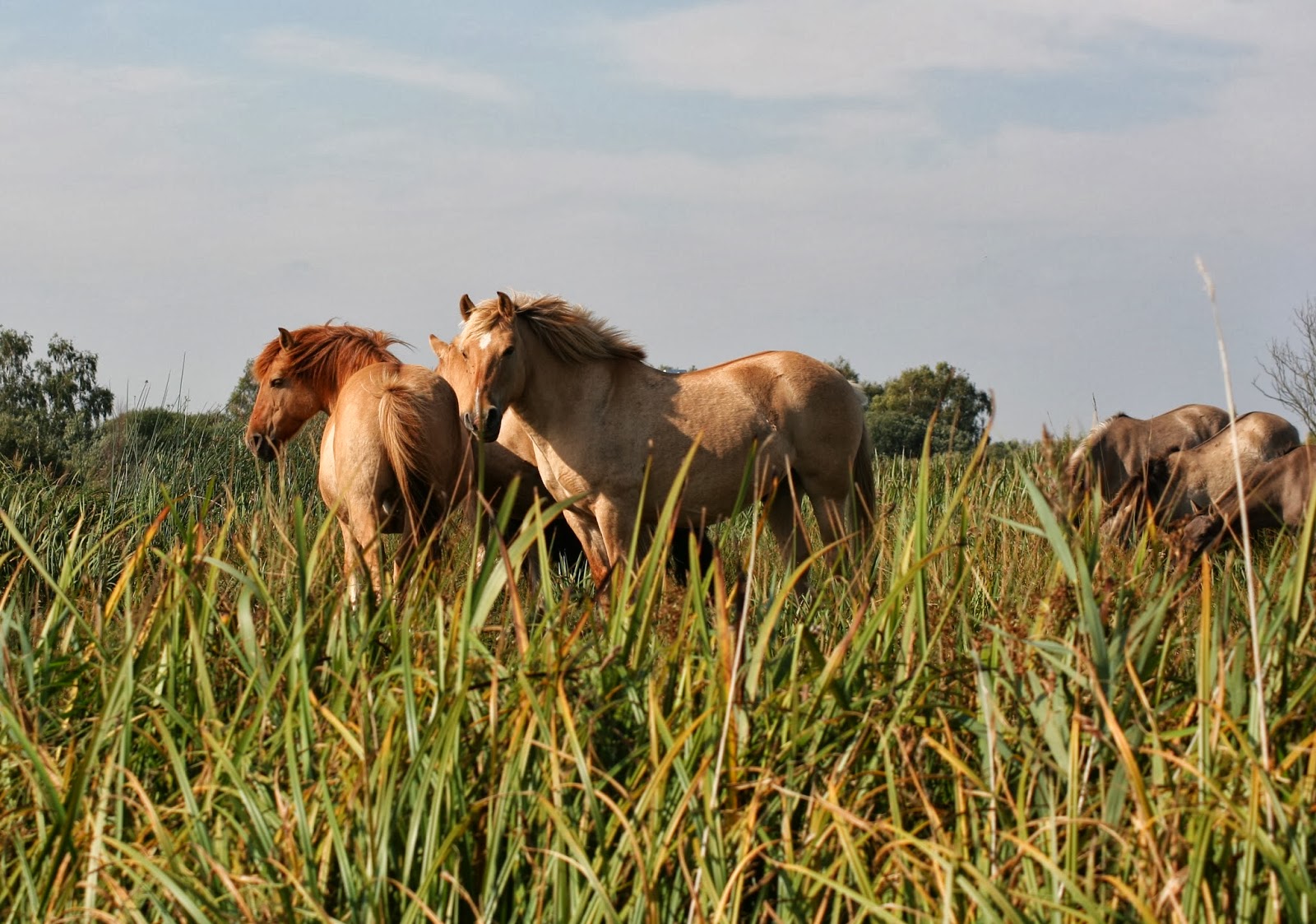
We opted to explore the site initially by taking a boat ride on the lodes, the man-made waterways that cross the site and eventually link it to the river Cam. The electric vessel made its way among the reeds, as our informed guide brought our attention to the Guilder Roses, red with fruit, that grew among the reeds. Where the reed beds gave way to meadows, the highland cattle, which are left apparently in a wild state, in their small groups, and the Konik geldings which manage the vegetation with their grazing looked on curiously. A male Common Darter dragonfly was our companion for part of the journey, sunning himself on the plastic floor of the boat until he was interrupted and chased off by a rival conspecific. While there were few birds about, there were plenty of dragonflies, Southern and Migrant hawkers, the males with electric blue bands on their slender abdomens and in their eyes patrolled the reeds, wheras Common and Ruddy darters sat motionless on the reeds, waiting to take off and snatch smaller insects out of the air, or engage in aerial combat to fend off their rivals. A buzzard wheeled effortlessly on the thermals in the blue sky, and a few late Swallows and House Martins were still on the wing, many of them juveniles, surely days away from the perilous trip South.  As if to provide a counterpoint to the wildlife, American AWACS aircraft were flying over occasionally all day. 

Konik Horses


NATO Boeing 707 AWACS aircraft.


Our boat eventually returned to the visitors centre and we treated ourselves to the inevitable National Trust coffee and cake, before heading back out along the bank of Wicken Lode. A sign at the visitors centre advised us of a couple of scarce birds visible from one of the hides, and a chat with the lady in the centre informed us of their most recent known location. We walked along the short grass beside the load. Roach and sticklebacks shoaled in the crystal clear water, and a Mute Swan hissed at us as we passed. We made in to the hide after an hour’s walk.  It had a view of the open water of ‘the Mere’ as it is known, a small area of still open water fringed by the ubiquitous Phragmites reeds and Carex sedges. Four Cormorants (Phalacocorax carbo) sat on a log that stuck out of the water, and a number of Mallard and Teal dabbled in the shallows in front of us. out across the water was the bird we were looking for. With a Grey Heron (Ardea cinerea) stood beside it, if only to demonstrate the size of the bird, was a Great White Egret (Ardea alba). This is a tall, long-necked and stunning looking heron that is somewhat rare in the UK. Indeed the first breeding pairs in Britain in recorded history bred on the Somerset Levels in 2012.   It stands taller than a Grey Heron, to which it is closely related, and its plumage is bright white, like that of the much smaller Little Egret which colonised the UK in the 1990s.  And here one was, preening itself nonchalently. 

The Great White Egret

I looked through the scope and scanned the bases of the reeds. There was another snipe opposite us, close to the egret, and a couple of smart Godwits, medium-sized waders with very long beaks, wading about and probing in the lake mud. But something at the bottom of the reeds caught my eye. Stripes. Golden stripes, against a dark coloured back, a bird hunkered down among the Phragmites. I wasn’t sure, but I showed the other birders and family members present. We figured it was a Jack Snipe. Seconds later it stood up, and wandered around with the characteristic bobbing motion associated with that species. Two rarities! A couple of smaller waders, periodically flying low across the water as they moved between feeding spots, turned out to be Dunlin, and the ducks were joined by a small party of scruffy looking Shoveller, ducks with massive bills, which arrived with an influx of Teal and Mallards.  We stayed and watched the birds, as the Jack Snipe faded once again into the reeds and his excellent camouflage.

We left the hide not long after the Egret took to the wing and flew off on slow lazy wing beats over the tops of the reeds, assuming the strange, front heavy shape of a heron in flight. we wandered back through the reeds, before setting out, just as the sun was beginning to drop nearer the long, flat fen land horizon. We found a small hide, just a couple of hundred metres from the visitors centre where we could watch a couple of Marsh Harriers, large, scarce birds of prey but increasingly familiar on the wetlands of South Eastern England, hunting over the reeds, wings raised up slightly, riding on the evening thermals. Every so often a coot or moorhen would be flushed from the reeds. These big birds of prey were splended but what happened next was something of a surprise. We wandered out of the hide and onto the board walk, which would take us on a short circuit around the area known as Sedge Fen. I saw ahead of us what looked like another Marsh harrier, sharing the same  profile in flight, so I raised my binoculars to look at it. This bird was moving faster than a Marsh Harrier, and when it stooped after something in the reeds, it moved quicker than any marsh harrier I had seen. Its’ wing tips were black, and its back a very uniform steely grey, apart from a white flash above its tail.  I wasn’t looking at a Marsh Harrier. I was looking at an adult male Hen Harrier, one of the most threatened and rarest breeding birds in Britain. This one wasn't breeding here, the UK population breed in the uplands and fly down to the coast in winter. He was probably passing through to a wintering ground further South; those that winter at Wicken Fen I learned from the informed volunteer at the visitors centre later do not typically arrive until later in the year.

A hen harrier. I had just returned from a year spent beside the Forest of Bowland, last breeding site of Hen Harriers in Britain, without ever seeing one, and here I was in Cambridgeshire, looking at such a beautiful, elegant adult male.

A successful days birding, I thought.


Sunday, 26 May 2013

RSPB Hodbarrow, or The Start of the Northern Summer


I want to blog about the buzzards, I really want to, but nothing but incoherent rage can come out of my mouth on the subject at the moment. Indeed, I cannot talk about it without incitement so I’m not going to. Instead I am going to tell you about all the trips I managed to squeeze in, between the GIS coursework, in  the last few days, the days summer arrived in Lancashire! Instead of raging against English (anti) Nature, and the game industry to whom they are in thrall, I am going to tell you all what a nice week I have had.  There will be more to come, think of this as “part one.”


Sunday took Natty and I to the RSPB and National Nature Reserve at Hodbarrow, on the West coast of Cumbria, near Millom, where apparently there is an ex RAF airfield and possibly a prison. It is also home to a large coastal lagoon where a colony of very special, on a UK level at least, Terns live. No sooner had we left the car park, and overcome the disappointment that for some reason dogs were permitted on the reserve, we were surrounded by the sound of birdsong. We could hear the scratchy melodies of Whitethroat, the full-on techno beats of Sedge Warbler, the tumbling melodies of willow warbler, and the repetitious, two-note song of Chiffchaff, the melody with flourish at the end of Chaffinch. A pair of blackcaps hopped about in an oak tree. The paths were lined with yellow flowering Gorse.  There were a few white butterflies about.

Rounding a corner, passing a pond attended by the obligatory pair of Mute Swans and large numbers of Swallows and Sand Martins, Natalie, ever the sharp-eyed entomologist, found me the season’s first Damselfly, sunning itself on a blade of grass. By the season and the red colour, it was probably a Pyrrhosoma nymphula, A large Red Damselfly. A couple of fresher damselflies were about, still to develop their adult markings.  The trees had only just entered full leaf, and one or two were still sparse. To see the first Damselfly of the year was a relief. The snow in Bowland and down into the Peaks at Easter is still a recent memory, as was Roeburndale in late April, sliding about in the pouring rain, and noticing the bluebells were still underground. We walked on and found a small cove. A few crab skins lay about on the beach. Out on the water we could see some Red Breasted Merganser, and a few Eider and Shelduck. Redshank and crows foraged in the mud. We were out of Morecambe Bay by now, having driven through the South Western corner of the Lake District National Park. Across the river Duddon the fells of South Lakeland stood out above the estuary mud.

We were crossing a small headland when we saw a bird of prey being mobbed, fairly relentlessly, by gulls. It drew toward us over the estuary. There is nothing unusual about seeing a buzzard or some such crossing a small strip of water, or getting mobbed by gulls, but raising my binoculars, this was no buzzard. Its long wings arched slightly like a gulls’, and its body was white, a dark stripe running through its eye. This was an Osprey! We couldn’t see a tag or a ring, and shortly the gulls had seen it off, back over the Duddon Estuary. To my mind this seemed too late to be a passage migrant, the internet reports the Rutland Water Ospreys already have chicks, it may have been one of the adults now nesting in the Lake District.

We had lunch on the beach and dipped our toes in the still freezing water. A few Sandwich and Common Terns flew by, some diving for fish, and some skimming the water surface. Hodbarrow is one of the few places little terns can be seen in the UK. They breed on islands left behind by abandoned Iron workings on the site. The industrial history of the Hodbarrow reserve is rich, and plain to see, the muddy soil stained red by haematite, old quarries scarring the landscape and the odd fragment of a concrete structure protruding among the rushes. We walked the sea wall to the hide were we were entertained by the pretty Little Terns, sweet looking little birds with black caps, yellow bills and short forked tails. They were feisty, defending their nest site against anything, mobbing even larger terns as they passed by. They had arrived only a few days ago, but now there seemed to be as many as forty of them, nest scrapes already established on the bare bars of stone in the lagoon, presumably stacks of spoil from some quarrying operation. Despite their aggression little terns are infamously vulnerable to predators. Here, electric fences, and broken fences, were all over the islands, presumably from attemptos to protect these nationally rare (but globally distributed) birds.  I have seen Little Tern before, but only when I was volunteering in Gialova in Greece, in a place which bore odd similarities to Hodbarrow.  A few Eider swam in the still water, one of the males very vocal, tipping his head back and making the classic Eider call, perhaps best described as an impression of Kenneth Williams. The smart sea ducks dabbled about for a while. Great crested grebes swam around, paired up, no longer dancing as the summer is now in full swing, but not yet with the little chicks on their backs, as will I have no doubt charm us in the months to come.
We ended the day with a spot of sea watching, in the distance, Gannets and Kittywakes could be seen diving for fish in the open water among flocks of terns and black headed gulls. Gulls and Eider, and a few Red Breasted Merganser bobbed on the surface. The falling temperature and building wind coming in off the sea reminded us of our latitude, but among the birds, the swifts and swallows flying all around us on the walk back to the car park, we could be in no doubt that the summer had begun.