Showing posts with label National Trust. Show all posts

Friday, 20 November 2020

Wandering in the Strangest Summer: Curbar, Froggatt and White Edge via the Longshaw Estate. 20th June 2020

20th June 2020 

I parked up on the bend in the road up to Curbar Edge from Curbar, camera-less sadly following its unfortunate inundation in the storm which had caught me at Bradford Dale, and took the low path, through the trees, passing some lovely fresh Small Tortoiseshells, and blooming Foxgloves. The woods were fairly bird-quiet, so I made my way up onto the moor, with the Heather and Meadow Pipits. There were loads of people up here, making their entertainment in the outdoors, though perhaps this is typical. A smart Whinchat, a charming summer visitor, migrant relative of the Stonechat, perched atop a frond of Bracken.


Photos taken on Curbar Edge in 2018


I spent a few moments in solstice meditation at the Stone Circle, ancient marker of this rather magical place high in the Eastern moors, and also took in the vistas across the valley, as the Swifts wheeled above and below me. I strolled downhill into Hay Wood, which was beautiful and alive with birdsong, and charming wrens. I reached the Longshaw Estate, National Trust land. The National Trust in Derbyshire was sadly mired in controversy a few years ago, when a gamekeeper was seen to place a plastic decoy Hen Harrier, a fiercely persecuted, endangered and magnificent raptor, and wait by it with a gun, until walkers sent him packing and the Trust ended his employer's shooting lease. This incident did not happen here, but on land near the Snake Pass, according to Raptor Persecution UK, but unfortunately some of the Longshaw Estate remains under grouse shooting management.

There remains a rich, wild beauty to Longshaw's moorland fringes, its moorland though well walked is home to some remarkable wildlife. A Hobby, a small migrant falcon about the size of a kestrel, but faster and more agile,  hunted over a blooming moor, its underside boldly streaked, a black mustache on its white cheeks. The sound of aero engines made me look up, as a Harvard trainer flew loudly overhead in formation with a couple of smaller machines and a Nanchang. Further engine sounds a few moments later caused me to look up again, and a Hurricane, iconic fighter of the Battle of Britain, followed the same path through the sky. 

Following my pleasant aviation interlude I continued onto the parkland, where a handsome Cuckoo sat silent, my first sighting of this bird this year. I arrived at the heart of the Trust's visitor operation, a popular temporary cafe in a wooden shed, and enjoyed a local ice cream before continuing my exploration of the parkland, enjoying Nuthatches and Coal Tits busy in the branches. A pond on the estate is a great site to see Mandarin ducks.  

I left the Longshaw Estate and all its people behind, and continued onto the high, undulating expanse of White Edge, part of Big Moor. This was quieter, though a family disconcertingly allowed their dog to run off lead. Curlews bubbled their mournful calls, and small bands of deer grazed peaceably below, and Meadow Pipits sang.  A beautiful Stonechat put on a distraction display beside the path.

Stonechat photographed at South Walney in 2015


As I returned to the car, I was surprised to find many young people gathered around, dressed for a night out in alternative stylings, perhaps en route to some Solstice gathering. Were I ten years younger I might have attempted to join them. I hope they had a good night. 

Birds Seen: Mandarin Duck, Mallard, Tufted Duck, Curlew, Woodpigeon, Cuckoo, Swift, Hobby, Magpie, Carrion Crow, Coal Tit, Great Tit, Skylark, Swallow, Willow Warbler, Blackcap, Wren, Nutchatch, Blackbird, Song Thrush, Robin, Whinchat, Stonechat, Pied Wagtail, Meadow Pipit, Chaffinch, Goldfinch. 

Mammals: Grey Squirrel, Brown Hare, Red Deer. 

Butterflies: Small Tortoiseshell, Red Admiral, Meadow Brown. 

Flashback: Curbar Edge, 30th May 2020

Natty and I took a brief drive, the first one since lockdown for a birdy trip together, to Curbar Edge on he Eastern Moors. The sun was high and bright but a gentle breeze cooled the tops. There were many families out enjoying the sun, but possible disturbing the birds somewhat. Meadow Pipits were plentiful and some stonechats a welcome sight, and there was a beautiful red Cardinal Beetle on the heather.


Cardinal Beetle on Curbar Edge. 


Unfortunately we were witness to an unfolding disaster, as a thick column of smoke rose from the moors somewhere to the North of us. A call to the Eastern Moors RSPB warden to alert him, we found his number online thanks to the miracle of mobile technology, confirmed it was on Bamford Moor, near the Derwent reservoirs. Six fire engines, and a helicopter, I learned on the internet, were needed to put it out, with the support of gamekeepers and other land workers.  In these dry summers, keep your barbecues off the moors, people, and don't smoke up there. A fire at this time of year is devastating for bird life, grouse, raptors and stonechats alike nest in the heather, and the frequency of fires in recent summers far exceeds natural levels.

The Bamford Moor Fire from Curbar Edge. 


We strolled sadly back down the low path, through the leafy birch woodland, where Natty's expert ears picked out Yellowhammer and Cuckoo calling.

Birds Seen: Mallard (flew over) Cuckoo (Heard only) Jackdaw, Carrion Crow, Skylark, Willow Warbler, Chiffchaff, Song Thrush (heard only) Robin, Stonechat, Pied Wagtail, Meadow Pipit, Chaffinch, Goldfinch, Yellowhammer (heard only) 

Not Birds Seen: Cardinal Beetle, Small Tortoiseshell, Small Heath, Green Veined White. 

Saturday, 12 October 2013

Wicken Fen

Please excuse the months it has been since I last blogged. A master’s degree can rather suck up ones free time. Which is a shame, as my field work on Warton Crag would have offered a lot to blog about. However, please forgive. 

the historic wind pump at Wicken Fen.


Having got back to the Home County, perhaps a little reluctantly, after my year in the wonderfully wet and windswept North West, I took a ride up to the Cambridgeshire fens with my folks for a day on the 1st October. We went to the National Trust’s Wicken Fen, one of the oldest Nature Reserves in the country. A small visitors centre, a glorified souvenir shop with the typical National Trust merchandise at typical National Trust merchandise greeted us. We stepped outside into the sedge fen, where a boardwalk led us through the tall reeds to a small windmill, or wind pump, a small reminder of the times when the fens were being drained for agriculture, when these once vast wetlands shrank, consigning much of their wildlife and the way of life of their people to history.  They once stretched across a huge swathe of East Anglia, the reed and sedge regularly harvested for building materials maintaining the open reed beds, and the people fishing and hunting wildfowl. Cranes used to nest here, alongside a huge range of bird life through the seasons. Here at Wicken, a fragment survives. The reeds still grow tall, sometimes rising to head height as I walked along the boardwalks among them, and they are still harvested to keep the site open. Patches of Carr woodland, with silvery Sallow and Alder trees still offer a habitat to passerine birds. The site was saved by the National Trust in 1899, when part of the reserve popular with the botany department at Cambridge University, and used by insect collectors was bought by the nascent heritage NGO.  On summer nights the banks of the loads were lit up by the ‘Edison lighthouses’ of numerous moth trappers. The Cambridgeshire fens once hosted Large Copper and Swallowtail butterflies, the former now gone from the UK, and the latter confined to the Norfolk Broads, despite attempts to reintroduce both species over more recent decades.

The Common Darter on our boat trip


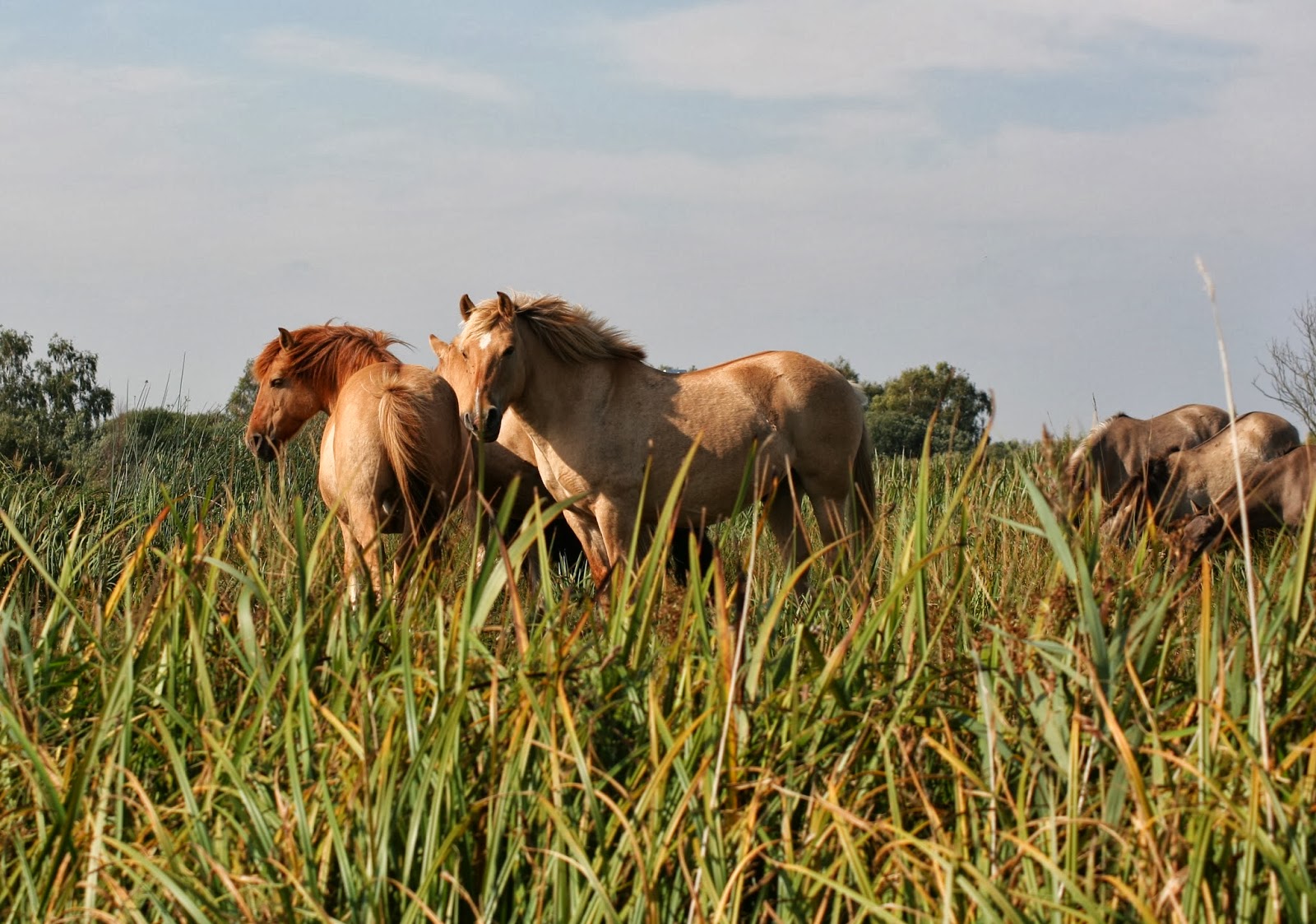
We opted to explore the site initially by taking a boat ride on the lodes, the man-made waterways that cross the site and eventually link it to the river Cam. The electric vessel made its way among the reeds, as our informed guide brought our attention to the Guilder Roses, red with fruit, that grew among the reeds. Where the reed beds gave way to meadows, the highland cattle, which are left apparently in a wild state, in their small groups, and the Konik geldings which manage the vegetation with their grazing looked on curiously. A male Common Darter dragonfly was our companion for part of the journey, sunning himself on the plastic floor of the boat until he was interrupted and chased off by a rival conspecific. While there were few birds about, there were plenty of dragonflies, Southern and Migrant hawkers, the males with electric blue bands on their slender abdomens and in their eyes patrolled the reeds, wheras Common and Ruddy darters sat motionless on the reeds, waiting to take off and snatch smaller insects out of the air, or engage in aerial combat to fend off their rivals. A buzzard wheeled effortlessly on the thermals in the blue sky, and a few late Swallows and House Martins were still on the wing, many of them juveniles, surely days away from the perilous trip South.  As if to provide a counterpoint to the wildlife, American AWACS aircraft were flying over occasionally all day. 

Konik Horses


NATO Boeing 707 AWACS aircraft.


Our boat eventually returned to the visitors centre and we treated ourselves to the inevitable National Trust coffee and cake, before heading back out along the bank of Wicken Lode. A sign at the visitors centre advised us of a couple of scarce birds visible from one of the hides, and a chat with the lady in the centre informed us of their most recent known location. We walked along the short grass beside the load. Roach and sticklebacks shoaled in the crystal clear water, and a Mute Swan hissed at us as we passed. We made in to the hide after an hour’s walk.  It had a view of the open water of ‘the Mere’ as it is known, a small area of still open water fringed by the ubiquitous Phragmites reeds and Carex sedges. Four Cormorants (Phalacocorax carbo) sat on a log that stuck out of the water, and a number of Mallard and Teal dabbled in the shallows in front of us. out across the water was the bird we were looking for. With a Grey Heron (Ardea cinerea) stood beside it, if only to demonstrate the size of the bird, was a Great White Egret (Ardea alba). This is a tall, long-necked and stunning looking heron that is somewhat rare in the UK. Indeed the first breeding pairs in Britain in recorded history bred on the Somerset Levels in 2012.   It stands taller than a Grey Heron, to which it is closely related, and its plumage is bright white, like that of the much smaller Little Egret which colonised the UK in the 1990s.  And here one was, preening itself nonchalently. 

The Great White Egret

I looked through the scope and scanned the bases of the reeds. There was another snipe opposite us, close to the egret, and a couple of smart Godwits, medium-sized waders with very long beaks, wading about and probing in the lake mud. But something at the bottom of the reeds caught my eye. Stripes. Golden stripes, against a dark coloured back, a bird hunkered down among the Phragmites. I wasn’t sure, but I showed the other birders and family members present. We figured it was a Jack Snipe. Seconds later it stood up, and wandered around with the characteristic bobbing motion associated with that species. Two rarities! A couple of smaller waders, periodically flying low across the water as they moved between feeding spots, turned out to be Dunlin, and the ducks were joined by a small party of scruffy looking Shoveller, ducks with massive bills, which arrived with an influx of Teal and Mallards.  We stayed and watched the birds, as the Jack Snipe faded once again into the reeds and his excellent camouflage.

We left the hide not long after the Egret took to the wing and flew off on slow lazy wing beats over the tops of the reeds, assuming the strange, front heavy shape of a heron in flight. we wandered back through the reeds, before setting out, just as the sun was beginning to drop nearer the long, flat fen land horizon. We found a small hide, just a couple of hundred metres from the visitors centre where we could watch a couple of Marsh Harriers, large, scarce birds of prey but increasingly familiar on the wetlands of South Eastern England, hunting over the reeds, wings raised up slightly, riding on the evening thermals. Every so often a coot or moorhen would be flushed from the reeds. These big birds of prey were splended but what happened next was something of a surprise. We wandered out of the hide and onto the board walk, which would take us on a short circuit around the area known as Sedge Fen. I saw ahead of us what looked like another Marsh harrier, sharing the same  profile in flight, so I raised my binoculars to look at it. This bird was moving faster than a Marsh Harrier, and when it stooped after something in the reeds, it moved quicker than any marsh harrier I had seen. Its’ wing tips were black, and its back a very uniform steely grey, apart from a white flash above its tail.  I wasn’t looking at a Marsh Harrier. I was looking at an adult male Hen Harrier, one of the most threatened and rarest breeding birds in Britain. This one wasn't breeding here, the UK population breed in the uplands and fly down to the coast in winter. He was probably passing through to a wintering ground further South; those that winter at Wicken Fen I learned from the informed volunteer at the visitors centre later do not typically arrive until later in the year.

A hen harrier. I had just returned from a year spent beside the Forest of Bowland, last breeding site of Hen Harriers in Britain, without ever seeing one, and here I was in Cambridgeshire, looking at such a beautiful, elegant adult male.

A successful days birding, I thought.


Sunday, 20 January 2013

Arctic Waders and Icicles at Heysham Head.


If our proximity to the sea has denied me the pleasure of walking in the snow here in Lancaster, I thought, after throwing my Wildlife Monitoring Techniques “The Bird Survey” and “The Insect Survey” into the drop box at the University, the culmination of months of fairly to moderately hard work and procrastination, I may as well go for a walk  by the sea. 

Song Thrush at Heysham.


I drove to the prettier end of Heysham, the Port Town  Morecambe, and parked up outside the Half Moon Beach Cafe, the one with the disconcerting flags, and stood where the road turns to approach the port, and the two imposing structures which are the two nuclear power stations. Heysham itself remains in the running for a third, but it would, it seems, take a lot of destruction to squeeze in such a building on this site, where archaeological remains, caravan sites, an active port and huge flocks of wading birds are already pressed together.   I do not know which other Northern sites are in the running for the dubious honour, and nuclear seems like a grubby compromise, with the emphasis on the grubby, for the future of energy, but Heysham doesn’t need it.
View of Heysham Power Stations.
A song thrush hopped about and posed for a couple of photos on the bank near the fence, and a cluster of Knot huddled together against the biting cold.  The grey winter plumage of the Knot, Red Knot in acknowledgement of their rust coloured breeding plumage, and their hunched posture against the wind, just seems fitting on such an icy day. Appropriately too, these birds breed in the arctic. Even their scientific name, Caladris canutus, invoking the Norse king Knut, speaks of wintry coastlines and the power of the tide which governs their lives. .  The breeze was not strong  but it was bitter. Smaller Turnstones had a different strategy, busily gathering food, picking about among the pebbles. A flock of finches flew in from over the two imposing cuboid power stations. I got breifly excited, scanning their number for some of the elusive passerines, Snow Buntings and Twite, which sometimes use this coast when the cold weather forces them off their more normal, upland habitats. They can deal with the rocky substrate. The birds turned out to be greenfinches, and they foraged in the bushes. I walked down the beach. The water flowing out of the red soil had formed large icicles, like vitreous stalactites,  which hung from the subtle overhangs of the eroding sections at the top of the beach, as if just to underline the fact it was cold.

Icicles.


A flock of noisy, piping little birds flew in low over the waves.   My binoculars revealed them to be Ringed Plovers, with bold black masks on their faces and dark collards. These smart, and inevitably cute little birds looked hardly resilient to the cold, but they joined the foraging turnstones in frenetic activity on the beach. I walked up onto Heysham Head, the green promontory of land with National Trust signs on it. Wrens hissed angrily in the bushes, there were several of these feisty little birds of the scrub around.  How tiny bodied birds cope with the ice is a constant source of wonder, but they do.

I kept my eye on the rocks below. A couple of curlews sat with their heads and long beaks under their wings, with turnstones at their feet, and a ringed plover wandering about. One looked up, irritated by the small birds, and eventually took off over the waves. I scanned the surface of the sea, hoping for some interesting sea birds seeking the shelter of Morecambe bay, or better still a dark dorsal fin rising out of the water. I saw no fin, but a little crowd of Oystercatchers, black with white bands on their wings, which flew around the headland and settled somewhere out of sight.  Distant gulls were Common Gulls, far from the commonest of gulls, but winter visitors to most of England and largely breeding birds of further North than this, marked out by the big white mirrors in their black-tipped primaries.  A brown bird over the water turned out to be one of the sleepy curlews, perhaps irritated into flight by busy Turnstones.

Wakey Wakey!
Note the Ringed Plover at the bottom left. I knew he was there when I took the photo. Honest!


I walked up to the top, close to the chapel of St Patrick, a ruin which stands on the top of Heysham head, overlooking the town of Morecambe and its promenade, with its mysterious open stone graves, hewn into the rock, presumably the reason the head has been spared from industry and providing the interest of the National Trust.  By now the cold which numbed my fingers was creeping up my arms and I thought perhaps it was time to turn around. A dog, out for a walk with a few canine comrades and their master, put up a couple of Lapwings. I descended a little and saw the Oystercatchers on the rocks below me.  There must have been a couple of hundred, and they looked settled for the night, although more birds were flying in to join them. A duck caught my eye and closer inspection revealed it to be a fish-eating merganser type. She was a female with a brown head and grey flanks splashed with white. The brown of her head and grey of her body seemed to fade into each other, and the white patch beneath her beak was edged diffusely with brown feathers. The crest was thin, and looked like a Mohawk. I managed to take a couple of photos, blurry, distant record shots in the fading light, so I stand to be corrected, but I wrote down Red-Breasted Merganser, less common round here than the very similar, and currently range-expanding Goosander.  It dived frequently, as did the few cormorants which also sat on top of the waves.

Female Red Breasted Merganser


As I walked down the path toward the car park, joined by increasing numbers of dogs and dog walkers, signalling the end of the working day, I made my way back down the head toward the car park, and the welcome opportunity to warm up after a day by the coast.  Twite and Snow bunting less, but nonetheless having enjoyed the opportunity to do a bit of coastal birding and  newfound, and temporary freedom from impending essay deadlines.

Oystercatchers


Bird List for Heysham head, 18th January 2012: (International Common names/Authors preference)

Song Thrush (Turdus philomelos) Red Knot (Caladris canutus) Turnstone (Arenaria interpres) Common Redshank (Tringa totanus) Greenfinch (Carduelis chloris) Northern Lapwing (Vanellus vanellus) Greater Cormorant (Phalacrocorax carbo) Oystercatcher (Haematopus haematopus) Common Gull (Larus canus) Herring Gull (Larus argentatus) Black Headed Gull (Croicocephalus ridibundus) Wren (Troglodytes troglodytes) Carrion Crow (Corvus corone) Ringed Plover (Charadrius hiaticula) Red Breasted Merganser (Mergus serrator) Blackbird (Turdus merula)