Showing posts with label Hen Harrier. Show all posts

Thursday, 16 August 2018

A tale of joy and heartbreak- An unforgettable encounter in Orkney


A couple of weeks ago, I was fortunate enough to visit the Orkney islands off the North coast of Scotland. A patchwork of ancient sites, standing stones, wild seas and cattle farms, of jewelled wild flower meadows and moorland in bloom, where blue butterflies and bumblebees live only in sheltered hollows, where Neolithic villages and places of worship stand testimony to the ingenuity of our ancient ancestors, Orkney is a remote, and fascinating place.


One afternoon, I drove in the sunshine to the RSPB’s Cottascarth viewpoint, on the moors not far from Finstown.  While on the road I encountered, and photographed, very badly as it turned out, a beautiful Oystercatcher chick, in the company of a parent. The chick still had some down, though its adult feathers had begun to show, and it was nearly ready to take to the skies. Oystercatchers breed in substantial numbers in Orkney’s farmland. I took the narrow, twisting track through farm buildings to the viewpoint, where, green-roofed and windowed, but still clearly crafted from abandoned croft buildings, stood the RSPB hide.  Optimistic, I waited and enjoyed the surroundings, hoping to catch a glimpse of a Hen Harrier.  The occasional call of a Curlew echoed from the hills, or an Oystercatcher alarm call rose from the farmland and the flock of linnet which alighted briefly on the roof of the hide. A few sheep grazed.  After about an hour the Harrier appeared, a male, a smart, grey bird, with black, fingered wingtips, a grey ghost over the moorland, hanging on wings with the characteristic dihedral.  Hen Harriers hunt in part by hearing, and by sight, and prey on voles, as well as young ground nesting birds.   The male made a couple of passes, his attention fully focussed on the ground below, looking for voles or any unfortunate small birds, before disappearing over the ridge into the valley behind. I waited another few minutes, hoping this magnificent bird would reappear, but he did not, and I began to make my way back to the small car park ready to head back to my camp site.


As made my way back to the car I saw the male glide over the place I had just been standing. With some disappointment at missing out on this close view, enjoyed his majestic hunting through binoculars. I headed back down to the coast roads. Driving slowly on empty roads with my eyes open for birds, I became aware of the mother Oystercatcher I had encountered earlier. She was loudly and aggressively mobbing something in the field, down beyond a low brow hidden from sight. She’d break away bto chase off a passing Hooded Crow, though these birds did not seem to go far, then returning to her target on the ground, strafing with her sonic weapon, her passes low and frequent, her calls rhythmic but high and frantic. I slowed down, wondering what could possibly have enraged her like this. Then, just 15 metres or so from my window, I saw what had happened. On top of a sad, white lump with feathers, feet extended toward the sky, stood a female Hen Harrier. Her golden yellow eyes, set in a subtle facial disc recalling an owl, glanced to me, before, unconcerned by me or the distraught mobbing of the adult Oystercatcher, returning to plucking her prize.


My heart in my mouth, I silently reached for my camera and grabbed a few photos through the passenger window.  I watched the bird, predator, as she continued to remove the downy feathers from her prey, scattering them to the wind like dandelion seeds, calmly, yet so alert, eyes scanning in all directions.  The adult did not relent from calling.


Suddenly the bird was on the move, a grey shape emerging from the bushes. A farm cat burst out from cover toward the bird of prey. With her wings spread, her imposing size was apparent. She struggled into the air with her prize, but it was a little too heavy, and she dropped it. The dead Oystercatcher chick flopped limp to the ground. She swooped in on it again, and stood on it, bearing a steely look, extending her wings to protect her prize.  But the farm cat was determined. The next spring it made, the bird was off and flying, back toward the hills, and the Oystercatcher chick was clasped firmly in the jaws of the tabby.  It sloped off, toward some farm buildings to enjoy its prize. I considered some attempt to scare the cat off, in the hope the Harrier would return, but I figured even semi-feral mammals must eat, and a cat brave enough to take on an adult Hen Harrier, talons and all, must be very hungry indeed.


My heart still in my mouth, I sat for a while,  as a band of thick, grey cloud rolled in over the sea, and the cool rain began to fall.  A double rainbow arced from the horizon. A confused and angry adult Oystercatcher stood on a fence post, yelling at the wind.


Tuesday, 21 October 2014

Open letter #1 An open letter to my local MP in support of a ban on Driven Grouse Shooting.


I am writing to express my support for the campaign to criminalise the driven shooting of Red Grouse (Lagopus lagopus scotius), and in support of the E-petition to ban it, started by Dr Mark Avery, which has received over 18,500 signatures at time of writing.  The campaign brings together grassroots conservation campaigners and seeks to address the tragic and unacceptable decline and potential extinction of the Hen Harrier (Circus cyaneus) as an English breeding bird.  It is my belief that a full ban on driven grouse shooting- where grouse are flushed from the heather by beaters onto the waiting guns-is the only way we can stop the criminal elements in this industry, who have proved themselves pathologically incapable of leaving magnificent birds of prey alone. The Hen Harrier, despite a range of efforts to save it, has now been reduced to a few breeding pairs in England and Wales.  After several decades, co-operation between Grouse shooting enterprises and government conservation agencies and NGOs has been a failure, and the English Hen Harrier population has continued its catastrophic downward trajectory.  If grouse shooting itself were criminalised, the profit in killing Hen Harriers would be wiped out overnight. It is already illegal to kill Hen Harriers, but gamekeepers and their landed masters continue to flout the law, as enforcement is minimal and the vast uplands hard to police, especially on wildlife crime budgets reduced by the Conservative party.  It is easy to discretely destroy a nest, or place bait or a trap, or shoot these trusting birds, as they are highly reluctant to abandon their nests and young.  It is far harder to conceal a party of guns and a band of hired beaters, and harder still to market a criminal shoot.  I am sure the League Against Cruel Sports or similar organisations would be able to support the law enforcement agencies, as they do in the case of Fox hunting, which has mercifully been criminalised, ensuring prosecutions where grouse are deliberately chased from cover onto the waiting guns.

The pro-shooting lobby claim that a ban on driven grouse shooting would damage rural economies, and grossly inflated figures tend to be trotted out by bodies such as the Game and Wildlife Conservation Trust and the Countryside Alliance, figure which typically represent the economic value of shooting as a whole, and not that of driven grouse shooting exclusively. It seems unlikely that driven shooting is of great benefit to the rural economy. It is seldom profitable and relies heavily on public subsidy, which surely undermines the Conservative values of enterprise and market freedom which are so often espoused by the clients, landowners and the current government of which you are a part.   Furthermore, shooting sees large swathes of access land closed to the public during the summer school holidays, at the height of the tourist season, and when the purple moorland is in full bloom and at its most beautiful. This cannot benefit areas like the Forest of Bowland and the North Yorkshire Moors National Park, where business relies so heavily on tourism. A restored Hen Harrier population, with watch points run by organisations such as the Wildlife Trusts and the RSPB, and by local entrepreneurs however, could make a substantial economic contribution, more than replacing any losses caused by the banning of driven grouse shooting, and would not represent a drain on public funds.

Grouse shooting has other damaging impacts on the uplands, as heather burns, designed to artificially create habitat and food sources for unnaturally high numbers of grouse, has an appreciable impact on hydrology and may increase the risk of flooding. Too high a frequency of burns can also damage the peaty upland soils and peat bogs, vital carbon sinks in the fight against climate change, and can damage floristic diversity in these scarce, and distinctly British habitats.

The Hen Harrier is an inspiring sight whether in summer in the uplands or in the lowlands during the winter, as it ghosts over the reed beds, and I hope one day to be able to witness it and not see the conversation with any other witnesses turn to persecution.  It would be a tragedy if it were lost so that frustrated city boys and foreign oligarchs with guns can blast barely flightworthy juvenile grouse out of the sky on the ‘Glorious’ Twelfth.  Only three Hen Harrier nests successfully fledged young in 2014, and in 2012 there were no successful nests.  Even the most optimistic estimates place the English breeding Hen Harrier population at around 12 pairs, while published estimates for the potential population, given the existing habitat, range between 40 and 200 pairs.  It is clear that action is needed now, and that the government should heed the public call for a ban on driven shooting during this parliament,  before the Hen Harrier is gone, and it is too late. 


The Epetition is available here:  http://epetitions.direct.gov.uk/petitions/65627


Sunday, 12 January 2014

An Open Letter to my local MP on the fate of the Hen Harrier in England and Wales

The below is an open letter to my local MP on the subject of Hen Harrier persecution. I recently spent a year living near the Forest of Bowland, where I never got to see a Hen Harrier, despite it being their last stronghold, and not for want of looking. The shooting industry is to blame.  Soon the only Hen Harriers in England will be the wintering individuals found on wetlands in the South East.

Use it for inspiration, ideas, whatever, but I must request that you please do not treat it as a form letter and produce copies of it.

Dear Mrs Watkinson

I am writing to express my disappointment about some of the recommendations of the Environmental Audit Commission to the government, made in October 2013, in particular the failure to call for the introduction of an offence of ‘vicarious liability’ for landowners who fail to prevent the persecution of birds of prey on their land in England and Wales. The offence of Vicarious Liability is essential if we are to reverse the terrible decline in birds such as the Hen Harrier (Circus cyanaeus) in the UK.

There is a widespread perception among gamekeepers and others in the shooting industry that birds of prey like C. cyanaeus inflict substantial losses on the quarry species which the industry commercially exploits, and as such, its persecution is ongoing and well documented, despite the legal protection it is supposed to receive.  Gamekeepers, where caught, can be tried and jailed for the illegal killing of Hen Harriers, however, in what can only be described as an affront to reason and to social justice, their employers enjoy impunity. Therefore, were I a land owner, in charge of a shooting estate, I could ask my employee to kill a hen harrier, and face no threat of prosecution, a mere denial being sufficient to absolve me of responsibility. Indeed, many gamekeepers convicted of offences against birds of prey have stated that their employer did nothing to discourage wildlife crime by their staff.  This situation has to change. If a crime boss pays an assassin to kill for him, or pays a criminal to steal a precious item, then both parties are clearly liable for that offence. Why should this change when the crime is committed against endangered wildlife, and the victims are biodiversity and all who care for it? When a gamekeeper commits an offence against wildlife, both he and his employer, who is ultimately responsible, should face jail.  One may suggest that issues of social class on the part of the lawmakers, willing to send a country lad to jail, but heaven forbid one of their colleagues should be put in such a situation, is responsible for this obvious inadequacy in the law.   

Another option which could be explored, perhaps in addition to Vicarious Liability, would be to introduce a policy of licensing for Grouse Moors and other areas used by the shooting industry.  Thus, after a confirmed incidence of raptor persecution, or the use of an illegal snare, for example, the licence for shooting on an estate could be revoked for a fixed time period, such as 5 or 10 years. This may provide an effective economic deterrent, ensuring that the persecution of raptors becomes harmful to the profit margins of the businesses responsible.  Where raptors are shot, shoots are cancelled for years to come, and profits forgone.  In respect of the well documented beneficial effects managing for shooting can have for invertebrate diversity, effective legislation must be employed to prevent unscrupulous landowners ‘repurposing’ the moor or discontinuing management, and interim arrangements to maintain the vegetation cover and wildlife value could be introduced.   Licences may be removed regardless of whether a successful criminal prosecution has occurred.  Such a move may complement existing criminal legislation, providing the conservation and law enforcement agencies with the equipment needed to bring the criminal ecocide of the shooting industry under control.

Hen Harriers, Britain’s most endangered bird, have failed to breed in the Forest of Bowland, Lancashire, in 2013, and in the summer of 2012, Bowland Betty, one of the last of her kind to be fledged in England, a marked and tagged individual, much loved by the local community in Bowland, was shot dead while crossing a grouse moor in Yorkshire. No-one has ever been brought to justice for her killing, and the frustrated city boys on weekend jollies continue slaughter grouse with their shotguns for fun, returning great profits for her killers, oblivious or indifferent to the ecocide they support.  Grouse moor operators also rake in vast sums of money through public subsidies, intended to support food production but freely taken by the shooting industry to line its pockets, and these too are unaffected when birds of prey are killed. Indeed, economic measures against criminals in the shooting industry seem very straightforward and easy to take. What is clear is that measures to protect our birds of prey are needed, and needed immediately, to deter shooting interests from continuing to depauperate our wild countryside of predators and rob everyone who enjoys living in a healthy environment with thriving ecosystems.  Please act now to protect birds of prey.

Yours Sincerely

JohnisJae RGB MSc

Further information about Bowland Betty available here:  http://www.rspb.org.uk/community/ourwork/skydancer/b/skydancer/archive/2012/12/10/bowland-betty-final-update.aspx

Petition Calling for Grouse Moor Licencing here: http://epetitions.direct.gov.uk/petitions/46473


Saturday, 12 October 2013

Wicken Fen

Please excuse the months it has been since I last blogged. A master’s degree can rather suck up ones free time. Which is a shame, as my field work on Warton Crag would have offered a lot to blog about. However, please forgive. 

the historic wind pump at Wicken Fen.


Having got back to the Home County, perhaps a little reluctantly, after my year in the wonderfully wet and windswept North West, I took a ride up to the Cambridgeshire fens with my folks for a day on the 1st October. We went to the National Trust’s Wicken Fen, one of the oldest Nature Reserves in the country. A small visitors centre, a glorified souvenir shop with the typical National Trust merchandise at typical National Trust merchandise greeted us. We stepped outside into the sedge fen, where a boardwalk led us through the tall reeds to a small windmill, or wind pump, a small reminder of the times when the fens were being drained for agriculture, when these once vast wetlands shrank, consigning much of their wildlife and the way of life of their people to history.  They once stretched across a huge swathe of East Anglia, the reed and sedge regularly harvested for building materials maintaining the open reed beds, and the people fishing and hunting wildfowl. Cranes used to nest here, alongside a huge range of bird life through the seasons. Here at Wicken, a fragment survives. The reeds still grow tall, sometimes rising to head height as I walked along the boardwalks among them, and they are still harvested to keep the site open. Patches of Carr woodland, with silvery Sallow and Alder trees still offer a habitat to passerine birds. The site was saved by the National Trust in 1899, when part of the reserve popular with the botany department at Cambridge University, and used by insect collectors was bought by the nascent heritage NGO.  On summer nights the banks of the loads were lit up by the ‘Edison lighthouses’ of numerous moth trappers. The Cambridgeshire fens once hosted Large Copper and Swallowtail butterflies, the former now gone from the UK, and the latter confined to the Norfolk Broads, despite attempts to reintroduce both species over more recent decades.

The Common Darter on our boat trip


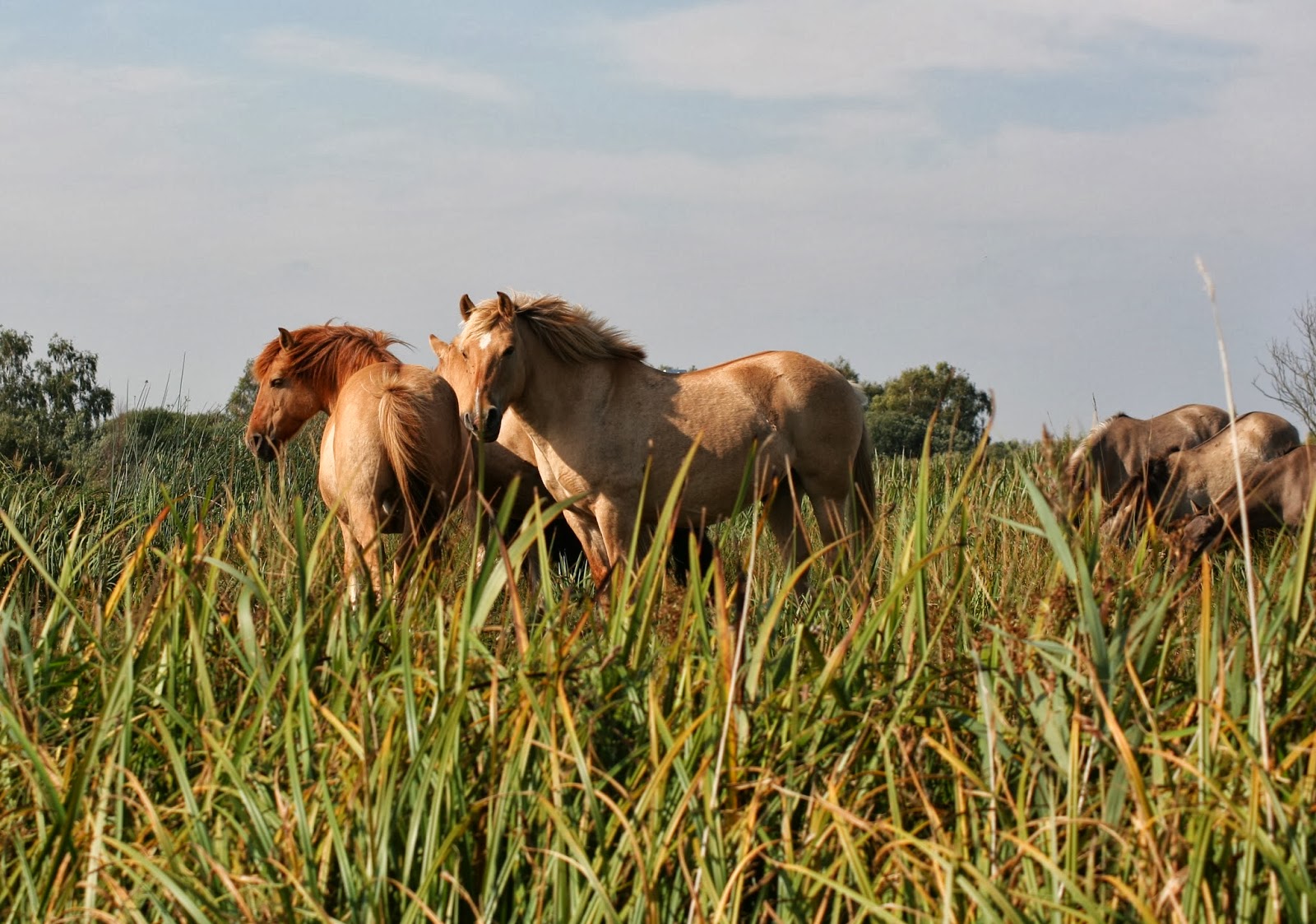
We opted to explore the site initially by taking a boat ride on the lodes, the man-made waterways that cross the site and eventually link it to the river Cam. The electric vessel made its way among the reeds, as our informed guide brought our attention to the Guilder Roses, red with fruit, that grew among the reeds. Where the reed beds gave way to meadows, the highland cattle, which are left apparently in a wild state, in their small groups, and the Konik geldings which manage the vegetation with their grazing looked on curiously. A male Common Darter dragonfly was our companion for part of the journey, sunning himself on the plastic floor of the boat until he was interrupted and chased off by a rival conspecific. While there were few birds about, there were plenty of dragonflies, Southern and Migrant hawkers, the males with electric blue bands on their slender abdomens and in their eyes patrolled the reeds, wheras Common and Ruddy darters sat motionless on the reeds, waiting to take off and snatch smaller insects out of the air, or engage in aerial combat to fend off their rivals. A buzzard wheeled effortlessly on the thermals in the blue sky, and a few late Swallows and House Martins were still on the wing, many of them juveniles, surely days away from the perilous trip South.  As if to provide a counterpoint to the wildlife, American AWACS aircraft were flying over occasionally all day. 

Konik Horses


NATO Boeing 707 AWACS aircraft.


Our boat eventually returned to the visitors centre and we treated ourselves to the inevitable National Trust coffee and cake, before heading back out along the bank of Wicken Lode. A sign at the visitors centre advised us of a couple of scarce birds visible from one of the hides, and a chat with the lady in the centre informed us of their most recent known location. We walked along the short grass beside the load. Roach and sticklebacks shoaled in the crystal clear water, and a Mute Swan hissed at us as we passed. We made in to the hide after an hour’s walk.  It had a view of the open water of ‘the Mere’ as it is known, a small area of still open water fringed by the ubiquitous Phragmites reeds and Carex sedges. Four Cormorants (Phalacocorax carbo) sat on a log that stuck out of the water, and a number of Mallard and Teal dabbled in the shallows in front of us. out across the water was the bird we were looking for. With a Grey Heron (Ardea cinerea) stood beside it, if only to demonstrate the size of the bird, was a Great White Egret (Ardea alba). This is a tall, long-necked and stunning looking heron that is somewhat rare in the UK. Indeed the first breeding pairs in Britain in recorded history bred on the Somerset Levels in 2012.   It stands taller than a Grey Heron, to which it is closely related, and its plumage is bright white, like that of the much smaller Little Egret which colonised the UK in the 1990s.  And here one was, preening itself nonchalently. 

The Great White Egret

I looked through the scope and scanned the bases of the reeds. There was another snipe opposite us, close to the egret, and a couple of smart Godwits, medium-sized waders with very long beaks, wading about and probing in the lake mud. But something at the bottom of the reeds caught my eye. Stripes. Golden stripes, against a dark coloured back, a bird hunkered down among the Phragmites. I wasn’t sure, but I showed the other birders and family members present. We figured it was a Jack Snipe. Seconds later it stood up, and wandered around with the characteristic bobbing motion associated with that species. Two rarities! A couple of smaller waders, periodically flying low across the water as they moved between feeding spots, turned out to be Dunlin, and the ducks were joined by a small party of scruffy looking Shoveller, ducks with massive bills, which arrived with an influx of Teal and Mallards.  We stayed and watched the birds, as the Jack Snipe faded once again into the reeds and his excellent camouflage.

We left the hide not long after the Egret took to the wing and flew off on slow lazy wing beats over the tops of the reeds, assuming the strange, front heavy shape of a heron in flight. we wandered back through the reeds, before setting out, just as the sun was beginning to drop nearer the long, flat fen land horizon. We found a small hide, just a couple of hundred metres from the visitors centre where we could watch a couple of Marsh Harriers, large, scarce birds of prey but increasingly familiar on the wetlands of South Eastern England, hunting over the reeds, wings raised up slightly, riding on the evening thermals. Every so often a coot or moorhen would be flushed from the reeds. These big birds of prey were splended but what happened next was something of a surprise. We wandered out of the hide and onto the board walk, which would take us on a short circuit around the area known as Sedge Fen. I saw ahead of us what looked like another Marsh harrier, sharing the same  profile in flight, so I raised my binoculars to look at it. This bird was moving faster than a Marsh Harrier, and when it stooped after something in the reeds, it moved quicker than any marsh harrier I had seen. Its’ wing tips were black, and its back a very uniform steely grey, apart from a white flash above its tail.  I wasn’t looking at a Marsh Harrier. I was looking at an adult male Hen Harrier, one of the most threatened and rarest breeding birds in Britain. This one wasn't breeding here, the UK population breed in the uplands and fly down to the coast in winter. He was probably passing through to a wintering ground further South; those that winter at Wicken Fen I learned from the informed volunteer at the visitors centre later do not typically arrive until later in the year.

A hen harrier. I had just returned from a year spent beside the Forest of Bowland, last breeding site of Hen Harriers in Britain, without ever seeing one, and here I was in Cambridgeshire, looking at such a beautiful, elegant adult male.

A successful days birding, I thought.