Showing posts with label Lockdown. Show all posts

Friday, 19 February 2021

Wanderings in the Strangest Summer: A trip South, Part 2. 20th-21st July 2020

 A walk from Stone

Mum and Dad and I went up to Stone, on the South side of the River Blackwater, up in the wilds of Essex. I spent a few hours strolling the sea wall, strolling and wildlife spotting in the glorious sunshine, as my Dad played with boats.  Birds were surprisingly few and far between, with, in what must be a first for a walk by the River Blackwater,  no waders spotted, though Common Terns flew by with characteristic grace. However there was a veritable feast of butterflies. Mumsie spotted a Marbled White, and as I walked I counted many of these big Satyrids, and a pair danced among the parched grass.  Their dance, presumably a courtship display, was rudely but accidentally interrupted by a Small White, causing one of the Marbled Whites to abandon the dance, and the other, if one can imagine a butterfly angry, chased the intruder furiously for 50 metres or more along the sea wall, until they were out of sight.

One of the 101+, female Gatekeeper at Stone. 


Butterfly highlight was a pair of Clouded Yellows, which flew up and down the sea wall at speed, full of the sun's energy, and then ascended, twisting and turning around each other, into the blue heavens. Clouded Yellows are a scarce, accidental migrant from continental Europe, some years irrupting into Southern England across the channel. Sadly they are continuously brooded, and seem unable to survive a British winter, and little correlation is seen between their numbers one year to the next.


View of the Blackwater at Stone


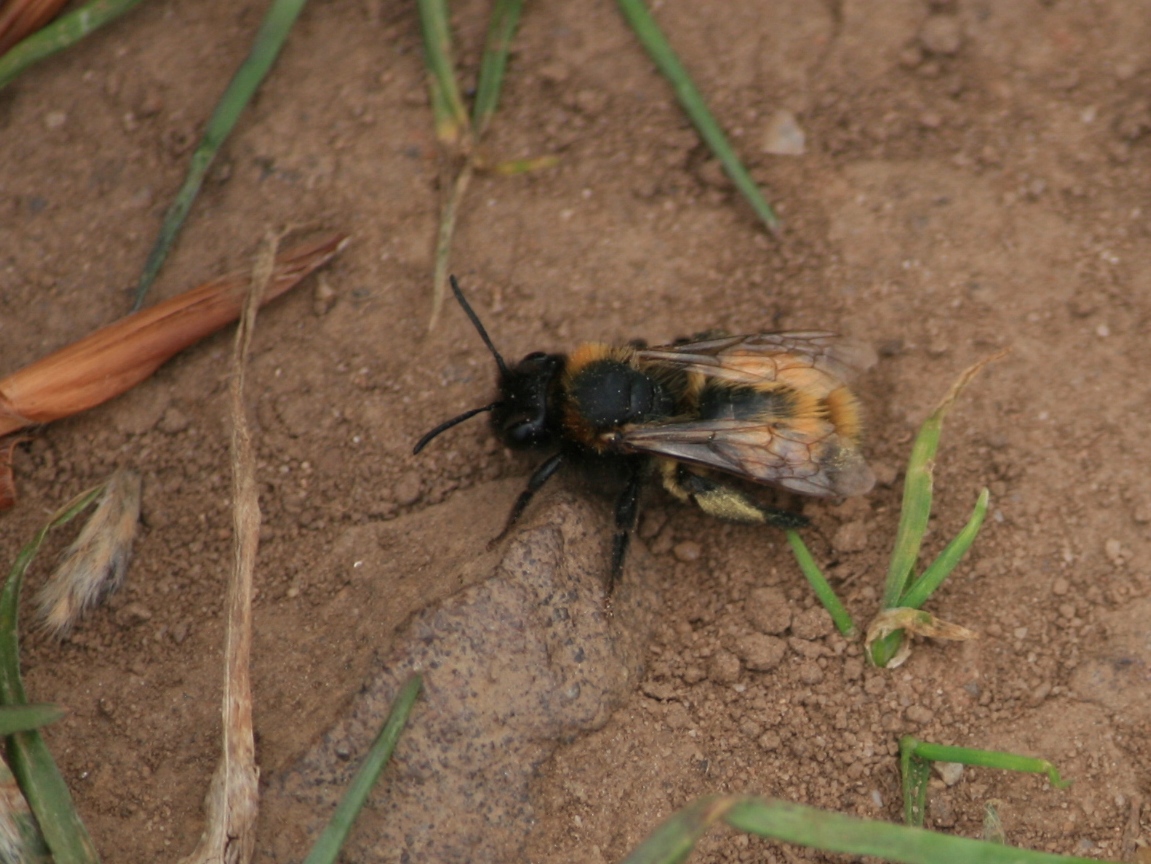
A curious, large black bumblebee was not identified, and I think subsequent investigation led us to the conclusion it was probably a melanistic example of one of the Cuckoo bee species.

Melanistic form Cuckoo bee spp. 


A single small copper, and a number of little orange Small Skippers flew, but Gatekeepers were by far the commonest butterfly, indeed I maxed out the counter on the iRecord butterfly app, which settled, curiously, on '101+.' A beautiful Great Crested Grebe fished on the shimmering water, and Dad enjoyed the song of a Wren from one of the sailing club chalets.

Small Skipper butterfly at Stone


Birds Seen: Great Crested Grebe, Grey Heron, Black Headed Gull, Great Black Backed Gull, Herring Gull, Common Tern, Woodpigeon, Feral Pigeon, Great Tit, Swallow, Wren, Starling, House Sparrow, Dunnock, Pied Wagtail, Chaffinch, Linnet. 

Butterflies: Comma (1) Holly Blue (1) Green Veined White (19) Gatekeeper ('101+') Small White (19) Meadow Brown (24) Small Skipper (14) Marbled White (4) Large White (17) Small Tortoiseshell (1) Clouded Yellow (3) Small Copper (1) (210+ of 14 species) 

Canvey Wick, 21st July 2020


Mumsie and I found our intended destination, the excellent RSPB reserve at West Canvey, was still closed as a result of the coronavirus, so we headed over to the Buglife/Land Trust/RSPB reserve at Canvey Wick, a former industrial site, its concrete now home to some rare and unique invertebrates, including Shrill Carder Bees, one of the country's rarest bees, and Brown Banded Carder Bees.


The summer sun was high, and bright, and the air was calm, the weather glorious. 
 
Sadly, during lockdown the dog walkers had been doing their worst, and the path up from the car park was rather unpleasant, but entering the reserve 'proper' we found a riot of floral colour, from tiny alpines, to large and unfamiliar blooms, scarcities and garden escapes leaf by petal, no doubt. They rather made me wish I was I was a better botanist.

Note figure of 8 on hindwing, leading edge. Brown Argus at Canvey Wick


Note absence of figure 8 on hidwing and additional spot on forewing. Common Blue at Canvey Wick.


From a high wooden platform stretching over the Thames, we saw the unmistakable shape of a Whimbrel, probably a returning migrant, probing about in the mud with sharply downcurved bill, while Godwits flocked in the distance. A Little Egret flew out from under us, brilliant white in the sunshine. There were plenty of Carder Bees of various descriptions about, and beautiful little solitary bees. Whitethroats sang, and we saw many fledglings of this charming warbler. Mumsie found a Wall Butterfly, and a stunning Holly Blue, which invited photography.


Mumsie's Holly Blue


Birds Seen: Little Egret, Oystercatcher, Whimbrel*, Curlew, Bar Tailed Godwit, Redshank, Black Headed Gull, Lesser Black Backed Gull, Common Tern, Woodpigeon, Collared Dove, Great Spotted Woodpecker, Green Woodpecker, Magpie, Carrion Crow, Blue Tit, Chiffchaff, Lesser Whitethroat, Whitethroat, Wren, Dunnock, Greenfinch, Goldfinch.

Wall 


Butterflies seen: Small Skipper (1) Comma (1) Speckled Wood (1) Peacock (5) Large White (1) Wall (2) Holly Blue (3) Common Blue (1) Small Tortoiseshell (1) Red Admiral (1) Marbled White (2) Brown Argus (1) Meadow Brown (3) Gatekeeper (13) Small White (3) 

Burnet Companion Moth


Saturday, 6 February 2021

Wanderings in the Strangest Summer. 2nd-6th July 2020 Attenborough and Bempton

 On the second of July I headed, perhaps ill-advisedly, to Attenborough, and found it extraordinarily and uncomfortably peoply and doggy. The Visitors Centre, and thus the toilets, were still closed, and this unfortunately did no favours for the site. The most interesting wildlife encounter of the day was in Attenborough Village, when I encountered many, many Common Toadlets, beautiful and miniscule, some still bearing tiny tails. I managed to resuce some which had become stuck in a gutter and lurched awkwardly towards a drain grill. One Common Froglet was also among them. 

Following this rather mixed experience, I was rather unsure on the fifth, whether returning to Attenborough was a good idea, but between us Natalie and I decided Carsington was far too familiar, and Rutland Water simply too far. We did not, it turned out, regret it. I was still camera-less so there are no pictures from this trip-and I want a Bempton one for the share banner. 

We found the site again rather peoply, but perhaps the grey sky above and the stiff breeze which blew over acted as a deterrent, and it did not feel quite so busy. Dogs were again on the rampage on the central causeway, the temporary lack of wardening perhaps taken by some as licence for irresponsibility. Beside the semi-feral hounds, we saw a few passerines, and a lovely Green Sandpiper, probably a returning migrant, a hint of Autumn, was on the ridge and furrow. A huge abundance of Swifts and Sand Martins hunted insects, low over the water near the Tower Hide. A Kingfisher flashed between them, fighting the wind on a blur of wings. 

Attenborough hosted at least 10 Little Egrets, with six, later eight, counted on the ridge-and-furrow. The Common Terns which breed at Attenborough were active too, and, evidence perhaps of their maritime lineage, were apparently unperturbed by the wind. 

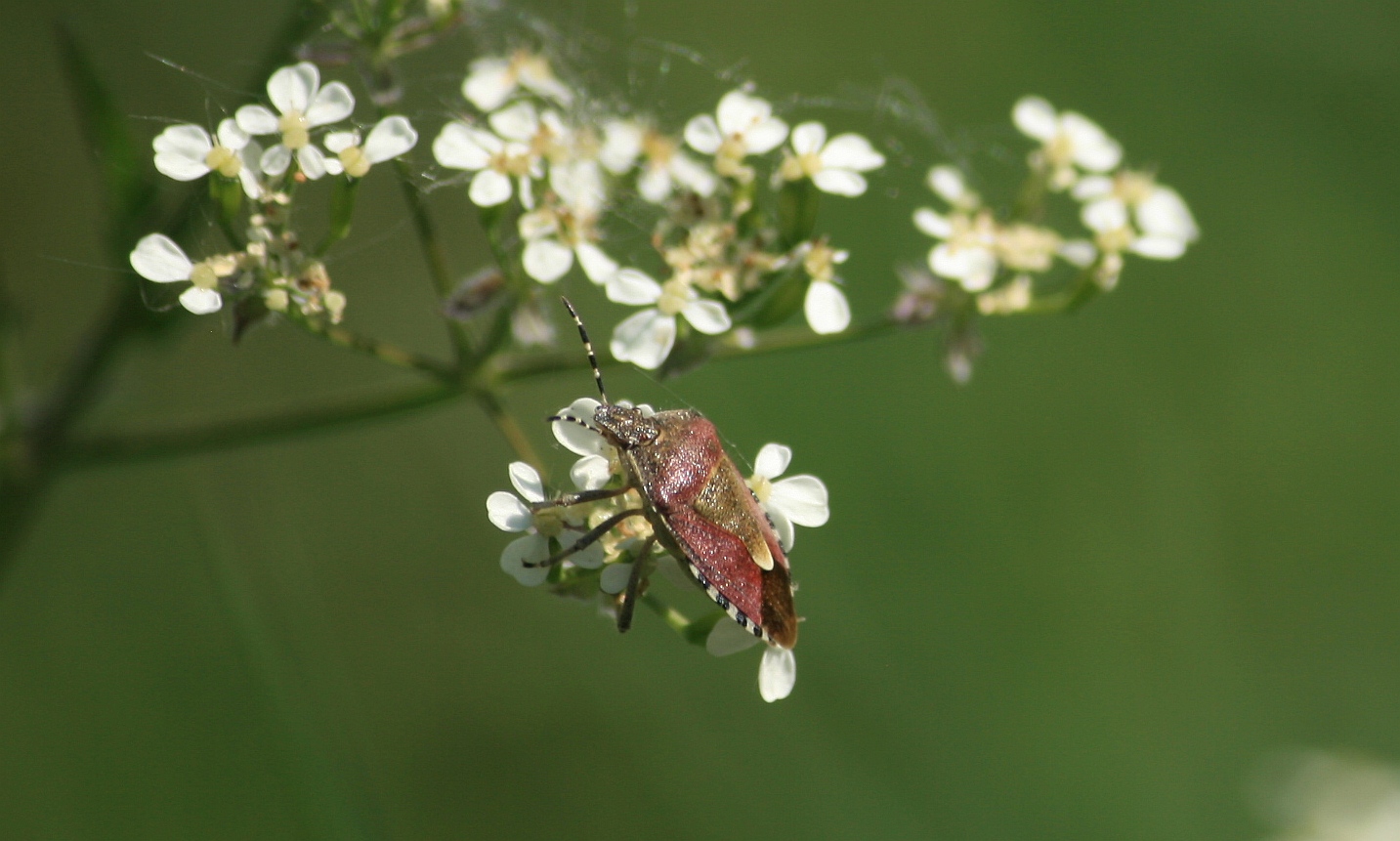
We walked up the riverside path as far as the Delta Sanctuary, before turning back, following the broad River Trent and its curves. There were plenty of insects about, to remind me of my paucity of Ladybird and Shieldbug ID skills. We saw some beautiful Damsels and Dragons including a beautiful male Banded Demoiselle, and a Small Tortoiseshell was an orange jewel in a moment of sunshine. 

Across the river we found half a dozen or so Black Tailed Godwit, still flushed orange in their breeding finery. Probably non breeding adults, or failed breeding birds, waders like these in July represent the vanguard of Autumn migration. As we watched them the heavens opened and the rain came down. We made our way back to the car, getting soaked to the skin. 

As we arrived at the car park the weather improved a little, and a Whitethroat and a Garden Warbler enjoyed the first of the season's blackberries. 

Birds Seen: Canada Goose, Greylag Goose, Mute Swan, Egyptian Goose, Gadwall, Mallard, Tufted Duck, Grey Heron, Little Egret, Cormorant, Moorhen, Coot, Lapwing, Black Tailed Godwit, Green Sandpiper, Black Headed Gull, Common Tern, Stock Dove, Woodpigeon, Swift, Kingfisher, Kestrel, Magpie, Carrion Crow, Sand Martin, Chiffchaff, Garden Warbler, Whitethroat, Starling, Blackbird, Sing Thrust, Robin, Goldfinch, Reed Bunting.

Metal Bird: Airbus A400M Atlas

Butterflies: Small Tortoiseshell, Meadow Brown, Peacock. 

Invertebrates: Aeshna spp, Blue Tailed Damselfly, Banded Demoiselle. 

Bempton Cliffs, Yorkshire, 6th July 2020

With lockdown restrictions easing further, Natty and I were, for the first time this year, able to make our annual pilgrimage to the RSPB's reserve at Bempton Cliffs in Yorkshire.

Puffins at Bempton


The weather was largely fine, and we explored the clifftop viewpoints of this towering seabird city, busy, distinctively perfumed, and alive with sound, the cried of Kittywakes and the chattering of Razorbills filling the air. A pair of Razorbills preened each other affectionately, and a mother sheltered her baby, standing between the brown fluffy creature and the chalky face. A large baby Gannet, still covered in down but big and ungainly, a massive white ball of fuzz as long as the adult, was fed regurgitated fish from its parent's crop. Its wings were tiny, but the black points of its juvenile flight feathers had just begun to appear. Puffins, always beautiful but never in great numbers at Bempton compared to the other seabirds bill-rubbed with their partners on their chosen ledges. Stiff-winged Fulmars breezed by- the air was full of seabirds, the white cruciforms of Gannets, the whirring wings of Puffins, and Herring Gulls, patrolling as if looking for trouble, and elegant Kittywakes. A single Common Seal was below in the water, looking up at the birds.

Gannet with chick, with Guillemot arguing with a fish behind. 

Kittywake in the sunshine.


We returned to the visitors' centre, and enjoyed a cup of coffee, something of a novelty after all these months, and found ourselves surrounded by confiding blue-eyed Jackdaws and chattering Tree Sparrows, perhaps hoping for a crumb or two of RSPB visitor centre cake. We also watched tree sparrows dust-bathing in the dry sandy soil. After our sustenance, we were treated to the graceful sight of a Barn Owl, perched on a post, then taking to the wing to seize an unfortunate rodent in the grass.


Tree Sparrows


In the sunny spells, butterflies were on the wing in the clifftop meadows. In the yellow glow of the early evening sun, two juvenile Peregrines perched upon posts. I avoided approaching too close, and enjoyed watching these two powerful predators, and was surprised when these laid-back youngsters did not flinch at oncoming walkers. The adult female flew by, and some minutes later we saw the adult male perched on a clifftop.

Gannet in flight


We turned our backs reluctantly on the seabirds, as the evening was approaching, and made our way back to the car park. Taking a last scan around, and watching some Linnets, Natty found a bird perched in a commanding position on top of a small Hawthorne bush, and identified it as a Red Backed Shrike, a scarce migrant, a life tick for Natty and only my second in the UK. The bird appeared to be an adult female, presumably a returning migrant, and sat with the deceptively cute look of the smaller shrikes, not betraying its nature as a powerful little predator of small mammals and even small birds.

Red Backed Shrike


Nearby a Yellowhammer sang from the top of a post. 

We made our way home, having enjoyed a wonderful day at Bempton, one of my favourite places, and our only day trippable seabird city. I hope we can return in 2021. 

Birds Seen: Fulmar, Gannet, Moorhen, Oystercatcher, Kittywake, Lesser Black Backed Gull, Herring Gull, Guillemot, Razorbill, Puffin*, Feral Pigeon, Woodpigeon, Barn Owl, Kestrel, Peregrine, Red Backed Shrike*, Magpie, Jackdaw, Carrion Crow, Blue Tit, Great Tit, Skylark, Swallow, Whitethroat, Blackbird, Song Thrush, Stonechat, Tree Sparrow, Meadow Pipit, Chaffinch, Linnet, Goldfinch, Yellowhammer*, Reed Bunting

Butterflies: Red Admiral, Small Tortoiseshell, Meadow Brown, White spp. 

Mammals: Rabbit, Common Seal (Harbour Seal)

Razorbill, chattering.


Sunday, 15 November 2020

Lockdown Walks, a Retrospective. 21st-25th May.

 21st May 2020

Feeling a touch of sunstroke from my long walk in the heat the previous day, something like the mother of all hangovers, I remained at home today, and enjoyed seeing a Cinnabar Moth in the back garden, a smart, day flying red and black creature. Their larvae, black and yellow striped creatures, feed on Ragwort, and can be seen through the summer months. A Large White butterfly had laid some eggs on my Brussels Sprouts, and I will aim to be the best custodian of them I can be. 

1430-1530

Natty and I visited her bee transects up at the National Stone Centre, a patch of greenery cut by examples of the dry stone waller's craft, surrounding Britain's only museum dedicated to building stone. The sun was hot and high and the Comfrey was in bloom. 

There were some butterflies on the wing including some lycaenids, Common Blues, and a bright orange Small Copper, on a patch of grass beside the Stone Centre car park, my first of the year. A larger Satyrid butterfly which flew by may have been a Wall.


Small Copper Butterfly. 


Bees: Early Bumblebee (worker) Garden Bumblebee (Worker, queen) Buff/White tailed bumblebee (workers) Common Carder Bee (workers) Honeybee (workers) 

Butterflies: Orange Tip (2) Common Blue (2) Small Copper (1)

Birds: Swift, Blue Tit, Great Tit, Chiffchaff, Blackcap, Whitethroat, Blackbird, Goldfinch. 

Gang Mine. 

The mountain Pansies, and tiny white flowers were in bloom on the lead spoil. There were surprisingly few bees, but a beautiful pheasant was standing on the path, confidingly, and hirundines darted about. 

Birds: Pheasant, Black Headed Gull, Woodpigeon, Kestrel, Magpie, Carrion Crow, Blue Tit, Sand Martin, Swallow, Long-Tailed Tit, Chiffchaff, Whitethroat, Blackbird, Mistle Thrush, Robin, House Sparrow, Dunnock, Pied Wagtail.


Sheildbug at Gang Mine

Small Heath Butterfly at Gang Mine. 


Butterflies: Small Heath (5) Orange Tip (1) Dingy Skipper (1) Green Veined White (1) Small Copper (1) 

Mammals: Rabbit, Grey Squirrel. 

24th May 2020

Bolehill Envrions

Natalie, Lizzie and I took a wader down to Cromford Canal from Wirksworth, taking the steep ascent to Bolehill. There were plenty of hirundines as swifts cavorting in the blue blazing sky. We took the farm track by the toad pond, so alive a few weeks ago but now near bone dry, and avoided four noisy dogs on the footpath, which yapped in a mildly confrontational manner. 
The Gorses in the cattle field were unusually quiet, but there was a fledgeling Meadow Pipit, my first fledgeling of this species this year. A flock of Goldfinch was busy on the farm track but included no juveniles; I would be interested to know if this collective feeding behaviour is common in the breeding season, or whether these birds were all failed or late breeders. When we reached the canal we found visitor numbers slightly up, but the only canal birds we saw were a single drake Mallard and a flyover Grey Wagtail. 
The climb up the Cromford incline was shallow but seemed unending. The precipitous gritstone cliffs were beautifully bathed in shimmering sunshine. In a small pond some Goldfish seemed to have been dumped, but alongside them some tadpoles persisted and Smooth Newts displayed courtship behaviour, the females gently pursued by the crested and amorous males.  Blue Tits nested in a hole in a concrete gatepost. 
I parted company with Natty and Lizzie, who took the quickest route home, and and headed up Black Rocks. The heat had brought out crowds, and some large groups were gathered up there, though they all seemed thoroughly civilised and there was no litter. There were a gorgeous family of Treecreepers, with little dumpy fledgelings, clinging to trunks above Black Rocks. 
A Cuckoo sang on the descent from the trig point, distinctive, distant, though it would not reveal itself. I stared urgently at a passing Sparrowhawk and at a Stock Dove. . A pair of Jays made food runs to nestlings of their own over my head as I waited in hope, but the Cuckoo remained unseen. I made my way back down to Wirksworth, as mother and foal Shetland Pony played in the evening sun.


Micropigs.


Birds: Mallard, Pheasant, Sparrowhawk, Black Headed Gull, Stock Dove, Woodpigeon, Cuckoo (Heard only) Swift, Kestrel, Jay (feeding), Magpie, Jackdaw, Blue Tit (nesting), Great Tit (nesting), Swallow, Chiffchaff, Wren, Treecreeper (+fl) Blackbird, Robin, Dunnock, Grey Wagtail, Pied Wagtail, Meadow Pipit (fl) Chaffinch, Goldfinch. 

25th May 2020

Stoney Wood

On a glorious sunny afternoon, \I went for my occasional Stoney Wood Bimble, where I counted the butterflies. The Stardisc, a sculpture which sits at the top of Stoney Wood, an illuminated, round star map, was receiving a little TLC from its creator, who was cleaning and respraying the stars. 

The continuing heatwave seemed to be keeping the birds down, but Blue Tits and Robins were busy feeding fledgelings. 

Birds Seen: Woodpigeon, Swift, Jackdaw, Blue Tit, Swallow, Willow Warbler, Whitethroat, Blackbird, Robin, Goldfinch.

Butterflies: Orange Tip (1) Dingy Skipper (5) Large White (1) Common Blue (6) Green Veined White (2) Small Heath (2)


Common Blue ovipositing on Lotus corniculatus at Stoney Wood.


Cromford Moor


In the afternoon I returned to Cromford Moor, which was surprisingly busy with people, in the hope of reconnecting with the singing Cuckoo, of which there was not sight nor sound. A rabbit afflicted by Myxomatosis was a sad sight, blind and stumbling. At such a point I wished I were not so squeamish and knew how to euthanise a rabbit, but I do not, and for fear of adding to its suffering I continued on my way. 
A beautiful Green Tiger Beetle was a welcome diversion from lapine tragedy, amd scuttled rapidly across the sand on the clearfell area. A splendid little predator, bright metallic green and orange iridescences in the evening sun.


Green Tiger Beetle at Cromford Moor. 


Birds Seen: Buzzard, Woodpigeon, Collared Dove, Swift, Kestrel, Jay, Magpie, Jackdaw, Great Tit, Willow Warbler, Chiffchaff, Blackbird, Dunnock, Chaffinch, Bullfinch, Goldfinch. 


Sunday, 1 November 2020

Lockdown Walks, a Retrospective. 16th-19th May 2020

16th May 2020

Crich Trig Point.  

I strolled down to the Cromford Canal on my own, and then up through Lea Wood on a grey day, water standing in puddles around. The trees were thick now and there were few splashes of colour in the herb layer. I made my way along a fenced path across a parkland estate, ascending to the village of Upper Holloway, signs proclaiming its status as a 'village in bloom,' Its gardens were bright and alive with vivid cultivated flowers, and the paths and alleys on which I continued my ascent were lined with wild Forget Me Nots and Comfrey and Bluebells.

Bluebells in Upper Holloway. 


Mining Bee spp. Seen near Upper Holloway. 

After crossing a few sheep fields, as the clouds parted I joined the curving path from the road to the memorial and the trig point. The smell of may blossom filled the air. A Spotted Flycatcher and a pair of Bullfinch were about. I crossed the tracks of the Crich Tramway village, where, in different times, preserved trams take visitors on short rides.

Spotted Flycatcher at Crich. 


Now I must confess I hadn't known what the Pepperpot building which looks down on Matlock and Cromford from its commanding hilltop to the East actually was. A distinct landmark, unknown. It is a memorial to the soldiers of the Sherwood Foresters, a British Army regiment whose soldiers hailed from the Midlands. The men of the regiment served bravely in the First and Second World Wars, the unit's name is inscribed on many a war memorial hereabouts.   The memorial can be seen for several miles, and the views from the hill are commanding. Belper, Derby and the wider countryside spread out below me. I wasn't the only one there. A couple embraced on the grass beside the memorial. A sombre looking man respectfully took down the flags which flew at the site entrance for safe keeping as evening approached. 

View from Crich. 

Sherwood Foresters Memorial. 


I hung out with a handsome crow for a while, and had my lunch, and drank in the expansive vista, and some tea, and then I headed down again, via further woodland, where some fellow walkers were looking for a site used in the filming of the Children's drama 'Stig of the Dump.' I regret only the book was a part of my childhood, the 1981 and the 2002 versions both neatly avoiding me. 


Did Stig of the Dump wander among these Ramsons? 


I reached the Cromford Canal again as the sun was setting, and walked back, fish spotting. A huge, lone Perch, a neatly striped fish with two big dorsal fins more familiar as shoaling juveniles, big enough to be an ambush predator, hung motionless in the water. A few hundred yards on, I watched a Little Grebe fishing in the clear water, astounded by the speed they can do underwater. My word those things are fast. The terrors of the minnows. Clouds of Mayflies were hatching and danced in the evening sun over the water. 

Mallard on Cromford Canal. 

Mayfly Hatch on Cromford Canal. 

As I strolled back over the hills I reflected on how far I had just walked. 


Birds Seen: Canada Goose, Mallard, Tufted Duck, Little Grebe, Buzzard, Moorhen, Black Headed Gull, Lesser Black Backed Gull, Woodpigeon, Jay, Magpie, Jackdaw, Carrion Crow, Raven, Blue Tit, Great Tit, Swallow, House Martin, Long-Tailed Tit, Chiffchaff, Blackcap, Wren, Nuthatch, Blackbird, Song Thrush, Mistle Thrush, Spotted Flycatcher, Robin, House Sparrow, Dunnock, Grey Wagtail, Pied Wagtail, Chaffinch, Bullfinch, Goldfinch. 

Not Birds Seen: Brown Hare, Rabbit, Grey Squirrel, Brown Rat, Perch, Common Blue Damselfly, 

18th May 2020

Wirksworth to Carsington 

On a greyish, intermittently breezy day, I made my way via Stoney Wood, where abundant Dingy Skipper were on the wing despite the weather. There were a few fledgelings about, as Spring turns into Summer, a brood of robins up on the top path.  I continued down to Carsington, where the visitor facilities remained closed, that now familiar refrain, 'due to the Pandemic.' However a public footpath skirts the South-Eastern bank of the lake, according to my OS Map, and who am I to doubt it. It was curious to see the area around the visitor centre so abandoned, car parks empty and fenced off, Stones Island with its sculptures unattended, and the grass, normally host to families, noisy youngsters and playful dogs, now totally and utterly reclaimed by Canada Geese. Though a few small crowds of humans were pootling about, as well as the odd jogger, the Reservoir seemed to belong largely to fluffy Goslings and Spotted Flycatchers.  Willow Tits had fledged youngsters, encouragingly. This is a scarce species which seems to thrive at Carsington.


This walk was among the first in which no year nor lockdown bird list ticks were had. A Great Crested Grebe floated with some striped 'humbugs,' the distinctive young of this charismatic and familiar  water bird. 

Stoney Wood Bird Sightings: Jay, Jackdaw, Great Tit, Swallow, Nuthatch, Robin + Fledgelings, Goldfinch (Singing) 

Stoney Wood Butterfly Sightings: Dingy Skipper (5), Green Veined White (2) 

Carsington Water Bird Sightings: Canada Goose, Barnacle Goose, Greylag Goose, Mute Swan, Gadwall, Mallard, Great Crested Grebe, Grey Heron, Cormorant, Buzzard, Moorhen, Coot, Oystercatcher, Lapwing, Black Headed Gull, Common Gull, Lesser Black Backed Gull, Woodpigeon, Swift, Great Spotted Woodpecker, Magpie, Jackdaw, Carrion Crow, Willow Tit (+Fledgelings), Blue Tit, Great Tit, Skylark, Sand Martin, Swallow, Long-Tailed Tit, Chiffchaff, Reed Warbler, Whitethroat, Blackbird, Song Thrush, Spotted Flycatcher, Robin, Redstart, Dunnock, Pied Wagtail, Meadow Pipit, Chaffinch, Bullfinch, Goldfinch, Reed Bunting. 

Mammals: Grey Squirrel, Rabbit. 

Butterflies: Large (Cabbage) White, Green Veined White, Brimstone. 

19th May 2020

A Stroll to Bolehill (Contains description of predation) 

A breif hour or so out of the house in beautiful sunshine brought the unexpected. Beneath an old, gnarled Oak tree beside the footpath, a few small birds were feeding on the ground, a typical mixed crowd of tits and finches. A Great Spotted Woodpecker dropped in, I assumed to join them in preying in whatever small insects could be found there. Repeatedly it stabbed the ground, as the smaller birds took flight, chattering, and then it was up, with a small dead bird in its bill. Downy feathers drifted on the breeze. The bird, a Great Tit, was unceremoniously hammered into a crack in the bark by the Woodpecker's bill. The Woodpecker returned twice during the following ten minutes or so to peck at the carcass. An adult Great Tit was in the area with a food parcel for its youngster, one can but hope others survived. Passerine alarm calls abounded throughout.  Woodpeckers are not unknown to take young birds, hammered out nest boxes are a telltale sign of Great Spotted Woodpecker predation, but this was the first time I had witnessed it with my own eyes, and not of nestlings either, but of a fledgeling.

Distant view of the Woodpecker enjoying its meal. 


Plenty of other birds were busy with the business of raising chicks. Blue Tits fed chicks in a nest box on the wall of a house in Bolehill Village. A newly fledged Woodpigeon hassled a weary looking parent for food in a street tree, and robins were busy stuffing invertebrates into the yellow gapes of speckled fledgelings.


Friendly Sheep


I returned to the path beside the farm buildings, Ash Tree Farm or some such, and passed through a field of friendly sheep.  As I crossed the Ecclesbourne Valley Railway, a Sparrowhawk flew over, a kill in its talons. Swifts whistled joyously in the clear blue sky, themselves predators on the aerial 'plankton.' 

Birds Seen: Sparrowhawk, Woodpigeon, Swift, Great Spotted Woodpecker, Magpie, Jackdaw, Carrion Crown, Coal Tit, Blue Tit (+nest w/ young) Great Tit (+Fledgelings, one eaten by GSWP) Swallow, Blackbird, Robin (+Fledgelings) Dunnock, Chaffinch, Goldfinch


Thursday, 22 October 2020

Lockdown Walks, a Retrospective.

 6th May 2020

I took a brief afternoon stroll in Stoney Wood, the little local greenspace in a disused quarry I have visited many times, for an informal bird and butterfly survey. Here I witnessed predation, nature, in all its shocking glory. 

The prey, fast, agile, and undeniably beautifully marked, was flying at treetop height, and clearly very aware of the danger it was in, jinked and turned aerobatically, in a desperate attempt to escape the snapping mandibles. The predator, faster, but not as agile, hung briefly in mid air, before locking on again with its sharp vision, darted and snapped again, and missed again. They prey had almost reached cover, but changed direction, and this loss of speed afforded the predator another chance, and this time, with an audible snap, the sharp bill found its mark. The Spotted Flycatcher returned to its perch in the scrub with the Peacock Butterfly flapping desperately in its tight grip. The bird struck the insect against a branch several times, until the manic struggling ceased. Then it shook its head violently, and the four jewelled wings of the butterfly fluttered to the ground like falling leaves, and the bird devoured the body, a small, sad morsel but of course a substantial meal to the tiny bird. 

Peacock Butterfly. Not the one in this story but one in Cambridgeshire in August.


This horror aside, the weather was still glorious and there were plenty of butterflies on the wing, including several Dingy Skipper, and Robins, Whitethroats and Willow Warblers, insect killers all, sang melodiously to the summer sky. 

Birds Seen: Black Headed Gull, Stock Dove, Woodpigeon, Swift, Jackdaw, Blue Tit, Great Tit, Willow Warbler, Chiffchaff, Whitethroat, Blackbird, Spotted Flycatcher*, Dunnock, Goldfinch. 

Butterflies: Orange Tip, Peacock (alive and dead) Green Veined White, Dingy Skipper. 


Orange Tip Butterfly near Kirk Ireton.


8th May 2020

 Wirksworth to Carsington via Kirk Ireton

I strolled along footpaths from Summer Lane, where the housing on the Southern fringe of Wirksworth gives way to farmland. I crossed the open fields and climbed up to half moon lane, which was quiet and offered beautiful views over the Ecclesbourne Valley. The roadside vegetation was well grown and butterfly infested. A Sparrowhawk soared as racing pigeons took their daily exercise from someone's loft. Swallows and Martins wheeled above a farmyard. I arrived in Kirk Ireton, and was surprised to find the human population out and about, celebrating VE day in the streets, a dose of normality, but still a surprise. 

After a couple of wrong turns, I think I had been aiming for the Trig Point called The Mountain, I found myself unexpectedly stood beside Carsington Water, not far from the Millfields car park. A beautiful Garden Warbler sang on the Hawthorn, and the Black Headed Gull colony was typically noisy. A few Lapwings and a single Redshank waded in the shallows. A pair of feral Barnacle Geese were on the gull colony island and one appeared to be incubating.  Long Tailed Tits foraged in the shrubs, gathing beakfulls of insects for their waiting chicks.


Long Tailed Tit at Carsington Water. 


I returned via Kirk Ireton once again, through sunny fields full of butterflies and horses, and filled my empty water bottle with takeaway beers from the pub there. I sat in a field on the way back and raised a glass to the men and women of 1945.


Garden Warbler at Carsington Water


Returning in near darkness I saw hares close to where the footpath crosses the Alderwasley Hall School site. The vegetation here was a sad sight, the farmer appeared to have sprayed herbicide on nearly everything, and wildflowers and nettles alike drooped forlornly. I crossed the Ecclesbourne Brook and returned to Wirksworth through Miller's Green. A pond, signposted as a fishery, beside the road reminded me how I was still discovering this town, I had not known it existed. 

Birds Seen: Canada Goose, Barnacle Goose, Greylag Goose, Gadwall, Mallard, Tufted Duck, Pheasant, Great Crested Grebe, Sparrowhawk, Moorhen, Coot, Lapwing, Redshank, Black-Headed Gull, Lesser Black Backed Gull, Swift, Stock Dove, Woodpigeon, Collared Dove, Magpie, Jackdaw, Carrion Crow, Blue Tit, Great Tit, Swallow, House Martin, Long Tailed Tit, Chiffchaff, Blackcap, Garden Warbler, Whitethroat, Blackbird, Mistle Thrush, Robin, Pied Wagtail, Chaffinch, Greenfinch, Goldfinch. 

Butterflies seen: Green Veined White, Orange Tip, Speckled Wood, Red Admiral, Small Tortoiseshell, Peacock. 

Mammals Seen: Rabbit, Brown Hare. 

Friday, 21 August 2020

Lockdown Wanderings (A Retrospective) 17th-24th April

 Wirksworth-Middleton Top-Carsington Water 17th April 2020

A sunny day but with strong winds at the tops, and around the high peak trail, but cooler than the past few. 

Despite the hide closures and the lack of visitor amenities, the public footpath sections of Carsington's trails were open. I strolled down from Middleton Top into Carsington/Hopton Village, where the verges bloomed with Forget Me Nots and Dandelions, attended by Tree Bumblebees and a few small Andrena spp. Most of the trees down here are not yet in full leaf. 
Carsington's birds were mainly passerines, with most of the winter waterfowl apparently moved on. Blackcaps sang spiritedly and wrens darted low back and forth across the paths, presumably with hungry gapes to feed. Hirundines wheeled and Lapwings displayed, issuing their strange, electronic sounding whistles. 
My intended route home was blocked by a footpath closure- it passed through the garden of some self-isolating people, so I returned by the same route along which I arrived. There were a pair of Redstarts in the bushes near Middleton Top. 
Additional interest was provided by flypasts from a single member of the RAF Red Arrows display team, a single jet screaming through the sky, low over Carsington Village. 


Birds Seen: Canada Goose, Tufted Duck, Mallard, Pheasant, Great Crested Grebe, Buzzard, Coot, Oystercatcher, Lapwing, Redshank, Black Headed Gull, Great Black Backed Gull, Lesser Black Backed Gull, woodpigeon, Collared Dove, Kestrel, Coal Tit, Blue Tit, Great Tit, Swallow, House Martin, Long Tailed Tit, Chiffchaff, Blackcap, Wren, Nuthatch, Blackbird, Song Thrush, Robin, Redstart, House Sparrow, Tree Sparrow, Dunnock, Pied Wagtail, Chaffinch, Greenfinch, Linnet, Goldfinch. 

Wirksworth to Alport Heights, 20th April 2020

Natty and I strolled South out of Wirksworth along Prathall Lane, taking a detour to Moor View Farm through the small woods. There were a few Swallows zipping about around the farm buildings, and plenty of pretty, chirpy Linnets in the fields adjoining Hay Lane. We continued along the narrow country lanes to Alport Heights, pausing to giggle at Knob Lane.
Sadly lots of litter had accumulated around the Alport Heights car park, which was currently closed, but we enjoyed stunning views over the rolling hills of South Derbyshire. Willington and Drakelow Power Stations loomed large to the south. Alport Heights is something of a local tourist destination, where people come to park up and enjoy the view. Irritatingly, the Trig Point at Alport Heights was locked into a fenced compound with the mobile phone masts.


We returned via Prathall Lane again, where Orange Tip Butterflies fluttered and Wild Garlic bloomed beside a babbling brook at Folly Well. Returning to Wirksworth over the bridge across the Hannage Brook I had a surprise, eye to eye encounter with a pair of chiffchaffs, the male continuing to sing just a metre or so from my face. 

Birds Seen: Pheasant, Sparrowhawk, Buzzard, Black Headed Gull, Lesser Black Backed Gull, Stock Dove, Woodpigeon, Great Spotted Woodpecker, Kestrel, Magpie, Jackdaw, Rook, Carrion Crow, Blue Tit, Great Tit, Swallow, Long Tailed Tit, Chiffchaff, Song Thrush, Mistle Thrush, Robin, House Sparrow, Dunnock, Chaffinch, Greenfinch, Linnet, Goldfinch. 

Wirksworth - Bolehill - Black Rocks - Dene Hollow - Gang Mine - Middleton Village - Wirksworth 22nd April 2020

An interesting one, strolling from Wirksworth up to Bolehill, where a single House Martin circled, then continuing to Cromford Moor, where a surprisingly confiding Willow Warbler was in a Silver Birch. I began to descend via Black Rocks, and took up the path to Gang Mine Nature Reserve. Sadly there were some dog idiots about here and their menacing charges were off lead and running amok. The grassland at Gang Mine, which hosts remarkable botany, nationally scarce Mountain Pansy and Alpine Pennycress, thriving on the lead spoil which would be toxic to many of their competitors, and a diverse insect flora including mining bees, could also support ground nesting birds if only dog walkers could stay away.  Irritated, I continued to Middleton, passing the town's recreation ground. Since closure it has become a beautiful riot of Dandelions and forget me nots, the abandonment of mowing giving way to a feast of wild flowers.


Taking in some good views of the town, I continued up onto Middleton Moor, where Skylarks sang,  Meadow Pipits argued over breeding rights and nest sites, and Swallows zipped across the grass at speed. 
The weather was fine, with a cooling breeze in the high places. Orange Tip, Large (a beautiful 'cabbage classic') and Small White, were on the wing, with Peacock and Small Tortoiseshell. The Blackthorn on Gang Mine had begun to go over, brown petals falling as the shrubs came into leaf, and the Wood Anemones have begun to fade, but the Bluebells and Forget Me Nots had grown in intensity. 

Birds Seen: Pheasant, Buzzard, Stock Dove, Sparrowhawk, Woodpigeon, Collared Dove, Kestrel, Jackdaw, Raven, Carrion Crow, Blue Tit, Great Tit, Long-Tailed Tit, Skylark, Swallow, House Martin, Willow Warbler, Blackcap, Blackbird, Robin, House Sparrow, Dunnock, Meadow Pipit, Chaffinch, Goldfinch, Linnet. 

Middleton Top Long Loop, 24th April 2020

Natty and I walked up to Middleton Top via Stoney Wood and Middle Peak Quarry. We saw our first Whitethroat of the summer, performing his song flight. He descended slowly and loudly from the heavens to take up his position atop the scrub. We continued to the trig point at Middleton Top, access to which is somewhat ambiguous, where we enjoyed the 360° view from there, taking in the range of local habitats and geologies. Here Natty and I parted company for the evening, among the cowslips above Middleton Top Cycle Hire, having enjoyed further aerial virtuoso performances from Skylarks and Meadow Pipits. 

I continued with a circular walk around Middleton Top, taking in views of the village, then continued through the young Hawthorn woods with their abundant Wood Anemone- these still looking stunning, and bluebells. My visit took in an abandoned quarry, along unofficial paths cut by mountain bikers. The quarry workings were impressive, tunnels of varying ages were cut into the rock. A short stretch of road brought me to a footpath through a farmyard, where I apologised for the intrusion as the family were enjoying a barbecue. I walked past dry stone walls, where increasingly tired Small Tortoiseshell butterflies competed for each other's attention, and that of peacock butterflies, across fields,  and then returned to the High Peak Trail and retraced my route home. 


Birds Seen: Pheasant, Buzzard, Stock Dove, Woodpigeon, Kestrel, Jackdaw, Carrion Crow, Raven, Blue Tit, Great Tit, Skylark, Long Tailed Tit, Willow Warbler, Chiffchaff, Blackcap, Whitethroat, Wren, Nuthatch, Treecreeper, Blackbird, Song Thrush, Robin, Meadow Pipit, Chaffinch, Bullfinch. Goldfinch.