Showing posts with label Carsington Water. Show all posts

Thursday, 22 October 2020

Lockdown Walks, a Retrospective.

 6th May 2020

I took a brief afternoon stroll in Stoney Wood, the little local greenspace in a disused quarry I have visited many times, for an informal bird and butterfly survey. Here I witnessed predation, nature, in all its shocking glory. 

The prey, fast, agile, and undeniably beautifully marked, was flying at treetop height, and clearly very aware of the danger it was in, jinked and turned aerobatically, in a desperate attempt to escape the snapping mandibles. The predator, faster, but not as agile, hung briefly in mid air, before locking on again with its sharp vision, darted and snapped again, and missed again. They prey had almost reached cover, but changed direction, and this loss of speed afforded the predator another chance, and this time, with an audible snap, the sharp bill found its mark. The Spotted Flycatcher returned to its perch in the scrub with the Peacock Butterfly flapping desperately in its tight grip. The bird struck the insect against a branch several times, until the manic struggling ceased. Then it shook its head violently, and the four jewelled wings of the butterfly fluttered to the ground like falling leaves, and the bird devoured the body, a small, sad morsel but of course a substantial meal to the tiny bird. 

Peacock Butterfly. Not the one in this story but one in Cambridgeshire in August.


This horror aside, the weather was still glorious and there were plenty of butterflies on the wing, including several Dingy Skipper, and Robins, Whitethroats and Willow Warblers, insect killers all, sang melodiously to the summer sky. 

Birds Seen: Black Headed Gull, Stock Dove, Woodpigeon, Swift, Jackdaw, Blue Tit, Great Tit, Willow Warbler, Chiffchaff, Whitethroat, Blackbird, Spotted Flycatcher*, Dunnock, Goldfinch. 

Butterflies: Orange Tip, Peacock (alive and dead) Green Veined White, Dingy Skipper. 


Orange Tip Butterfly near Kirk Ireton.


8th May 2020

 Wirksworth to Carsington via Kirk Ireton

I strolled along footpaths from Summer Lane, where the housing on the Southern fringe of Wirksworth gives way to farmland. I crossed the open fields and climbed up to half moon lane, which was quiet and offered beautiful views over the Ecclesbourne Valley. The roadside vegetation was well grown and butterfly infested. A Sparrowhawk soared as racing pigeons took their daily exercise from someone's loft. Swallows and Martins wheeled above a farmyard. I arrived in Kirk Ireton, and was surprised to find the human population out and about, celebrating VE day in the streets, a dose of normality, but still a surprise. 

After a couple of wrong turns, I think I had been aiming for the Trig Point called The Mountain, I found myself unexpectedly stood beside Carsington Water, not far from the Millfields car park. A beautiful Garden Warbler sang on the Hawthorn, and the Black Headed Gull colony was typically noisy. A few Lapwings and a single Redshank waded in the shallows. A pair of feral Barnacle Geese were on the gull colony island and one appeared to be incubating.  Long Tailed Tits foraged in the shrubs, gathing beakfulls of insects for their waiting chicks.


Long Tailed Tit at Carsington Water. 


I returned via Kirk Ireton once again, through sunny fields full of butterflies and horses, and filled my empty water bottle with takeaway beers from the pub there. I sat in a field on the way back and raised a glass to the men and women of 1945.


Garden Warbler at Carsington Water


Returning in near darkness I saw hares close to where the footpath crosses the Alderwasley Hall School site. The vegetation here was a sad sight, the farmer appeared to have sprayed herbicide on nearly everything, and wildflowers and nettles alike drooped forlornly. I crossed the Ecclesbourne Brook and returned to Wirksworth through Miller's Green. A pond, signposted as a fishery, beside the road reminded me how I was still discovering this town, I had not known it existed. 

Birds Seen: Canada Goose, Barnacle Goose, Greylag Goose, Gadwall, Mallard, Tufted Duck, Pheasant, Great Crested Grebe, Sparrowhawk, Moorhen, Coot, Lapwing, Redshank, Black-Headed Gull, Lesser Black Backed Gull, Swift, Stock Dove, Woodpigeon, Collared Dove, Magpie, Jackdaw, Carrion Crow, Blue Tit, Great Tit, Swallow, House Martin, Long Tailed Tit, Chiffchaff, Blackcap, Garden Warbler, Whitethroat, Blackbird, Mistle Thrush, Robin, Pied Wagtail, Chaffinch, Greenfinch, Goldfinch. 

Butterflies seen: Green Veined White, Orange Tip, Speckled Wood, Red Admiral, Small Tortoiseshell, Peacock. 

Mammals Seen: Rabbit, Brown Hare. 

Saturday, 10 October 2020

Lockdown Walks: A Retrospective. 5th May. Four Trigs.

 Apologies for the long delay in getting back to blogging, all good things must come to an end, including the longest summer, and I have now returned to work.  So the blog posts will remain relatively infrequent, but will continue. 

So, here goes. 

5th May 2020 Spring Wood, Carsington, Black Rocks, including four Trig Points. 

On a cool breezy day, I strolled out of Wirksworth toward Sprink Woods, at the time an unofficially accessible patch of woodland just across the fields to the South of the town. The trees were very quiet, but the woodland floor bloomed, especially in the patches of felling. Yellow Archangel, Forget Me Not, Wild Garlic, Red and White Campion, and Herb Robert all bloomed in the patches of sunshine. Unfortunately there was also a little litter, something which may have inspired the landowner to close off access to the wood a few days after my walk there.


I reached the Callow Road and proceeded to the Stainsborough Farm trig point, accessible across fields by two open gates. I descended toward Carsington Water, on the way encountering the distressing sight of a newborn lamb stuck fast between two barbed wire fences. I managed to lift out the tiny, wobbly creature, which was as light as one of my cats, and return it to the field from which it came. It doddered about and bleated. I did not see it reunited with its mother, and just got sheep milk poo on my hands and a bit emotional. Online approaches were made to find the farmer, such is the glory of technology, and hopefully the animal was okay.


RAF Hercules fly past. 

Great Northern Diver, Distant but distinctive. 


From the lamb I made my way down to Carsington  Water, by now bathed in sunshine after an overcast morning, and listened to the rhythmic, foot tapping stylings of Reed Warblers at the foot of the Reservoir.  The calm was broken by a very low flying RAF Hercules transport aircraft, whirring through the valley.  The Great Northern Diver, a juvenile which had spent the winter at Carsington, gave wonderful close views, showing its Hulk-like proportions, and the diagnostic neck markings which separate it from the other two species of Diver.  This is the same species of bird referred to in North America as the Common Loon, a reference to its haunting breeding call, a sound we do not hear at these latitudes. This wintering individual would soon return to the Northern sea lochs and fjords in which they breed, places to which the summer comes late. A Willow Tit also at Carsington was my first sighting of this declining woodland species, which thrives at the site, of the lockdown walks. 


Carsington Water from Carsington Pastures. 


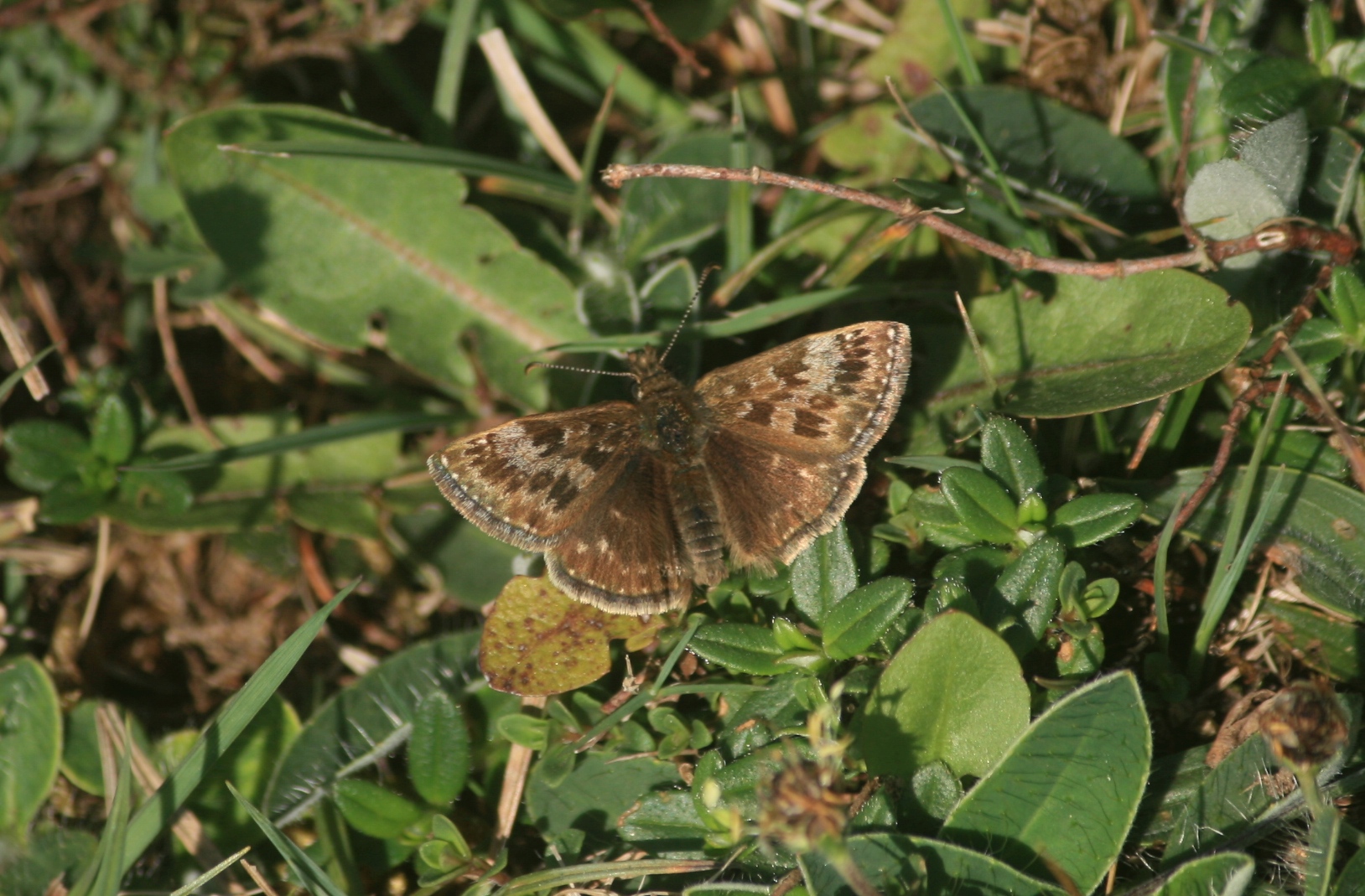
I climbed up after my brief flirtation with the lake shore, through the hummocked fields of Carsington Pasture. A grumpy landowner was evidently keen for me to keep to the footpath, having made careful use of signage, and a muckspreader to dissuade me from leaving the path to have a sit down. The views from here were extraordinary, however, vast, across the reservoir. Skylarks and a beautifully plain Garden Warbler sang. Higher still, through the edge of Brassington Town, where people suspiciously eyed the stranger out in Lockdown, I climbed, to a picnic site where Orange Tip butterflies patrolled banks of vibrant blooms, then turned into a field where Early Purple Orchids bloomed, and my first Dingy Skipper butterfly of the season was on the wing.

Orange Tip (male)

Dingy Skipper

Early Purple orchids and Cowslips


The factory which sits beneath Harborough Rocks was noisy again, in contrast to earlier visits in Lockdown where it had been silenced. Meadow Pipits and Skylark were in attendance around the trig point, the second of the day.


St Mark's Fly (Bibio marci)


I returned to the High Peak Trail and, with evening fast approaching, I enjoyed the sight and sound of plentiful Whitethroat and a glorious male Redstart once again close to the turning for the Middleton trig. As I walked away from it to reconnect with the footpath, Meadow Pipits took off in fright but did not leave the area, suggesting the proximity of nests on the ground. I will avoid the area in future so as not to risk disturbing these birds. I reconnected with the Wheatear pair behind Middleton Top Cycle Hire. The light had really begun to fade now, but the possibility of four trigs held rather more pull than perhaps it should, and I yomped to the fourth Trig at Black Rocks, even breaking a sweat, something I usually avowedly avoid while out strolling, to achieve my objective. I reached it with just enough light for a final selfie.  Bats flew in the gloom. I got back to my front door in darkness.


Harborough Rocks Trig Point. 

Moonrise over Middleton

Birds Seen: Canada Goose, Greylag, Gadwall, Mallard, Tufted Duck, Great Northern Diver, Grey Heron, Sparrowhawk, Buzzard, Moorhen, Coot, Oystercatcher, Lapwing, Black Headed Gull, Lesser Black Backed Gull, Stock Dove, Woodpigeon, Collared Dove, Tawny Owl (Heard only) Swift, Kestrel, Magpie, Jack, Rook, Carrion Crow, Raven, Coal Tit, Willow Tit, Blue Tit, Swallow, House Martin, Willow Warbler, Chiffchaff, Reed Warbler, Garden Warbler, Whitethroat, Wren, Blackbird, Song Thrush, Mistle Thrush, Robin, Wheatear, House Sparrow, Dunnock, Pied Wagtail, Meadow Pipit, Chaffinch, Linnet, Goldfinch, Reed Bunting. 

Butterflies: Peacock, Green Veined White, Orange Tip, Brimstone, Dingy Skipper. 

Mammals: Brown Rat, Grey Squirrel, Rabbit, Pipistrelle.