Showing posts with label Derbyshire Dales. Show all posts

Friday, 20 November 2020

Wanderings in the Strangest Summer: Elton to Bradford Dale 17th June 2020

17th June 2020 


I took the short drive to Elton, not to be confused with the same name, once again, and parked near the church, where I was greeted almost immediately by a confiding young Song Thrush.  From here, and in pleasant weather, white cloud above, I crossed the farm fields where a magnificent Hereford Bull nuzzled affectionately with one of his cows. A glance signalled permission to cross, and I did so. I walked through meadows now teaming with Meadow Browns and Small Tortoiseshells, even on this overcast day.


Song Thrush at Elton


Then I crossed some 'improved' fields, ugly dayglo green dairy deserts, little more than lawns, with few butterflies. I waked past enclosed copses fenced in by barbed wire. Barbed wire was a feature only of the improved fields, curiously. I reached a rock-strewn slope and descended through the cattle, and paused to view a small pond, signs advertising it for angling, where coots and tufted ducks swam. The Eastern end of Bradford Dale was heavily managed and well trodden, but there were wild flowers down to the water's edge attended by smart Red Admirals and yet more Small Tortoiseshells.


The Eastern side, where I walked beyond the bridge in Youlgreave, was more wooded in character, though host to Grey Wagtails, swans, and an area of slow, crystal clear water designated for swimming. I walked into the woodland, in decreasing light, as storm clouds gathered. The river had historically been managed for fish, once on a commercial basis, and was divided into concrete pools, each holding a family of Mallards, some with large, near adult size juveniles, others with downy doughball ducklings. The weather was on its way, but still I paused to enjoy a Dipper darting in and out from a nest in some pipework where the river flows under a small arch bridge.


I took the footpath through some wetlands, across a camp site, abandoned for the time being, past a field of inquisitive bullocks, who walked in step with me on the other side of a fence, and reached a narrow road near one of a couple of places in the UK called Robin Hood's Stride. Here the heavens opened, and I found a memorial bench overhung with branches, I wish I could remember to whom it was dedicated, but to their family I am grateful, as from this bench I watched fork lightning split the sky, as the downpour drew on. Hares darted at the sound of thunder like gunfire, and cattle bellowed in their frustration, and gathered together around the loudest. Birdwatching was out of the window, butterfly spotting a laughable dream


When the rain alleviated a little, I made my way back to Elton. When it had stopped, I shivered. To my surprise, on my way back to Elton, I saw a Barn Owl, floating ghostly over the fields. Perhaps the rain had been so heavy mice and voles had been flooded out of their holes. It dived into the grass, stayed down a moment, and then was up again and flying. I reached for my camera, but found its viewfinder and LCD display frosted by condensation. 

I made my way back to my car, shivering, disassembled the camera, hopelessly it transpired, a victim of the deluge, on the passenger seat to dry. As I drove, another storm rolled into the green valleys.


Grey Wagtail


Butterflies Seen: Elton-Bradford Dale: Small Copper 1, Red Admiral 1, Small Tortoiseshell 6, Meadow Brown 29. 

Bradford-Alport: Small Tortoiseshell 8, Meadow Brown 1. 

Bradford Dale East: Red Admiral 1, Common Blue 1, Small Tortoiseshell 5, Meadow Brown 3.

Bradford Dale West (inclement weather) Green Veined White 1, Small Tortoiseshell 2.

Birds Seen: Greylag Goose,Mute Swan, Mallard, Tufted Duck, Pheasant, Buzzard, Moorhen, Coot, Woodpigeon, Barn Owl, Swift, Great Spotted Woodpecker, Kestrel, Magpie, Jackdaw, Carrion Crow, Blue Tit, Great Tit, Swallow, House Martin, Long Tailed Tit, Chiffchaff, Wren, Treecreeper, Starling, Blackbird, Song Thrush, Robin, Redstart, Dipper (visiting nest) House Sparrow, Grey Wagtail, Chaffinch, Goldfinch. 


Tuesday, 17 November 2020

Wanderings in the Strangest Summer- A retrospective.

 2nd June 2020

I parked the car in Elton, a small village just off the road to Bakewell, and took a wander along the still quiet country roads to Gratton Dale, a dry, narrow dale, host to a lot of scrub as well as wildflower rich, limestone grassy banks. There was a huge abundance of butterflies, Common Blues chasing off anything in sight. The Common Blues combined with the activity brought on by warm conditions made photographing butterflies very challenging. Among the butterflies chased off by the territorial blues was a scruffy Green Hairstreak, a species coming to the end of its season. There were plenty of very fresh Brown Argus on the wing too, possibly the univoltine (single brooded) race which occurs round here. A Tawny Owl hooted in the daytime, which seemed unusual. The blackbirds were going crazy, mobbing something unseen. A pair of Redstarts were provisioning their young.

Brown Argus

Common Blue


A couple of years ago Gratton Dale had hosted hundreds of Dark Green Fritillaries, I had visited them in late June, an abundance of big orange butterflies, but this time I only encountered a single individual. Perhaps their numbers will swell towards the summer Solstice. There were still a few early season species about, in Brimstone and Orange Tip as well as Green Hairstreak. The beetle Oedemira nobilis was seen in good numbers in all their green jewel brilliance, both sexes, thick-thighed male and female, feasting on the large daisies. Abundant Large Skipper butterflies were my first of the year of this common species. 

Dark Green Fritillary

Oedemira nobilis (male)

Oedemira nobilis (female)


Long Dale was quieter, and lacked the wild kaleidoscope of butterflies, though a Skylark sang overhead. A small copper was pretty but camera shy, and there were plenty of Small Heaths. Long Dale is a National Nature Reserve and kept close grazed, genrally regarded as very well managed, buit I felt it perhaps a little overgrazed, and it lacked the diversity of habitat and the lush verdance of Gratton Dale.  Day flying moths were about, including a Wood Tiger, an arctid with beautiful cream and brown forewings and yellow dappled hindwings, and Forester moths, I'd not like to guess a species, fat and metallic green, were abundant.

Small Heath

Wood Tiger


I climbed the footpath North out of Long Dale over the farmland, and a pair of Linnet watched me attentively as I passed, from a perch atop the Gorse. I avoided a field full of cattle and took in the views. A narrow path among the white Cow Parsley led me down to a road, which I crossed, entering a treecreeper infested patch of woodland. This led me along a stone path to the infant River Bradford. I elected not to try to walk Bradford Dale too, on grounds of time, and took the footpath back toward Gratton village and Elton. Near Gratton I saw a stunning Brown Hare in the grass, and in the grounds of a dairy, numerous Small Tortoiseshells defended a patch of nettles.


Large Skipper


Gratton Village was gloriously wildlife rich, surprisingly so, with an attractive pair of reed buntings, apparently breeding beside a small stream. Chirping House Sparrows were around the houses, and House Martins nested under the eaves. A beautiful Wall butterfly was an unexpected pleasure to see in this pretty stream side hamlet.


Wall


I made my way across more fields back into Elton, to head home, having enjoyed a beautiful, butterfly rich stroll in the glorious June weather. 

Gratton Dale Birds Seen: Buzzard, Tawny Owl, Jay, Magpie, Jackdaw, Rook, Carrion Crow, Great Tit, Willow Warbler, Chiffchaff, Whitethroat, Blackbird, Redstart, Goldfinch. 

Butterflies: Large Skipper (10) Green Veined White (6) Dark Green Fritillary (2) Common Blue (25) Dingy Skipper (6) Brimstone (4) Brown Argus (5) Orange Tip (1) Green Hairstreak (3) Speckled Wood (2) Small Heath (3) 

Other invertebrates of note: Oedemira nobilis, Aeshna juncea

Mammals: Grey Squirrel


Green Hairstreak


Long Dale Birds: Woodpigeon, Magpie, Carrion Crow, Great Tit, Skylark, Pied Wagtail, Linnet. 

Butterflies Green Hairstreak (1) Dingy Skipper (1) Small Heath (19) Small Copper (1) Large Skipper (1) Large White (2)

Others: Forester Moth, Wood Tiger. 

Elton and Gratton Environs Birds: Pheasant, Stock Dove, Woodpigeon, Collared Dove, Kestrel, Magpie (+fl) Jackdaw, Carrion Crow, Blue Tit, Great Tit, Swallow (+Fl) House Martin, Chiffchaff, Whitethroat, Wren, Treecreeper, Mistle Thrush, Robin, Redstart, House Sparrow, Pied Wagtail, Goldfinch, Reed Bunting. 

Butterflies: Green Veined White (5) Orange Tip (3) Small Tortoiseshell (9) Wall (1) 

Mammals: Brown Hare, Rabbit, Grey Squirrel. 


Monday, 16 November 2020

Lockdown Walks-A Retrospective. 28th May-1st June

 28th May 2020

Wirksworth to Alderwasley

In glorious sunshine I headed up to Alderwasley, taking Wash Green up out of Wirksworth. A gorgeous brood of newly fledged Coal Tits were in a garden on Wash Green. A huge European Hornet, gentle giant among wasps, looked for a nest in a wall.  I crossed the field full of sleepy but occasionally playful Bullocks, and through the woods. The nodding bluebells and the carpet of anemones were gone to seed, but foxgloves and red campion bloomed abundantly. 


I returned via Kennel Woods, a thick deciduous wood which rang with birdsong, and spotted a fine pair of Bullfinches. I continued past a farmhouse where I encountered beautiful cattle and horses. On my return to Wash Green I was somewhat besieged by the Bullocks whom I had passed to peacefully earlier. I was relieved when they were distracted by the farmer, who delivered them a salt lick. A pair of Grey Wagtails flew overhead. 

Birds seen: Mallard, Pheasant, Buzzard, Moorhen, Stock Dove, Woodpigeon, Magpie, Jackdaw, Carrion Crow, Coal Tit (+fl) Blue Tit, Great Tit, Swallow, House Martin, Chiffchaff, Whitethroat, Wren, Blackbird (provisioning), Mistle Thrush, House Sparrow, Grey Wagtail, Pied Wagtail, Chaffinch, Bullfinch, Goldfinch. 

Butterflies: Common Blue, Large White, Green Veined White

Mammals: Grey Squirrel, Rabbit, Weasel. 

Other notable invertebrates: Scorpionfly.

31st May 2020

The Conquest of Riber Castle

I walked, on a sunny, hot and slightly breezy day up to Riber Castle above Matlock. I trudged first to the Cromford Canal, where a Mallard enjoying the sunshine was the only bird to be seen, crossed the canal, the railway and the River Derwent, and Lea Road, and entered Bow Wood, the first time I had been to this pleasant woodland part managed by the Woodland Trust. The Bluebell ground flora had largely gone to seed. A family looking for Strutt's Mill were the only humans I encountered here. A Blackcap was up and singing and a beautiful Four-Spot Chaser Dragonfly was on the wing over the Bracken, deep green and gold, skillfully evading photography in speedy style.


I ascended by a network of paths, there seemed to be a choice of routes. The heat as I climbed as a little oppressive, lending a tropical atmosphere. I stopped when I reached a clearing on the hillside and looked down onto Cromford below me, the green expanse of rugby pitches, the shimmering meanders of the Derwent, the straight cut canal, with Black Rocks and Bolehill above. I paused to drink in the view before pressing on up, through old fields bounded by drystone walls, passing farm buildings and holiday cottages riotously planted in colour. Here I saw my first Goldfinch fledgelings of the year, lacking the distinctive head markings of their parents, but bearing the bright yellow wing stripe, begging youngsters perched on a wire. I reached Riber and with a couple of wrong turnings I approached the castle, an imposing building reminiscent of something out of Game of Thrones, once a zoo, now a building site being converted to flats. I used to refer to it as The Twins before I counted its towers. On the grass outside its Harris fencing there were a few people enjoying the grass and the sun. It had a commanding view of Matlock. After a cup of tea and my packed lunch, I returned to the farm track and took a left before Willersley Lane. Views from this footpath improved even on those from the castle. The Cable cars of Cromford hung over the shimmering Derwent, and Gulls could be seen over its surface. I could hear the occasional roar of a motorbike over the birdsong, the noise penetrating my leafy tranquility. The car park at Cromford still looked busy, and the whole Derwent valley was alive with humanity before me. I continued my descent through scrub and singing Whitethroats and Redstarts.

Cultivated Geraniums in Riber

Riber Castle

Matlock from Riber Castle. 


I reached the road and briefly took a wrong turning before being corrected by an affable and somewhat merry farmer whose drive I had mistaken for a footpath. I recovered the footpath and past a couple of ponds, and another Dragonfly, a Black Tailed Skimmer, was basking, a black and slatey blue beast. I reached Cromford Meadows, and found a little litter, evidence of humans reemerging to enjoy the sun, and corrected a memorial vase which had been upended.


Dragonfly.


After an aimless wander in the parched brown sheep field I took up a slightly perilous stretch of road, and crossed the Derwent by the big stone bridge. Bullocks were drinking from the brown, peaty water. I stopped breifly by the Cromford Canal, where Canada Geese were raising a family of downy yellow youngsters, and entered the network of alleyways, which led me, under flocks of House Martins, and past beautiful Tabby cats, up to the High Peak Trail. Music blared from car stereos in the Black Rocks car park, and dogs barked, and people drank beer out of glasses, the pub, it seemed, had moved onto these green thoroughfares for a sunny saturday night in the ongoing partial lockdown. I glanced back to Riber Castle and noted that it looked a long way away. I returned home in the late evening twilight.


Distant Riber Castle from Cromford. 


Birds seen: Canada Goose, Mallard, Tufted Duck, Buzzard, Moorhen, Black Headed Gull, Stock Dove, Woodpigeon, Swift, Jay, Magpie, Jackdaw, Carrion Crow, Blue Tit, Great Tit, Swallow, House Martin, Long-Tailed Tit, Willow Warbler, Chiffchaff, Blackcap, Whitethroat, Wren, Blackbird, Song Thrush, Mistle Thrush, Robin, Redstart, Dunnock, Chaffinch, Goldfinch. 

Not Birds Seen: Rabbit, Grey Squirrel, Four Spot Chaser, Black Tailed Skimmer, Scorpionfly, Black Soldier Beetle, Small Tortoiseshell, Green Veined White, Cinnabar Moth. 

1st June 2020

Stoney Wood

I took a breif bird and butterfly bimble over Stoney Wood, in not inconsiderable heat. 

Birds: Black Headed Gull (flyovers), Kestrel, Jackdaw, Great Tit, Chiffchaff, Blackbird, Mistle Thrush. 

Butterflies: Common Blue (3) Dingy Skipper (1) Small Heath (1) Small White (1) Cinnabar Moth (1) 

I continued through Middle peak quarry, which was alive with valerian, buttercups and trefoil, and young people enjoying themselves, and a couple of police officers trying to stop them. A Redstart was disappearing into bushes and I could hear the sounds of noisy, begging young. Then I was on Middleton Top. The Cattle had moved up onto Middleton  Moor for some summer grazing. I came down through the grounds of the National Stone Centre. 

Birds: Black Headed Gull, Feral Pigeon, Woodpigeon, Swift, Magpie, Jackdaw, Carrion Crow, Coal Tit, Blue Tit, Great Tit, Skylark, Swallow, House Martin, Willow Warbler, Treecreeper, Blackbird, Mistle Thrush, Redstart, House Sparrow, Pied Wagtail, Meadow Pipit, Linnet, Goldfinch. 

Butterfly: Small Tortoiseshell. 

Sunday, 15 November 2020

Lockdown Walks, a Retrospective. 21st-25th May.

 21st May 2020

Feeling a touch of sunstroke from my long walk in the heat the previous day, something like the mother of all hangovers, I remained at home today, and enjoyed seeing a Cinnabar Moth in the back garden, a smart, day flying red and black creature. Their larvae, black and yellow striped creatures, feed on Ragwort, and can be seen through the summer months. A Large White butterfly had laid some eggs on my Brussels Sprouts, and I will aim to be the best custodian of them I can be. 

1430-1530

Natty and I visited her bee transects up at the National Stone Centre, a patch of greenery cut by examples of the dry stone waller's craft, surrounding Britain's only museum dedicated to building stone. The sun was hot and high and the Comfrey was in bloom. 

There were some butterflies on the wing including some lycaenids, Common Blues, and a bright orange Small Copper, on a patch of grass beside the Stone Centre car park, my first of the year. A larger Satyrid butterfly which flew by may have been a Wall.


Small Copper Butterfly. 


Bees: Early Bumblebee (worker) Garden Bumblebee (Worker, queen) Buff/White tailed bumblebee (workers) Common Carder Bee (workers) Honeybee (workers) 

Butterflies: Orange Tip (2) Common Blue (2) Small Copper (1)

Birds: Swift, Blue Tit, Great Tit, Chiffchaff, Blackcap, Whitethroat, Blackbird, Goldfinch. 

Gang Mine. 

The mountain Pansies, and tiny white flowers were in bloom on the lead spoil. There were surprisingly few bees, but a beautiful pheasant was standing on the path, confidingly, and hirundines darted about. 

Birds: Pheasant, Black Headed Gull, Woodpigeon, Kestrel, Magpie, Carrion Crow, Blue Tit, Sand Martin, Swallow, Long-Tailed Tit, Chiffchaff, Whitethroat, Blackbird, Mistle Thrush, Robin, House Sparrow, Dunnock, Pied Wagtail.


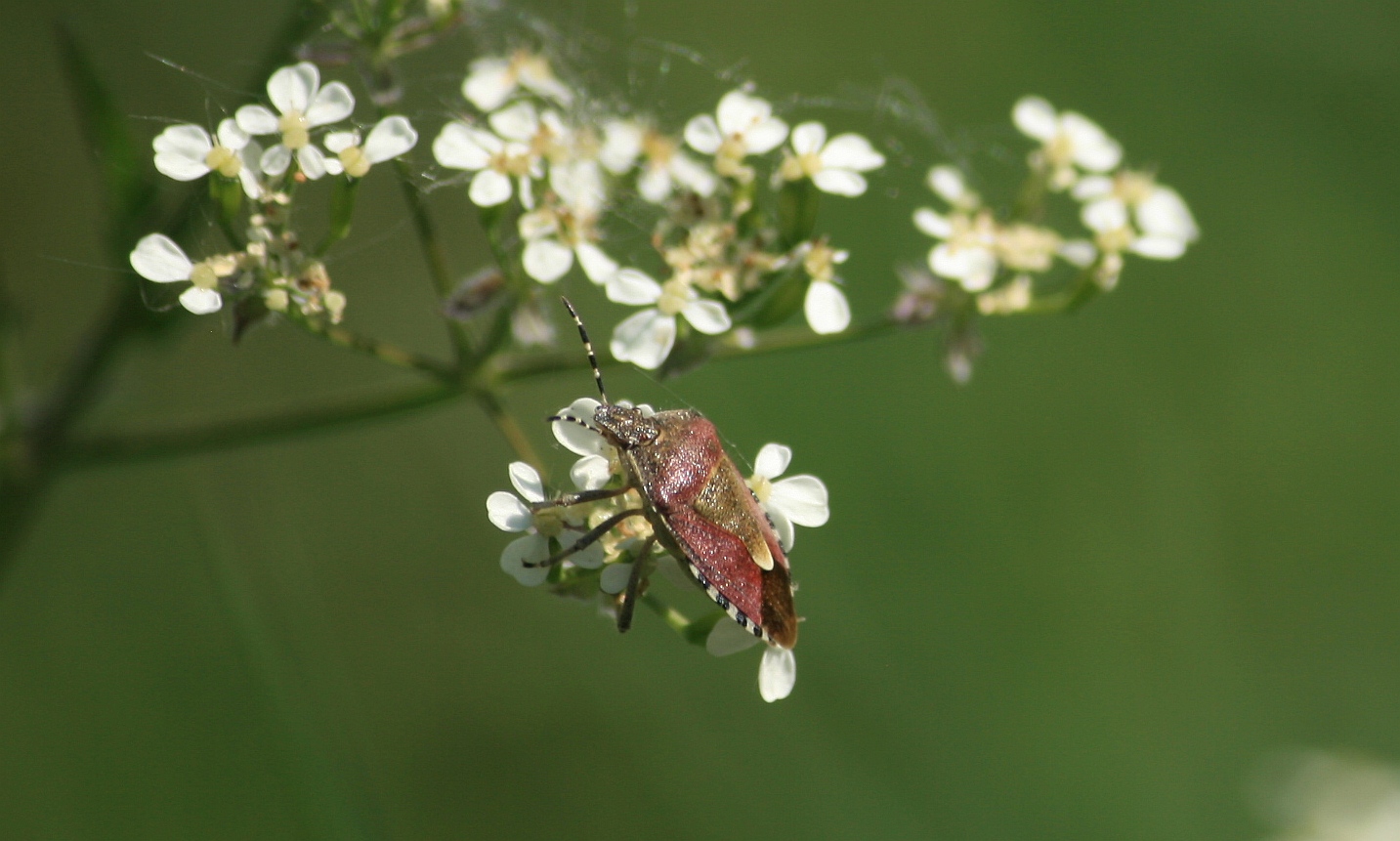
Sheildbug at Gang Mine

Small Heath Butterfly at Gang Mine. 


Butterflies: Small Heath (5) Orange Tip (1) Dingy Skipper (1) Green Veined White (1) Small Copper (1) 

Mammals: Rabbit, Grey Squirrel. 

24th May 2020

Bolehill Envrions

Natalie, Lizzie and I took a wader down to Cromford Canal from Wirksworth, taking the steep ascent to Bolehill. There were plenty of hirundines as swifts cavorting in the blue blazing sky. We took the farm track by the toad pond, so alive a few weeks ago but now near bone dry, and avoided four noisy dogs on the footpath, which yapped in a mildly confrontational manner. 
The Gorses in the cattle field were unusually quiet, but there was a fledgeling Meadow Pipit, my first fledgeling of this species this year. A flock of Goldfinch was busy on the farm track but included no juveniles; I would be interested to know if this collective feeding behaviour is common in the breeding season, or whether these birds were all failed or late breeders. When we reached the canal we found visitor numbers slightly up, but the only canal birds we saw were a single drake Mallard and a flyover Grey Wagtail. 
The climb up the Cromford incline was shallow but seemed unending. The precipitous gritstone cliffs were beautifully bathed in shimmering sunshine. In a small pond some Goldfish seemed to have been dumped, but alongside them some tadpoles persisted and Smooth Newts displayed courtship behaviour, the females gently pursued by the crested and amorous males.  Blue Tits nested in a hole in a concrete gatepost. 
I parted company with Natty and Lizzie, who took the quickest route home, and and headed up Black Rocks. The heat had brought out crowds, and some large groups were gathered up there, though they all seemed thoroughly civilised and there was no litter. There were a gorgeous family of Treecreepers, with little dumpy fledgelings, clinging to trunks above Black Rocks. 
A Cuckoo sang on the descent from the trig point, distinctive, distant, though it would not reveal itself. I stared urgently at a passing Sparrowhawk and at a Stock Dove. . A pair of Jays made food runs to nestlings of their own over my head as I waited in hope, but the Cuckoo remained unseen. I made my way back down to Wirksworth, as mother and foal Shetland Pony played in the evening sun.


Micropigs.


Birds: Mallard, Pheasant, Sparrowhawk, Black Headed Gull, Stock Dove, Woodpigeon, Cuckoo (Heard only) Swift, Kestrel, Jay (feeding), Magpie, Jackdaw, Blue Tit (nesting), Great Tit (nesting), Swallow, Chiffchaff, Wren, Treecreeper (+fl) Blackbird, Robin, Dunnock, Grey Wagtail, Pied Wagtail, Meadow Pipit (fl) Chaffinch, Goldfinch. 

25th May 2020

Stoney Wood

On a glorious sunny afternoon, \I went for my occasional Stoney Wood Bimble, where I counted the butterflies. The Stardisc, a sculpture which sits at the top of Stoney Wood, an illuminated, round star map, was receiving a little TLC from its creator, who was cleaning and respraying the stars. 

The continuing heatwave seemed to be keeping the birds down, but Blue Tits and Robins were busy feeding fledgelings. 

Birds Seen: Woodpigeon, Swift, Jackdaw, Blue Tit, Swallow, Willow Warbler, Whitethroat, Blackbird, Robin, Goldfinch.

Butterflies: Orange Tip (1) Dingy Skipper (5) Large White (1) Common Blue (6) Green Veined White (2) Small Heath (2)


Common Blue ovipositing on Lotus corniculatus at Stoney Wood.


Cromford Moor


In the afternoon I returned to Cromford Moor, which was surprisingly busy with people, in the hope of reconnecting with the singing Cuckoo, of which there was not sight nor sound. A rabbit afflicted by Myxomatosis was a sad sight, blind and stumbling. At such a point I wished I were not so squeamish and knew how to euthanise a rabbit, but I do not, and for fear of adding to its suffering I continued on my way. 
A beautiful Green Tiger Beetle was a welcome diversion from lapine tragedy, amd scuttled rapidly across the sand on the clearfell area. A splendid little predator, bright metallic green and orange iridescences in the evening sun.


Green Tiger Beetle at Cromford Moor. 


Birds Seen: Buzzard, Woodpigeon, Collared Dove, Swift, Kestrel, Jay, Magpie, Jackdaw, Great Tit, Willow Warbler, Chiffchaff, Blackbird, Dunnock, Chaffinch, Bullfinch, Goldfinch. 


Saturday, 14 November 2020

Lockdown Walks, a Retrospective.

 20th May 2020

Aiming for Idridgehay. 

On a very hot day, I decided to take a stroll to the South of Wirksworth, in the direction of Idridgehay, following Prathall Lane to its end. As Prathall lane becomes Taylors lane it crosses out of Derbyshire Dales Local Authority area and enters the Amber Valley. Here, curiously, there seems to be a change in the standard of footpaths. Whether this is down to different landowners or local authorities I do not know. Some of the wooded footpaths, winding their way past pheasant release pens, were almost impassable, but Anemones bloomed and Buzzards circled overhead. 


In the searing summer heat I made my way South, toward Idridgehay, picking up the road past the wedding venue at Shottle Hall, and then crossed the main road. A pair of Lapwings off the farmland whooped and tumbled, mobbing a passing Red Kite, perhaps the same bird I had seen a couple of days earlier.


I crossed the main road, and made my way down to the Ecclesbourne Valley Railway, crossing the tracks by footpath beside a beautifully restored signal box, and continued down to the River Ecclesbourne a little South of Idridgehay. Here, a beautiful pair of Mandarin Duck floated with their fluffy ducklings. Unlike many ducks, male Mandarins do display some parental care. As hole nesters, the bright male can safely incubate without his bright colours giving away the nest location to predators.


Mandarins. Not the ones actually seen on the Ecclesbourne, but some seen in Kent in about 2016, probably. Included for beautifulness. 


 I gave the Mandarin family a little space, as they seemed somewhat nervous,  and continued on my way, by road and by footpath, past a pond where Mayflies danced in the afternoon sun. I reached a field, and was warned by a sign that there was a 'Bull and Cows with Calves' in the field. Now I am not one to take undue risks around Cattle, but a Bull with cows and calves is usually happy to play the contented father, and seldom feels he has anything to prove. This Bull, however, was not 'with' cows and calves. This Bull was some distance from the rest of the herd, apparently shunned by them, unconnected by genetics or familiarity to any of them. This Bull had a lot to prove, and he bellowed aggressively. He trotted towards me, head slightly bowed, he did not charge but his vocalisations and his trot were warning enough. I made it to a bridge on the other side of the field. The Bull stood, and bellowed some more, whether in frustration or satisfaction I do not know. He was not the first confrontational oddity I was to encounter today. As I  continued walking I was met at a style by a lady of late middle age, dressed like someone who might live on a trailer park in an American movie, with a voice like the Queen. 

Our conversation went something like this: 

She: Excuse me, are you from the press? 
Me: From the press? why do you think I am from the press?
She: Are you from the press?
Me: Let's say I am from the press. Is there a story? 
Her husband: Let's see your press card. 
Me: Okay, I am not from the press. Why do you ask?
She: We've had some problems. 
Me: With the press? 
She: Are you from the Council? 
Me: Why would I be from the council? No, I am just out for a walk. (her husband is satisfied with this explanation and wanders off)
She: Where is your car? 
Me: It's at home. I am out for a walk not for a drive. 
She: I own this. I am the owner of everything. 
Me: Do you own that Bull?
She: There was a sign about the Bull. Why would you put yourself at risk from the Bull? 
Me: I was on a public footpath. A designated right of way. If you put the Bull there I did not put myself at risk, you put me at risk. 
She: Are you from the Police? 
Me: What? Do I look like I am from the Police? [I do not look like I am from the Police] Why would I be from the Police? 
She: I own this. I am the owner of everything. 
Me: Yes but why do you keep asking if I am from the legitimate democratic authorities?

I left the eccentric landowner and her eccentric Bull to their own devices, and wondered whether she was concealing some mystery. Her estate is indeed a beautiful, lush place to walk. I have endeavoured to obscure its location and identity, for obvious reasons. 
I continued, the day advancing apace, back to Wirksworth, grabbing a pint on the way from a hole in a pub wall in Kirk Ireton. Near Miller's Green a snuffling in the leaves beside the road alerted me to my first living hedgehog sighting of the year. Once again I arrived back at Wirksworth in darkness. 


Birds Seen: Mandarin Duck, Pheasant, Grey Heron, Red Kite, Buzzard, Lapwing, Curlew, Black Headed Gull, Tawny Owl (H) Swift, Kestrel, Magpie, Jackdaw, Carrion Crow, Raven, Blue Tit, Great Tit, Swallow, House Martin, Long-Tailed Tit, Chiffchaff, Whitethroat, Wren, Blackbird, Song Thrush, Robin, House Sparrow, Chaffinch, Goldfinch. 

Mammals Seen: Rabbit, Grey Squirrel, Pipistrelle, Hedgehog. 

Butterflies: Red Admiral, Speckled Wood, Small Tortoiseshell, Peacock, Large (Cabbage) White, Green Veined White. 


Saturday, 24 October 2020

Lockdown Walks, a Retrospective. 9th-15th May

 9th May 2020

Cromford, Groaning Tor, Middleton Top. 

I strolled from Wirksworth up through the National Stone Centre and around Gang Mine Nature Reserve, where the mountain pansies bloomed, vivid yellow. The swifts were now abundant, with plenty of birds screaming and whistling through the heavens and over the undulating mining landscape of lead spoil and ancient workings.


Mountain Pansies at Gang Mine


Bluebells at Rose End Meadows.


I continued via the Dene Quarry footpaths, where I had a fleeting glimpse of a butterfly which may have been a wall, and through a Rose End Meadows, now carpeted with bluebells. Surprisingly, having seen it alive with migrants not too long ago, it was now fairly bird quiet, and I descended via a disconcertingly steep path to the small river beside the Via Gellia, before ascending through wet grassland and woodland to a rocky escarpment, called 'groaning tor' on my OS map. I found it rather impressive. I picked up the path to Middleton, and saw more of the apparently locally ubiquitous Redstarts, and was briefly confused by a horse in a zebra costume. A friend tells me the stripes deter biting flies, hypothesised as one possible advantage of the markings of real zebra.

Horse in a Zebra Costume. 


I reached Middleton, and decided to pick up the 'circular walk from Middleton Top.' This crosses more farmland, young woods of hawthorn, birch and blackthorn, and boasts lovely views across the valley. A Brown Hare was in the farmland, watching attentively, but not fleeing. In the Hawthorn woods the Wood Anemone had begun to go over, some of the white-pink blooms beginning to wilt or brown, but they were still an impressive carpet. I rounded the woods and joined a disused entrance track. after a few wrong turns, and impressive views of some remarkable disused quarry equipment, tunnels hewn into rock, I reached the loops' road section. This section of road could be a challenge to walkers on a busy day when the quarry lorries are on the move.
A tractor appeared to be spraying fertiliser on the fields above. Small Tortoiseshell butterflies, many of then slightly tatty from age basked on the dry stone wall, occasionally taking off to flirt with each other, or even a passing female Peacock Butterfly.

Small Tortoiseshell


I walked across middleton moor and descended once again via the National Stone Centre. 

Birds Seen: Buzzard, Black Headed Gull, Stock Dove, Woodpigeon, Collared Dove, Swift, Great Spotted Woodpecker, Jay, Magpie, Jackdaw, Blue Tit, Great Tit, Skylark, Sand Martin, Swallow, Chiffchaff, Blackcap, Whitethroat, Blackbird, Mistle Thrush, Robin, Redstart, Dunnock, House Sparrow, Pied Wagtail, Meadow Pipit, Chaffinch, Linnet, Goldfinch. 

Mammals: Brown Hare, Rabbit.

Butterflies Seen: Peacock, Brimstone, Green Veined White, Orange Tip, Speckled Wood, Dingy Skipper, Small Tortoiseshell. 


11th May 2020

Wirksworth and Bolehill

I took a bimble up the hill to the trig point on Cromford Moor, and strolled along a trail marked out by blue posts, passing relaxed cattle, moving between regenerating moorland on clearfelled forestry land, and young and mature pine plantation. Willow Warblers and Chiffchaffs were busy among the pines. Swifts zipped about ahead of the weather under an increasingly angry sky, which changed rapidly between blue, and the colour of old lead. I even enjoyed a brief hail shower. 
Cromford Moor is an interesting little patch. Though no access is marked on the OS map it is entirely possible to walk round it, and many do. Worth more of my attention, this spot, I think. 

Birds Seen: Mallard, Buzzard, Black Headed Gull, Herring Gull, Swift, Jackdaw, Carrion Crow, Coal Tit, Great Tit, Swallow, Willow Warbler, Chiffchaff, Whitethroat, Wren, Blackbird, Song Thrush, Robin, Grey Wagtail, Pied Wagtail, Goldfinch. 

12th May. 

Stoney Wood

I took a very brief stroll at Stoney Wood in the afternoon. A beautiful pair of Bullfinch foraged together. Bullfinch are almost always seen in pairs. They are rather romantic like that, foraging together as a pair even during the breeding season. 
Jackdaws flew over carrying nesting material, perhaps for mid season repairs or ahead of a second brood. Corvids breed early. In the low scrub lurked a small, brown, speckled creature, my first fledgeling Robin of the season. Robins, presumably the parents of this little youngster, squabbled with goldfinches over the bird feeders in a neighbouring garden. 

Birds Seen: Black Headed Gull, Woodpigeon, Swift, Jackdaw, Coal Tit, Great Tit, Long Tailed Tit, Chiffchaff, Nuthatch, Blackbird, Robin, Dunnock, Bullfinch, Goldfinch. 

Mammals: Grey Squirrel. 

13th May

Wirksworth-Alport-Idridgehay Envrions. 

A stroll up to Knob Lane was taken in search of Curlew, which I had encountered up here a few days earlier. Not sight nor sound of these melodious and enigmatic waders was had. I took the footpath down into the Amber Valley behind Alport Heights, where a Red Kite, a rather special lockdown 'tick' soared overhead. These magnificent birds are comeback kings, common scavengers even in cities 200 years ago, before they were methodically exterminated, reduced to a tiny population in North Wales by the mid 20th century, where sympathetic landowners allowed them to thrive quietly, then reintroduced, most famously in South Oxfordshire but at several sites in England and Scotland, at the close of the 20th century. When I was a kid they defined the rare and persecuted raptor. Now they are breeding in almost every English county, and there are records of them from Central London. Mobbed by crows this magnificent scavenger floated above the mid Derbyshire Countryside, as if his species had never left. He was a joy to see.


Red Kite near Alport Heights


Moving from the Derbyshire Dales to the Amber Valley, the quality of footpaths rather declined. It is unclear whether this is the result of differing priorities between the councils, or differing landowner attitudes, but the change across this political boundary was notable and distinct. Eventually I found the Ecclesbourne Way, a route promoted by the Ecclesbourne Valley heritage Railway, and walked beside the brook. Agricultural runoff rendered the brook somewhat cloudy, and it proved disappointing in terms of birds, though a magnificent Grey Heron took flight. I ascended again through the beautiful Gibbet Wood, the light of a fading sun peering between the trees, a tiny brook babbling its progress down to the Ecclesbourne. 

I descended via New Buildings and Gorsey Bank, the Dandelion fields now fully gone to seed, spherical 'clocks' of grey fluff replacing the yellow blooms. I continued through Folly Well to Gorsey Bank, and back into Wirksworth


Birds Seen: Grey Heron, Red Kite, Buzzard, Black Headed Gull, Lesser Black Backed Gull, Stock Dove, Woodpigeon,  Collared Dove, Swift, Magpie, Carrion Crow, Blue Tit, Great Tit, Skylark, Swallow, Chiffchaff, Whitethroat, Wren, Nuthatch, Blackbird, Song Thrush, House Sparrow, Pied Wagtail. 

Mammals: Brown Hare, Rabbit, Grey Squirrel. 

14th May 2020

Bolehill Environs

I took a stroll up to Bolehill and around the blue trail once again, on a gloriously sunny evening. Meadow Pipits sang in stereo from every dead tree and stump among the recovering moorland, in the golden light. Their chorus was joined by truck horns and distant rumbles, shattering the tranquility of the moors. It was Thursday, and the truck horns someone's thoughtful contribution to the weekly applause for the NHS and carers.

Meadow Pipit singing on Cromford Moor. 


Birds Seen: Buzzard, Woodpigeon, Sift, Wagpie, Jackdaw, Coal Tit, Blue Tit, Great Tit, Swallow, House Martin, Long Tailed Tit, Willow Warbler, Chiffchaff, Whitethroat, Blackbird, Song Thrush, Robin, Dunnock, Meadow Pipit, Chaffinch, Goldfinch. 

15th May. Wirksworth to Kirk Ireton. 

Natalie and I made our way down through Miller's Green, down to Kirk Ireton via the footpaths associated with Dark Lane, on a bright afternoon. My route through the fields and Half Moon Lane was deemed unduly circuitous. We passed plenty of Pheasants and saw some Red Legged Partridges, and buzzards soared. So many of the passerines we saw were now carrying food parcels to hungry chicks. We could hear the peeps of nestlings too, many of them now well grown. Chiffchaffs and Whitethroats were vociferous. Unfortunately the farmers had been out spraying again, and many of the fields close to Kirk Ireton bore its wilted signature. However this did not seem to have immediately affected the birdsong. 

On the pond near Miller's Green, a carp fishery, were baby Moorhens, and worker Early and Buff Tailed bumblebees, the small 'baby bees' which appear at this time of year, were busy on any thistles. A Nuthatch startled as it flew from a garden feeder past my face, a blue-grey flash across my field of vision. A newly fledged House Sparrow was looking for the power of flight, testing its wings on short hops from the ground near Haarlem Mill, and Swifts wheeled and whistled overhead.


Song Thrush. 


Birds Seen: Greylag Goose, Mallard, Red Legged Partridge, Pheasant, Buzzard, Moorhen, Woodpigeon, Swift, Magpie, Carrion Crow, Blue Tit, Swallow, Chiffchaff, Blackcap, Whitethroat, Wren, Nuthatch, Starling, Blackbird, Song Thrush, House Sparrow, Dunnock, Bullfinch, Greenfinch, Goldfinch. 


Saturday, 10 October 2020

Lockdown Walks: A Retrospective. 5th May. Four Trigs.

 Apologies for the long delay in getting back to blogging, all good things must come to an end, including the longest summer, and I have now returned to work.  So the blog posts will remain relatively infrequent, but will continue. 

So, here goes. 

5th May 2020 Spring Wood, Carsington, Black Rocks, including four Trig Points. 

On a cool breezy day, I strolled out of Wirksworth toward Sprink Woods, at the time an unofficially accessible patch of woodland just across the fields to the South of the town. The trees were very quiet, but the woodland floor bloomed, especially in the patches of felling. Yellow Archangel, Forget Me Not, Wild Garlic, Red and White Campion, and Herb Robert all bloomed in the patches of sunshine. Unfortunately there was also a little litter, something which may have inspired the landowner to close off access to the wood a few days after my walk there.


I reached the Callow Road and proceeded to the Stainsborough Farm trig point, accessible across fields by two open gates. I descended toward Carsington Water, on the way encountering the distressing sight of a newborn lamb stuck fast between two barbed wire fences. I managed to lift out the tiny, wobbly creature, which was as light as one of my cats, and return it to the field from which it came. It doddered about and bleated. I did not see it reunited with its mother, and just got sheep milk poo on my hands and a bit emotional. Online approaches were made to find the farmer, such is the glory of technology, and hopefully the animal was okay.


RAF Hercules fly past. 

Great Northern Diver, Distant but distinctive. 


From the lamb I made my way down to Carsington  Water, by now bathed in sunshine after an overcast morning, and listened to the rhythmic, foot tapping stylings of Reed Warblers at the foot of the Reservoir.  The calm was broken by a very low flying RAF Hercules transport aircraft, whirring through the valley.  The Great Northern Diver, a juvenile which had spent the winter at Carsington, gave wonderful close views, showing its Hulk-like proportions, and the diagnostic neck markings which separate it from the other two species of Diver.  This is the same species of bird referred to in North America as the Common Loon, a reference to its haunting breeding call, a sound we do not hear at these latitudes. This wintering individual would soon return to the Northern sea lochs and fjords in which they breed, places to which the summer comes late. A Willow Tit also at Carsington was my first sighting of this declining woodland species, which thrives at the site, of the lockdown walks. 


Carsington Water from Carsington Pastures. 


I climbed up after my brief flirtation with the lake shore, through the hummocked fields of Carsington Pasture. A grumpy landowner was evidently keen for me to keep to the footpath, having made careful use of signage, and a muckspreader to dissuade me from leaving the path to have a sit down. The views from here were extraordinary, however, vast, across the reservoir. Skylarks and a beautifully plain Garden Warbler sang. Higher still, through the edge of Brassington Town, where people suspiciously eyed the stranger out in Lockdown, I climbed, to a picnic site where Orange Tip butterflies patrolled banks of vibrant blooms, then turned into a field where Early Purple Orchids bloomed, and my first Dingy Skipper butterfly of the season was on the wing.

Orange Tip (male)

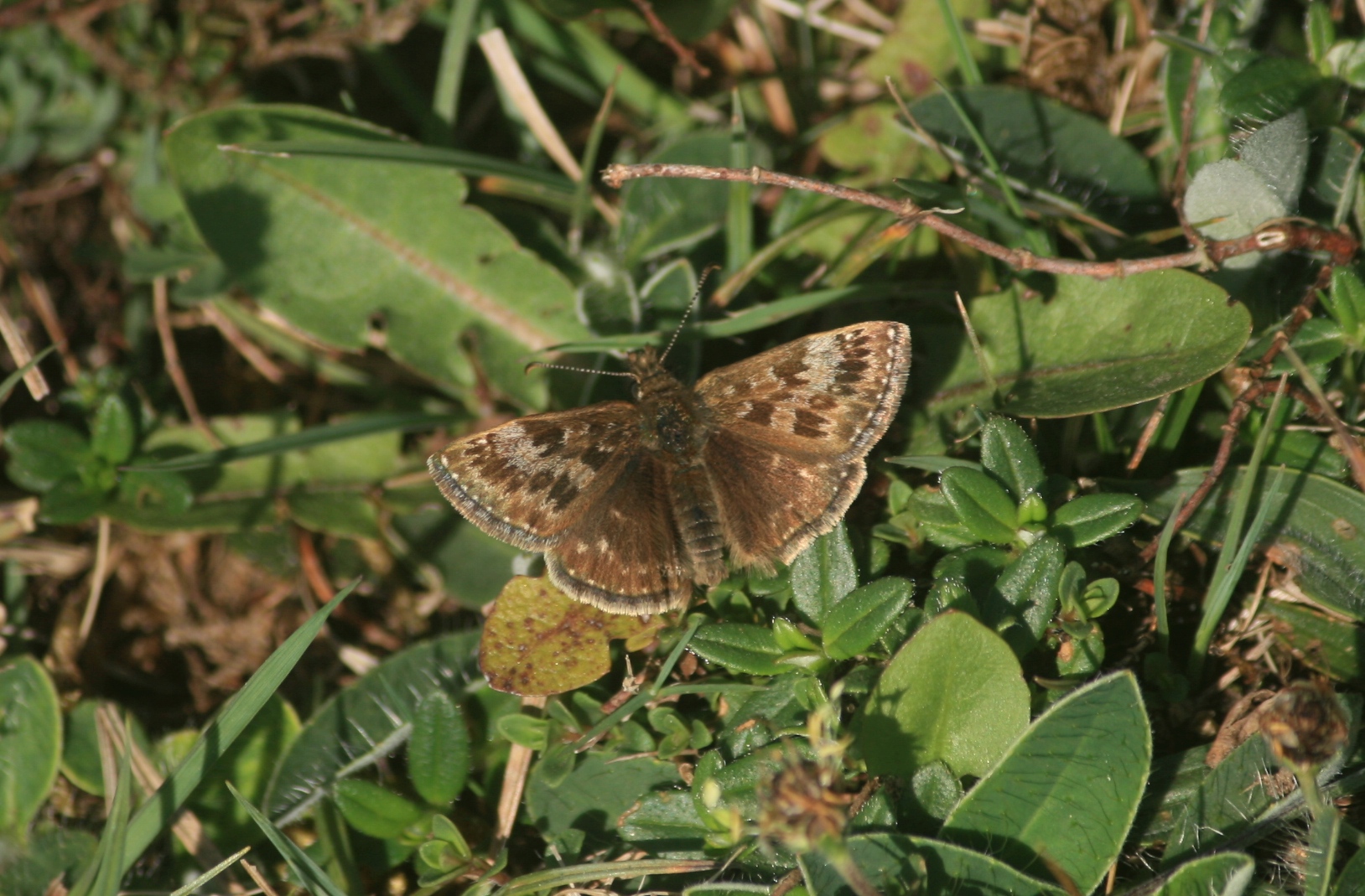
Dingy Skipper

Early Purple orchids and Cowslips


The factory which sits beneath Harborough Rocks was noisy again, in contrast to earlier visits in Lockdown where it had been silenced. Meadow Pipits and Skylark were in attendance around the trig point, the second of the day.


St Mark's Fly (Bibio marci)


I returned to the High Peak Trail and, with evening fast approaching, I enjoyed the sight and sound of plentiful Whitethroat and a glorious male Redstart once again close to the turning for the Middleton trig. As I walked away from it to reconnect with the footpath, Meadow Pipits took off in fright but did not leave the area, suggesting the proximity of nests on the ground. I will avoid the area in future so as not to risk disturbing these birds. I reconnected with the Wheatear pair behind Middleton Top Cycle Hire. The light had really begun to fade now, but the possibility of four trigs held rather more pull than perhaps it should, and I yomped to the fourth Trig at Black Rocks, even breaking a sweat, something I usually avowedly avoid while out strolling, to achieve my objective. I reached it with just enough light for a final selfie.  Bats flew in the gloom. I got back to my front door in darkness.


Harborough Rocks Trig Point. 

Moonrise over Middleton

Birds Seen: Canada Goose, Greylag, Gadwall, Mallard, Tufted Duck, Great Northern Diver, Grey Heron, Sparrowhawk, Buzzard, Moorhen, Coot, Oystercatcher, Lapwing, Black Headed Gull, Lesser Black Backed Gull, Stock Dove, Woodpigeon, Collared Dove, Tawny Owl (Heard only) Swift, Kestrel, Magpie, Jack, Rook, Carrion Crow, Raven, Coal Tit, Willow Tit, Blue Tit, Swallow, House Martin, Willow Warbler, Chiffchaff, Reed Warbler, Garden Warbler, Whitethroat, Wren, Blackbird, Song Thrush, Mistle Thrush, Robin, Wheatear, House Sparrow, Dunnock, Pied Wagtail, Meadow Pipit, Chaffinch, Linnet, Goldfinch, Reed Bunting. 

Butterflies: Peacock, Green Veined White, Orange Tip, Brimstone, Dingy Skipper. 

Mammals: Brown Rat, Grey Squirrel, Rabbit, Pipistrelle.