Thursday, 27 September 2012

Leighton Moss


Looking at the grey sky, I am afraid I failed to rise with the lark this morning and get to the RSPB’s reserve at Leighton Moss as the Sun came up, but I did make my way to my new local big RSPB reserve this afternoon.  I arrived under the bluest sky I have seen since I arrived in the North West. The leaves on the trees up here have already started turning, leaving me feeling like I had lost a couple of weeks off the end of Summer somewhere on the M6, and despite some sunshine yesterday, it has rained continuously since the day after I arrived, albeit with rainbows.

The downpours which have afflicted the North of England in recent weeks will not have gone unnoticed given all the flood warnings. Here in Lancaster I am fine, it has rained incessantly bar two days since my arrival but when I reached Leighton Moss I was a little disappointed to find that I was only able to view half of the reserve as some of the paths had become flooded. I left the visitors centre and took the opportunity to glance at the feeding station which sits outside it. There was a large amount of Passerine activity, with chaffinches and greenfinches alongside a less familiar Marsh Tit and a number of scruffy juvenile Bullfinches. One young male Bullfinch appeared to be gaining his distinctive and instantly recognisable salmon-pink breast in awkward patches. Badger-striped coal tits were here in number, and Mallards, these ones now well past their ‘eclipse’ and regaining their adult plumage, pottered about on the ground picking up the dropped seed from the feeders.
Coal Tit at the Feeding Station.


Scruffy young bullfinch, a stark contrast with the very smart adults.


After a few attempts to photograph some of the passerines, a task made all the more difficult by the positioning of the feeders under a thick woodland canopy, I headed on to the first hide,  called Lillian’s Hide, and from it, a large structure with a wide bay window affording good views across the lake, and was able to get a feel for the reserve. I was there with few expectations, and had been expecting to find a “moss,” that is, a Sphagnum bog, of the type so threatened by peat extraction, and was surprised to find a lowland wetland of much more familiar character.  Leighton Moss is described as the largest reed bed in the North West, and is a combination of Phragmites reed-swamp with scattered clumps of Typha, with its thick dark seed heads, popularly called Bullrush, and open water, fringed by (very) wet woodland, with wooded hill slopes climbing away. It lies in or close to the Silverdale Area of Outstanding Natural Beauty, and the elegantly curvaceous landscape is certainly beautiful. I was surprised to see, given the autumnal character of the last few days, that there were still dragonflies on the wing. Migrant Hawkers patrolled above the reeds. Some of the people in the hide were discussing Otters which had apparently been seen the same morning. Maybe I shouldn’t have been so persistent with that snooze button.   Outside were no more than the usual suspects-coots, some scruffy Tufted Ducks, the males now moulting out of their eclipse plumage, brown and patchy with white flanks, a moorhen or two, and the obligatory mallards. I stayed to enjoy the landscape for a bit, and watch a late Red Admiral butterfly fluttering about,  but the lack of interesting birds drove me on.
RSPB Leighton Moss.


I walked along the path toward the next hide, called the Public Hide, presumably because it sits on a public footpath to Leighton Hall, passing on the way a patch of open grass and a view of the reserve. The reed swamp certainly looked expansive. I continued through a Carr woodland rich in bird calls, and Goldcrests, to the main path through the reedbeds to the hide. I found myself wading uncomfortably through water several centimetres deep, and very cold, but stuck to the path and persevered.   A sign advertised grit trays supposedly frequented by the UK’s most Northerly population of Bearded Tits, but none of these charismatic denizens of thick reed beds were out today. Another advertised Bitterns, but only a beautiful family of mute swans, dabbling about in the sunshine, were to be seen in the patch of open water I looked out upon. Above me a buzzard circled. I might have missed it but for the friendly couple with pleasant local accents who pointed it out, along with the distinct absence of bearded tits, which they suggested might be in Africa. I replied that they might equally be at Purfleet. No bearded tits, but I took a moment to enjoy the sight of a large bird of prey circling on thermals above the beautiful Lancashire countryside.
Mute Swans near the Public Hide.


The view from the public hide was not much better than the first, again with Mute Swans, Mallards, Coots and Tufties. Not fancying further wading along the flooded paths, it was with a sense of mild disappointment that I made the return trudge through the freezing water.  As I re-entered the Carr woodland I was in for a pleasant surprise. A flock of small birds was moving though, paying particular attention to one Elder bush. This was one of the big gangs of mixed passerines foraging together and taking advantage of safety in numbers through the Autumn and Winter.  They are said to tolerate each other for this reason-while each species has a subtly different diet to the others. Goldcrests foraged frenetically among the yellowing leaves, and long tailed tits contact-called to each other. Blue tits and coal tits hung upside down from the tips of branches, and Treecreepers wound their way up the stems.  Great tits paused before disappearing into the depths of the vegetation, and smart Chaffinches and Greenfinches perched boldly and openly on the lower branches.   As I stood enjoying the spectacle of all these birds around me, yet more species piled in. A very handsome, boldly striped male Siskin appeared before disappearing among the elders’ leaves. A bird I enthusiastically called as a Garden Warbler turned out to be a female Blackcap.  I am certain I have never seen a fraction of this number of goldcrests in one place before, even in sheltered southern woodlands on snowy days.  A Marsh tit was also briefly visible. An older couple also stood enjoying what the RSPB might describe as a “moment,” and they told me they had seen a Willow Warbler in the flock as well.  We were surrounded by tiny passerines. In all the flock seemed to contain no less than 11 species, including the ten I had seen and the friendly couple’s Willow Warbler.  A Robin appeared and made angry noises toward the other passerines, and as soon as the show had begun, it was over, the distinct shapes of two Long-tailed Tits were briefly silhouetted against the sky through a gap in the branches appeared as stragglers, as the flock moved on to new bushes deeper in the woods and further from the path.  I don’t know whether the chirpy but highly territorial Robin had actually chased the whole flock away, but he seemed content to have his bush to himself again.

Very nervous coot.


I continued my return journey to Lillian’s hide.  There were a few Siskins feeding on the Birch which hangs over the hide. Inside the view was a little more interesting than before, and I hung on for a while in the hope of seeing some otter action. None was forthcoming, but a handsome, and very well camouflaged Snipe offered a rare photo opportunity, as it probed about in the  mud where some of the reeds had been cut, in search of invertebrate prey.  A very handsome Grey Heron stood silently and solemnly on one of the islands, eventually tucking his head away under one wing and roosting there. A single Little Egret flew over. I was surprised to see the small white heron so far north just a few decades after its rapid invasion of the country, I thought of them as a Southern thing.  A Gadwall, a male smart in his fresh breeding plumage, swam by, allowing me to add another water fowl to my list. As I enjoyed the view, I saw a number of Mallards take off in the back of my view. The coots instantly fell silent. One moment ago they had been splashing about, calling, bickering with each other, and diving for weeds. Now they swam quickly, some of them running on the water, onto the island, where they stood tensely among the reeds staring fixedly across the water. I followed their gaze. A Marsh Harrier was quartering over distant reeds, wings raised in a shallow V, with gold around her face and the leading edges of her wings. She settled into a bush across the water, where she remained as long as I did. I waited a while, fruitlessly, in the hope of meeting my first English otter, and eventually the tension among the coots subsided and some of the bolder ones ventured back into the water, still clearly aware of the deadly predator on the other side of the water. 

Very handsome and obliging Snipe.


I took a walk back to the RSPB visitors centre for a swift cup of coffee, and then took another look at the feeders.  I could hear the low, throaty bellowing of Red Deer stags in the distance, an enthralling and unfamiliar sound to this Southerner.  A handsome cock Pheasant strutted up and down beneath them. A brown passerine on one of the feeders was revealed to be a Redpoll, another less familiar species. Its body was brown and heavily streaked, with a small red cap on its forehead.   Passerine numbers were down on this morning, perhaps the fading light, and failing weather, it had begun spitting again, had seen some of them off to roost. I watched the antics of some of the remaining birds for a while, there was still a Marsh tit about, before I decided to jump in the car and try to reach the other end of the reserve. The RSPB land straddles a railway line, and to reach the other side I had to drive up in the direction of Silverdale and over a level crossing, then take a right turn after crossing a bridge. Inevitably, I got completely lost and spent several minutes trying to find the place. When I did, and I never got as far as the two Salt marsh hides, which overlook the edges of Morecambe Bay, I discovered Leighton Moss had one more trick up its sleeve to really impress me.
Pheasant at the feeding station.
I drove up the gravel track, having found it eventually, and stopped behind another driver who was looking up at the starlings, which had gathered in some number on the telephone wires which hung between two poles each side of the road, framing a small railway bridge and the sunset behind them. Every couple of minutes a small group of Starlings would arrive from somewhere and jostle for position with the birds which had already arrived. The gentleman in the other car passed me and remarked he was off to get his camera, the starlings had arrived. He departed down the road. Not long after he left, a larger flock appeared, and, as if at a signal, they combined with the flock on the wires and ascended into the sky. At first a disorganised mass of birds, a shape moving low over the reeds appeared to cause them to transform. All at once the edges of the flock became sharply defined, each bird apparently moving as part of some combined whole. They moved quickly, sharply, and as one dived into the reeds. A few moments later the chattering started, and the dark shape rose up and away headed for the hills. It was a fat dark shape, a ball of muscle, a clenched fist of a bird, between pointed wings. I recorded it as a male Peregrine, as it slipped out of site. I waited a few moments listening to the chattering in the reeds. A few pied wagtails flew low over the tops of the reeds as Cormorants passed inland over my head, and a fine rain began to fall as the light continued to fade, the sunset burning a deep yellow-orange, a gap in the cloud fringing the horizon. Lapwings flew down off the slopes, perhaps from further inland, in a flock, toward some protected saltmarsh roosting site. The gentleman with the other car returned with his camera, and was a little disappointed to find himself with only a noisy reed bed to point it at.  A distance away a Marsh Harrier put up small flocks of starlings, rising out of the reeds like puffs of smoke. We both looked at it through the binoculars and enjoyed the presence of a splendid raptor.   The next predator to appear, the starlings saw before we did. First, the noisy chattering of the birds stopped, and then, with a roar like the ocean, like waves breaking on a shingle beach, the starlings in the reeds took flight. The murmuration twisted, a single dark shape composed of what must be hundreds of birds, above the reed bed. Assigning a number of birds to them would have been impossible.  The predator, a juvenile Sparrowhawk which only briefly passed through our field of view, continued on its way and must have cleared the area quite quickly, as the starlings dived down into the reeds in a single column. They fell silent but the sound of the birds’ wings in unison was probably the most memorable feature of the spectacle.  Eventually the chattering resumed, and we watched the sky fill not with dense flocks of starlings but a more diffuse flock of hirundines, shortly, surely, to be on their way back to Africa in pursuit of bugs and summer.  Loosing the light, I headed home, with the word "murmuration" and the sound of hundreds of starling wings in my ears.
Murmuration.


Monday, 9 July 2012

Heybridge Basin


Saturday afternoon took me and my good friend Becky up to Heybridge Basin near Maldon, in the car to hone my driving skills. It lies where a canal meets the River Blackwater, effectively the estuary of the river Chelmer in North Essex.  We parked up in the free, council run car park on a grey afternoon, and wandered down a short length of canal to the village which stands beside the ‘basin,’ a sort of parking area and maintenance yard for canal boats. There were a number of Common Terns fishing around the spot where the fresh water of the canal passes through lock gates into the Blackwater.  A few black-headed gulls were there too, more powerful birds than the terns in many ways, which kept out of their way. The Black-headed gulls did not compete with the Terns in the grace and style stakes though, the forked tailed, almost angelic “sea swallows” made the larids look dumpy and inelegant. That said, the last time Bexx and I had met Terns, on a sunny day in Northumberland almost exactly a year previously,  they had attacked us. We were in the Farne Islands, and on one of the islands they just dive bombed any visitor stepping withing the colony, making contact with their beaks! Terns look pointy at the best of times. When they're going for the top of your head they are very pointy indeed. Today, however, they just allowed us to stand impressed by grace and fishing prowess. 

Beautiful Common Tern.


The salt marsh which borders the estuary separating Hebridge from the historic town of Maldon was alive, the vegetation was green and though of course the wintering birds are long gone, and the Autumn passage migrants yet (but soon) to arrive in any numbers, the peeping calls of Oystercatchers regularly broke through, and, as we walked the sound of Gulls became louder. A lone Little Egret shook his feet in the shallow, muddy water, and moved with elegant high-stepping motion across the mud. He seemed to dislike having a camera pointed at him and was soon on the wing, steadily, almost casually, making his exit from view across the saltmarsh. 
Little Egret at Heybridge


A number of old sand or gravel pits near Heybridge, between the canal and the Blackwater, have been turned over to nature, and black headed gulls, apparently in their hundreds, have taken to nesting on the small, gravelly islands. Tufted Ducks were about, some of the males still in their striking black and white but some turning over into their duller eclipse plumage, as were some of the drake mallards which were about too. A few swallows were hunting insects, sweeping around near the waters surface and over its grassy margins, never appearing to cross the Blackwater.  A cormorant flew overhead, straight and true, a jet-black adult.  There were a few Whitethroats and Acrocephalus spp. warblers singing in the bushes and lakeside vegetation, but passerine activity was a little disappointing, a couple of greenfinches flew over our heads. I’d seen a cuckoo there a couple of years ago, with my father who always seems to find cuckoos, but there wasn’t one about today. This breeze probably wasn’t helping, and nor was the cold. 
View of the River Blackwater from Heybridge.

Maldon’s sea front is dominated by bright building fronts, an old church and the wide Marine Park, the fountains of which could be seen from across the river. A stretch of tidal river, lined with lush saltmarshes, separates it from Heybridge. Here a number of shelducks filter-fed in the mud, and a couple more of these lovely, big white and black ducks flew over. Shelducks congregate in Northern Germany to moult, evidently these birds had yet to leave, and retained their smart breeding plumage, which includes an iridescent green head and red bill, and a chestnut band around their chests, in both sexes.  These handsome birds specialise in life around river estuaries, and are common in places like this but scarce in other habitats, some wintering on gravel pits, but rarely far from the coast.
Maldon


Maldon is a pretty town, when viewed from back here, and today there was some live music coming out of it, apparently from one of the towns old pubs.  Its sea front is dominated by bright building fronts, an old church and the wide Marine Park, the fountains of which could be seen from across the river. As the sky began spitting rain on us, I wondered if a boat over the river would be a good plan.  We walked on, past several cute, small rabbits, and reached a bank of spectacular, and very photogenic wild flowers.  These bordered some new build housing, presumably a backwater of the one-horse town of Heybridge.  Perhaps they had been put down as a seed mix as mitigation for the loss of habitat resultant from the building. Poppies nodded in the wind, beside camomile and some of the most brilliantly electric blue cornflowers I have ever seen. The flowers were popular with bees, and I wondered if more invertebrate fauna might be forthcoming were the weather a little less grey, and becoming colder. 

A wildflower mix. Instant wildlife for developers.


Luckily the rain continued to hold off as we walked back up the canal to the free car park which stands by it. We passed the narrowboats on the canal, which looked far more charming than the millionaires’ motor yachts which sat alongside more elegant sailing craft in the Basin itself. Although the two, appropriately nautically-themed pubs looked appealing for a glass of branded cola and a warm up, we had a dinner invitation in Witham to take up. Oh yeah, because I can drive now. Which is win. 

Black Headed Gull at Heybridge Basin. These breed in substantial numbers on the old gravel pits. 

Sunday, 24 June 2012

Heaton Park, Manchester


I need to conclude the Manchester account before I end up with a massive backlog of trips to write up. I went to Heybridge Basin yesterday and Cranham Marsh today.  I’m going to keep it brief but I felt that Heaton Park, Greater Manchester, which I visited with Tom, is a remarkable enough green space to be worth a write up. It belongs to a generation of grand, landscaped parks, from the 19th century and calls to mind the Royal Parks of London, which it exceeds in size. It stands Heaton Hall, an old stately home used to accommodate aircrew on flying training during World War II, until recently open to the public, and now, unfortunately, unoccupied and looking worryingly forlorn.
Heaton House.

Reaching the park we decided to head up to something called the “animal zone” or some such, which turned out to be a collection of grubby farm animals in small enclosures. The highlight was watching the swallows flying in and out from under the eaves, busily attending their chicks, before rocketing out and into the sky in search of insects. Outside the run down looking stately home they alighted on the ground in pursuit of something we could not see. There were a couple of pied wagtails running about as well. 
Swallow at Heaton Park.


The park is a patchwork of long, rough grass, manicured lawn and copses. In the copses the green leaves of Himalayan balsam are in evidence, suggesting this invasive has a hold here, beside the stinging nettles and other flora. Whitethroats could be heard singing but few birds presented themselves among the leaves, those that did turned out to be blue tits. There were plenty of Rhododendrons, presumably planted there for their dramatic flowers, and they indeed looked spectacular. There were dog roses around as well. The woodland, clearly planted, had obviously matured, and spots around the sites main lake, where the Rhododendron lined gaps in the tree cover from which the pavilion could be seen across the water, was testimony to the skill and foresight of the landscapers.
View from the "Temple.""


On the lake we saw a crèche of Canada geese and goslings, and the waterfowl were dominated by Canadas and a number of feral, farmyard type Geese.  Feral Ducks mingled with wild Mallards and tufties. Some of the male mallards appeared to be losing their bright, breeding plumage, and their brown eclipse plumage, providing vital camouflage during the late summer/early autumn moult, was beginning to show through, as brown patches against the smart iridescent green of their heads and the grey of their flanks. A moorhen was feeding a fluffy chuck, and then, somewhat inexplicably, decided to chase it off. There were a few coots on the water, as well as a distant little grebe.
Moorhen and juvenile
Juvenile Coots.


We walked back up to the stately home and to the “temple” an observatory-like structure which may well have been used as such. From this, the highest point, according to interpretive signage, in Greater Manchester, much of the city was screened by woodland, but in front of us the Beetham Tower still loomed, an ever present sense of place.  We elected to try to and have a look at Heaton Reservoir, which appeared on our maps of the park, but we could not get there. Skirting round a barbed wire compound with communication aerials inside, we found ourselves in a patch of meadow which again hosted common spotted orchids.  Mistle Thrushes hopped about among the grass.  We wandered off through the woods until we came to the margins of a rough grassy area, grazed by a number of horses of various sizes and shades. A very handsome Sparrowhawk over our heads was a welcome addition to the Manchester bird list. 
Mallard moulting into Eclipse plumage.


At the tram station on the way home a juvenile blackbird posed for photos, before the tram made its way back among the red brick and new builds of Manchester. The city had offered an unexpected number of birding opportunities, we saw four species of Raptor including the Sparrowhawk here at Heaton Park, and the Peregrines blew us away. So keep your eyes out, if you find yourself up North, wildlife experiences can turn up quite unexpectedly!
Juvenile Blackbird at Heaton Park Station.

Saturday, 23 June 2012

More Mancunian Birding Adventures


The day after the day spent with Peregrines I took the opportunity to catch up with an old friend. Cheryl and I met in Greece working for the HOS and she had recently returned to town after some time away. We decided, in lieu of a proper plan for the day, to head down initially to the Irwell to have a look at the Peregrines. As we wandered down toward the river a couple of tweeting passerines flew over us, which transpired to be Goldfinches.  Reaching the river, we could, with bins, still see a couple of the slate grey juveniles up on their ledge. Here at ground level the feral pigeons still went about their business, oblivious to the predators perched high above them. Still fed by their parents, the juveniles seemed to be having it fairly easy, and did not seem bothered by the meals-on-wings service beneath. A couple of Black headed gulls hawked about above the water, and some Canada Geese and their Goslings sat contentedly on the bank.  We stood, and did a bit of urban birding.


A Mancunian Feral Pigeon

As we stood watching the raptors, a blue shape flew low across the water like a shot. A kingfisher? I thought so, although I couldn’t find it again. An orange shape in the bushes could have been the front of a kingfisher, but turned out to be that of a robin. Where we stood, literally, was in the centre of a city, one of England’s biggest, in the shadow of tower blocks and shopping centres. The water must’ve absorbed several shopping trolleys, and only one bank was vegetated, with Elder, Willowherbs and Buddleia, and this trampled to mud in places by the Geese who roost there. The other bank, made of concrete, plunges directly into the water. There was nothing about this place to make it a wildlife site, nothing tangible, it was just another grotty urban water course, brown and polluted.

A grey wagtail rose out from under the bridge and fluttered off across a hotel car park, flashing its yellow belly and the white edges on its tail to us as it climbed away. Perhaps it was nesting down there. The real star birds, however, were on the water. With dark brown heads, and substantial punky crests, a two Goosander, possibly two females or juvenile birds, swam out from beneath us and hauled themselves out alongside the Canada Geese.  The Goosander is a species of duck, a merganser, with a shape which calls to mind that of a cormorant. Its beak had tooth-like structures which grasp the fish on which it feeds, and is a lot thinner and narrower than the beak of a mallard or similar dabbling duck.  These two were lazy, and just hauled up next to the Canada geese. The Goosander is a bird I associate with wide bodies of water in winter. It occurred to us they might have escaped from some private collection, but according to the RSPB Goosander breed on the Irwell and at other places in the area.  Yet here they are, hanging out near a Peregrine nest in the middle of a city.


Goosanders and Canada Geese in Urban Manchester

It was heartening to see these birds thriving here in the city. It is a city somewhat impoverished with green spaces, although not around the outskirts as the rest of my visit would prove. Urban birding, David Lindo style, can reveal some interesting species. Positive management for wildlife in Manchester and other cities undoubtedly makes a contribution, as does the unlikely ability of some species to adapt to urban conditions.  It is worth noting that the Peregrines are here in part as a result of great efforts by the RSPB and other institutions.

After our urban experience Cheryl and I met up with my good friend Tom and headed off to the Chorlton Water Park on the bus. Despite the wonderful wildlife I was starting to get the mild crazies I do from being in a built up area for so long. The bus to Chorlton took about twenty minutes and we walked through the leafy residential streets to the River Mersey. Crows and anglers hung out on its banks and the ubiquitous Canada Goose was about but this river, despite its green banks, is somewhat less well managed than the Irwell on the edge of Salford. The emergent and marginal vegetation looked to have been cleared with a mower, leaving only stark, ugly sloping banks. There seemed to be no rhyme or reason to this nonsensical management.  Marginal vegetation is vital to most of the characteristic riverside wildlife, such as dragonflies which need the stems to haul themselves from the water, and water voles who use it as both food and shelter. It also helps to reduce the power of flowing water and minimise the risk of flooding. Mindless vandalism would be a good word to describe the management of this stretch of the Mersey, or perhaps it is part of a plot with the Manchester rain to cause heavy flooding in Liverpool.

For the sake of completeness, dire management on the River Mersey.

And Better. Chorlton Water Park LNR.

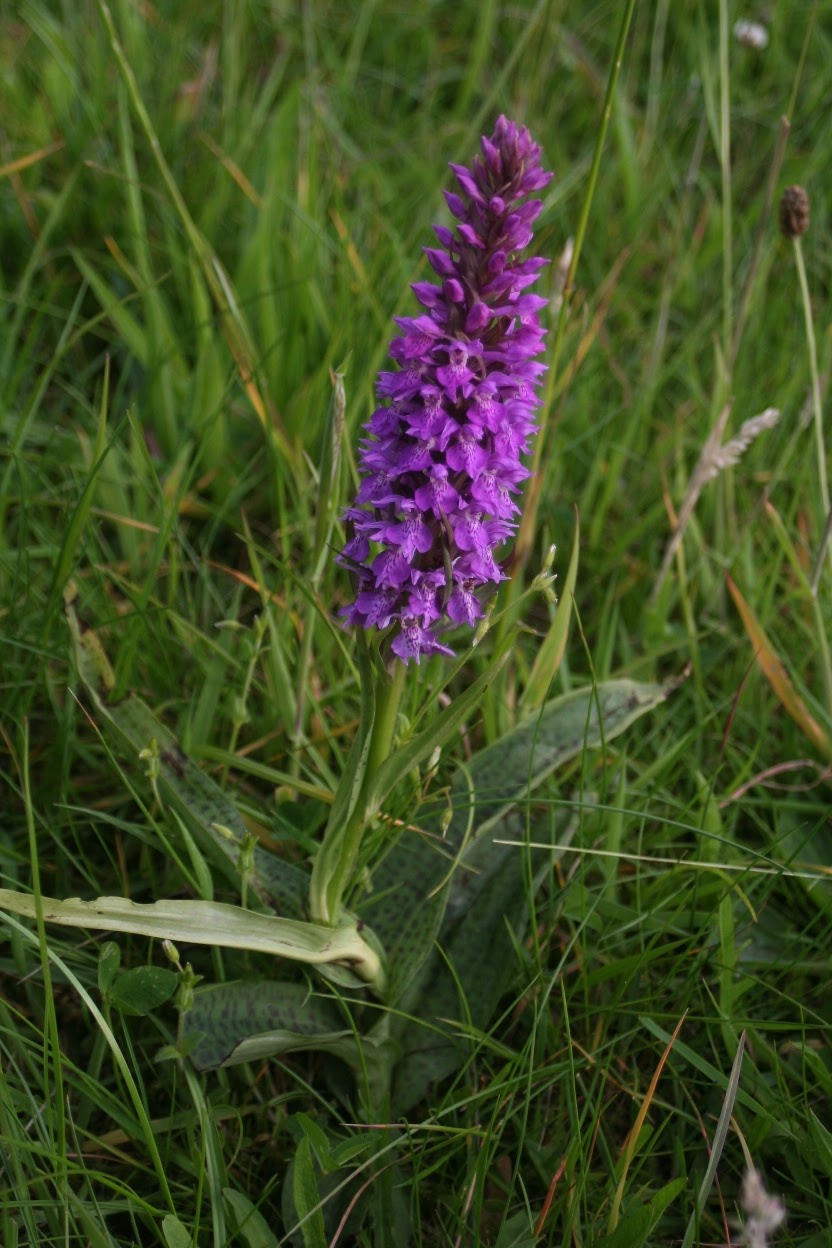
An exit to the right took us into Chorlton Water Park, where woodland fringed a pleasant, clear park lake. A flotilla of Canada geese occupied the open water. There were a couple of Great Crested Grebes about, a few coots, moorhens, mallards.  The water was quiet as would be expected at this time of year. The male mallards which were present had begun their transformation into camouflaged “eclipse” plumage, to hide them during their moult. The margins of the lake were intact, and, despite the obligatory passing idiots allowing their dogs into the water, management here was good. A walk round the lake, beer in hand, enjoying the rare burst of sunshine that afternoon, was lovely. Tadpoles, some almost developed into froglets swum, or clung to vegetation and stones, in the clear water. The margins at one corner of the lake were fringed with reeds, in which a Sedge Warbler sang frantically.   From the bushes whitethroats, too, could be heard. The banks were covered in wild flowers here, and Common Spotted Orchids grew among the usual clover and Ox Eye Daisies, attended by Silver Y Moths, and a couple of unidentified blue butterflies. They made a floral feast for the eyes. Common Spotted Orchids have spotted leaves and stunning purple inflorescences. 
Common Spotted Orchid

A few Swifts and Sand Martins whistled about in front of us over the water.  A kestrel hovered somewhere and a grey heron flew past on broad, slow wingbeats. On the water we could see a large, white looking duck. On closer inspection it proved to have a Green head and a narrow red beak. A male Goosander! Unfortunately he was too distant to give us a decent picture, but remarkable to encounter this species twice in  one day.

As we walked down to the river, in the fading light and heading towards the pub,  a large bird of prey rose up from in the nature reserve, pursued by a mobbing Carrion Crow. It was a Buzzard. Another bird of prey which was until so recently so scarce, is now thriving on the urban fringe. It felt like countryside here, so the bird did not look out of place, but at the water park nature reserve it was easy to forget how close we were to the city still.

Yeah, there’s a fair bit to see up in Manchester. An unlikely birding destination. We walked back to Chorlton and the bus stop through the woods, where well managed rides lined with silver birch took us to an old track which led back into town.

Friday, 22 June 2012

The Falcons of Manchester


Whilst my rant about the perilous situation facing many raptors in the UK at this stage, I have to write about my recent visit to Manchester where, in the heart of the city, I got some wonderful views of some wonderful birds of prey, and was a witness to their family life, on a ledge overhanging the river Irwell as it creeps sluggishly between the boroughs of Manchester and Salford.

On the day after my mate Tom’s birthday, we went over to the house of a pair of good friends of ours, a couple who live in one of the impressive, rather new “dual use” tower blocks in the city centre, overlooking the Irwell and the Arndale centre, as soulless a shopping centre as one could hope to find, and the wider city. From the 23rd floor the city spreads out before you, its smart, red brick buildings dating back to Industrial Revolution expansion sitting side by side with glass office blocks, the 47 story Beetham Tower and, in the distance, older tower blocks sitting on the outskirts of the city, with rolling hills to the horizon. From here, on a clear day, one can see the Jodrell Bank observatory, and a bridge in Runcorn, Liverpool.  As we disembarked from the lift, the window which faced us briefly framed the shape of a Peregrine, its buff coloured underside indicating it was a juvenile.  A couple of pigeons rocketed through our view, obviously recognising the threatening shape above them, changing direction and disappearing from sight. The Peregrine did not stoop after them.

We made our way in to our friends’ flat where we were made welcome, and we sat by the window. We were pointed to a mossy, dark patch, on a ledge beneath the roof of the smart, red brick building opposite. The ledge, on inspection with the binoculars, turned out to be covered in feathers. Many of these were white and our friend reported having seen the Peregrines taking Black-Headed Gulls back to the ledge.  We did not have to wait long for the birds to return. Reports from the RSPB online suggested four chicks had fledged and were being fed by two adults. An adult Peregrine, we assumed it must be the female, the larger of the sexes in this and most raptor species, landed on the ledge, holding in its talons the grey body of a feral pigeon.  The adult was a smart bird indeed, with a slate-black back, jet black crown and facial markings, and a yellow cere and eye ring giving a fierce expression. For a falcon it is broad bodied, chunky even, but lacks none of the grace of its smaller and slighter relatives. Two juveniles, one distinctly smaller than the other, follow their mother onto the ledge. The juveniles are greyer than their parents, with a hint of russet brown in the crown, and very much beige, rather than white undersides. In flight they already look like falcons, but when perching their youth is plain to see. The feathers on their undersides still look fluffy, and they lack the striking yellow facial features of the adults. For now she just stands over the pigeon, which appeared initially to be struggling, but quickly becomes still as she begins to pluck it. The youngsters look intrigued but wait patiently, occasionally reaching towards the female. Within a few minutes, she has cleared sufficient of the late pigeon’s feathers and begins to offer it, in small pieces as if to a nestling, to her offspring, amid a loud chorus of shrill begging calls from the youngsters. A male and female juvenile sit in front of her, and a few seconds later, another smaller juvenile arrives. The largest juvenile appeared to be receiving most of the food, but the others are fed too. The process of delicately removing small fragments of meat and passing them to members of her brood continues for several minutes, before she is off again, leaving the young to share the meat among themselves. The two larger siblings go in for the largest piece of meat, but a wing or some other substantial section of pigeon remains and, furtively, the smallest juvenile approached and dragged it away, feeding in peace a few metres from his siblings.  The process of breaking down and eating the pigeon has, rather to my surprise, taken the birds about an hour, an hour of squawking begging noises. Feathers from the pigeon are carried away on the breeze.


Another hour passes, and two of the youngsters remain on the ledge for some time, one of them, the smallest, laying down on it as if still in the nest. Raptors incubate their eggs as soon as they are laid, so the oldest chick gets a few days development in before the last youngster has hatched. The older chicks tend to dominate the younger ones, and in poor years, it is often just the oldest, or two oldest, chicks which survive. This juvenile though seemed strong enough, we’d seen him eating and holding his own, so, although some of us were concerned by his odd behaviour in lying around on his belly, wings hanging by his sides, I have no reason to believe his chances now are much slimmer than those of his siblings. Part of the difference in size at this stage could well be due to sexual dimorphism as much as age nutrition, and I do tend to think of what we saw as one female and two male youngsters.
An hour later the adult female returned with another pigeon for her hungry brood, two of which, the smaller youngsters, have waited patiently on the ledge for her. From somewhere, the large, and somewhat ungainly, female youngster appears as well.  Puffed up against the cold, she looks awkward, somewhere between being an adorable, fluffy chick and a streamlined, elegant, and deadly adult peregrine.  Her brothers, squawking, have no such pretences of adulthood about them. One could almost be forgiven for making “squee” noises in their presence. Almost.  The adult begins delicately feeding one of the young males, but their big sister barges them out of the way. At one point the cheeky youngster is engaged in a tug of war with her mother, apparently trying to wrestle the pigeon from her, or at least help to break it into more manageable chunks.   The adult female eventually turns her back on the youngster and covers the kill with her wings, offering a little to the smallest male who seems constantly to be standing behind her, keeping his distance from his siblings. Eventually the big juvenile works out what is going on and moves around to compete with her brother. The tug of war is briefly resumed, after which the female flies off, not to return that evening, leaving the youngsters to sort out the food between them. There is plenty left for the smaller juveniles once the young female is satisfied. Again, they make the meal last well over an hour, and they are still feeding after we’d had our dinner and Birthday Cake. When we look back the two little males are still there, but the young female has obviously left, perhaps to join her parents at a roosting site somewhere. We didn’t see the juveniles leave, but as the light faded, and the sunset shone off the glass Beetham Tower, they did leave the ledge, presumably to somewhere to roost and spend the night.  We took a taxi back to Tom’s flat in Hulme not long after.


The Peregrines in Manchester are not unique, a pair roost sometimes on the Tate Modern here in London, and Bath, Lincoln and several other cities also host breeding pairs. They are not harassed, the street pigeons are nobodies sport, and many welcome a bird which can, perhaps, manage their numbers, and volunteers are often forthcoming to watch the nests and guard against would-be egg collectors, or rescue the juveniles when they fall out. Their success is part of the partial recovery witnessed since the banning of DDT and protection from persecution, and Peregrines, which are cliff nesters, are well suited by towns which offer concrete substitutes for their natural nesting sites. Feral Pigeons, too, are descended from wild ancestors which bred on sea cliffs. Their iconic beauty makes them treasured, both by local experts and by nature-deprived urbanites, and cities offer something of a refuge from the human threats presented by the countryside.

Thursday, 7 June 2012

A Tale of Two Owls


Gialova, Greece, Sometime in Early August 2011

I’m casting my mind back now to my first encounter with a wild Barn Owl. It was last year, and I was volunteering in Greece, enjoying the summer of my life.  It was July, or early August, and I was with three or four people, young volunteers like me, and we’d been cycling between point counts on our circuit of the Gialova Lagoon.  I’d met and photographed my first Kentish Plover, or “Alexandrinus,” pronounced with a Spanish accent,  as it was known among ourselves, and seen the little fluffy chicks wandering about on the cracked mud on their oversized feet. I remember Cleopatra’s Brimstone butterflies, and Scarce Swallowtails being almost everywhere, and the wide muddy lagoon, never blue like in the postcards, always with the sound of the ripples lapping on the shore. We made our way to a disused fish farm which stood beside the beach, and represented our last point count of the day. I’d already been informed that “Tyto,” as he was known in our quasi-scientific idiom, lived here, and Estela, the HOS Ornithologist, had shown me their wonderfully messy former nest site, in an apparently filthy room upstairs in the old fish farm, with owl pellets and droppings over the wall, and a filthy space in which the owls had raised their chicks a year or two before. But it had been a while since the owls had been seen, apparently, having been familiar to Estela in the months and years previously.  I was at the back of the crowd, scanning the rafters of the old fish farm, happy to have seen a little Athene noctua, which we all enjoyed, when a white shape appeared to drop from the rafters and fly across the hugely spacious room that would have been the main floor of the factory.  It paused on one of the crossbars which held up the roof and, in what was intended as a combination of a whisper and a shout, and futilely, I tried to call back my colleagues to see the owl. White, a little ghostly, utterly silent, and incredibly beautiful, the owl appeared to hear me and was off through a space in the wall.
A couple of days later, on a cool morning before the Mediterranean heat began to beat down, I returned to the old fish farm, a little against the advice of others who warned it could be dangerous. I should stress looking for owls in abandoned buildings in the small hours of the morning, and alone, is not something this blogger recommends. I sat down on a pile of rubble in the main body of the building and waited for “Tyto.” It was about six in the morning, the same time we carried out our bird monitoring at the lagoon. It will come as no surprise, that, any paranoia about homeless drug dealers chasing conservation volunteers out of the fish farm in the morning quickly abated, and I fell asleep.
I woke up what must have been about an hour later and already the sun was high and the air was beginning to get quite warm. I rose to my feet and looked about. “Tyto” was only a few metres away, and when he saw me move, he took to the wing in a second, but, perhaps curious about me, he alighted in the far corner of the room. I approached him a little, inching forward, and I raised my camera and extended my lens. In the dim light of the fish factory, I needed a steady hand, but I managed to take a single record shot before he moved off, his broad, white wings carrying him silently through his gap between wall and ceiling, and away out of sight.
Tyto alba, Gialova Lagoon, August 2011


4th June 2012

I’d been trying to shake an inexplicable feeling of immense mild awkwardness and irritation all day. It was the evening, and I decided to throw my bike around Pages Wood, part of the Millennium Community woodlands project, operated by the Forestry Commission, and set between Upminster and Harold Wood, beside the busy Southend Arterial Road.  Young trees have been planted on former farmland, with a few old trees dominating as standards. The river Ingrebourne flows through it, lined with just such oak standards. As it reaches the side of the dual carriageway, a small network of hedges with a few standards spreads out, a bridge crosses the Ingrebourne and the path continues across meadows in which Horses are periodically grazed.  I rode laps of the track, I wasn’t birding, merely having a bit of a ride to blow out the cobwebs on a pleasant, sunny evening. I paused beside the river to watch the swallows picking off insects from the little living clouds which danced above it. I saw a couple of green woodpeckers, pecking about in the grass, the flowery meadows which line what will one day become, when the trees are more mature, the woodland rides, and I heard the Jackdaws alarm calling each time a dog passed them.
The light had begun to fade and I decided to cross the Ingrebourne and head back up the A127 to get home. As I did so, between the mature oak trees, I saw a white bird, very briefly, and I wondered what it was. The view was brief, it could even have been a white pigeon, but I moved forward a little to get a closer look. As the bird reappeared, its identity became clear. It had long, broad wings, was bigger than a pigeon, and its shape was unmistakeable. The flat faces of owls, honed by evolution to channel sound to their remarkable ears, give them a unique appearance in profile. It was a white lady, of medieval superstition, a barn owl, white and angelic against the fading light! I moved on a little, as the owl flew out of sight. I positioned myself on the path with a good vista of the dark green oaks and the buttercup infested meadow, and waited. I didn’t have to wait long. The owl reappeared, making another hunting pass low in front of the trees, eyes fixed on the ground, in search of the mice and voles on which they feed. She rounded a small Hawthorn on the meadow and, for a moment, was flying straight at me. She turned and I attempted to reel off a couple of shots with the DSLR, but as I raised it she saw me and turned tail, drifting silently over the trees and away to the East, where more woodland stood, before the trees gave way to urban parkland and sprawl. She was gone, and I had only blurry long shots on the camera, but she was beautiful, and my first British barn owl.  The experience was almost spiritual, the barn owl, a childhood favourite and ghostly beauty, floating over these woods and meadows on the cusp of London’s metropolis, something so wild, so beautiful, so revered and feared over the years for her unique colour and crepuscular habits. It was with a much less heavy heart that I made my way home in the fading light of a beautiful June evening, across the community woodland past the dog walkers, and the rubbish strewn bridge over the Arterial Road.
Barn Owl, Pages Wood, near Upminster, Essex, England, June 4th 2012

Wild flower Meadows at Pages Wood.

The Mature Trees into which she disappeared, Pages Wood.


Sunday, 3 June 2012

The Orchids of Grays


Crab Spider on Common Spotted Orchid Inflorescence.
Just a brief blog post today and an opportunity to share a couple of photos which came at the cost of trudging through some very wet grass on an Orchid Survey at Chafford Gorges today. I dragged my hangover and sleepiness out of bed this morning and grabbed a flask of coffee, and managed to get myself to Chafford to join some of the volunteers there to count some interesting flowers.  An interesting aside, on the way to picking up my hangover at the Huntsman and Hounds, I was lucky enough to watch a hunting Tawny Owl for several minutes, flying up and down over one of the meadows at Cranham Marsh.


Abundant Man Orchids at Grays Gorge.


But this morning, Orchids, back to the subject in hand. Grays Gorge, one of the less visited parts of the small network of sites collectively known as Chafford Gorges Nature Park, hosts some of the sites most exciting vegetation. The floor of the gorge holds woodland, and early succession habitats, but today work was focussed on the habitats around the tops of the chalk escarpments. Here, careful management to prevent the succession to scrub, ensures the survival of chalk grassland with characteristic  plant species. Grays Gorge has orchids, in short, and today I spent my morning counting the tall flowering spikes of Man Orchid, a plant with small, green flowers, with a distinct, closed “head” with a vaguely person-shaped appendage hanging from it, assembled on a tall inflorescence. There were hundreds of these. As I counted Man Orchids, the people next to me were counting Man Orchids, and the beautiful purple inflorescences of Common Spotted Orchids, and discovering the curious green flowers of Twayblades, so called because they always have two broad green leaves lying close to the ground, in the woods. 
Man Orchid Inflorescence

In one of the meadows we did not find a single Orchid at all, but other flowering plants were well represented, and we had to marvel a little at the variety of wildflowers peering through the long grass, even as we got soaked to the skin.
The Meadow.


Grays Gorge is well worth a visit for Orchid fans.  The spectacular purple flowers of the Common Spotted are something of a highlight at this time of year, and later in the season the Pyramidal Orchid, a relatively common but no less beautiful species, will begin to come into its own. 

Common Spotted Orchid inflorescence at Grays Gorge.