Showing posts with label Salford. Show all posts

Saturday, 23 June 2012

More Mancunian Birding Adventures


The day after the day spent with Peregrines I took the opportunity to catch up with an old friend. Cheryl and I met in Greece working for the HOS and she had recently returned to town after some time away. We decided, in lieu of a proper plan for the day, to head down initially to the Irwell to have a look at the Peregrines. As we wandered down toward the river a couple of tweeting passerines flew over us, which transpired to be Goldfinches.  Reaching the river, we could, with bins, still see a couple of the slate grey juveniles up on their ledge. Here at ground level the feral pigeons still went about their business, oblivious to the predators perched high above them. Still fed by their parents, the juveniles seemed to be having it fairly easy, and did not seem bothered by the meals-on-wings service beneath. A couple of Black headed gulls hawked about above the water, and some Canada Geese and their Goslings sat contentedly on the bank.  We stood, and did a bit of urban birding.


A Mancunian Feral Pigeon

As we stood watching the raptors, a blue shape flew low across the water like a shot. A kingfisher? I thought so, although I couldn’t find it again. An orange shape in the bushes could have been the front of a kingfisher, but turned out to be that of a robin. Where we stood, literally, was in the centre of a city, one of England’s biggest, in the shadow of tower blocks and shopping centres. The water must’ve absorbed several shopping trolleys, and only one bank was vegetated, with Elder, Willowherbs and Buddleia, and this trampled to mud in places by the Geese who roost there. The other bank, made of concrete, plunges directly into the water. There was nothing about this place to make it a wildlife site, nothing tangible, it was just another grotty urban water course, brown and polluted.

A grey wagtail rose out from under the bridge and fluttered off across a hotel car park, flashing its yellow belly and the white edges on its tail to us as it climbed away. Perhaps it was nesting down there. The real star birds, however, were on the water. With dark brown heads, and substantial punky crests, a two Goosander, possibly two females or juvenile birds, swam out from beneath us and hauled themselves out alongside the Canada Geese.  The Goosander is a species of duck, a merganser, with a shape which calls to mind that of a cormorant. Its beak had tooth-like structures which grasp the fish on which it feeds, and is a lot thinner and narrower than the beak of a mallard or similar dabbling duck.  These two were lazy, and just hauled up next to the Canada geese. The Goosander is a bird I associate with wide bodies of water in winter. It occurred to us they might have escaped from some private collection, but according to the RSPB Goosander breed on the Irwell and at other places in the area.  Yet here they are, hanging out near a Peregrine nest in the middle of a city.


Goosanders and Canada Geese in Urban Manchester

It was heartening to see these birds thriving here in the city. It is a city somewhat impoverished with green spaces, although not around the outskirts as the rest of my visit would prove. Urban birding, David Lindo style, can reveal some interesting species. Positive management for wildlife in Manchester and other cities undoubtedly makes a contribution, as does the unlikely ability of some species to adapt to urban conditions.  It is worth noting that the Peregrines are here in part as a result of great efforts by the RSPB and other institutions.

After our urban experience Cheryl and I met up with my good friend Tom and headed off to the Chorlton Water Park on the bus. Despite the wonderful wildlife I was starting to get the mild crazies I do from being in a built up area for so long. The bus to Chorlton took about twenty minutes and we walked through the leafy residential streets to the River Mersey. Crows and anglers hung out on its banks and the ubiquitous Canada Goose was about but this river, despite its green banks, is somewhat less well managed than the Irwell on the edge of Salford. The emergent and marginal vegetation looked to have been cleared with a mower, leaving only stark, ugly sloping banks. There seemed to be no rhyme or reason to this nonsensical management.  Marginal vegetation is vital to most of the characteristic riverside wildlife, such as dragonflies which need the stems to haul themselves from the water, and water voles who use it as both food and shelter. It also helps to reduce the power of flowing water and minimise the risk of flooding. Mindless vandalism would be a good word to describe the management of this stretch of the Mersey, or perhaps it is part of a plot with the Manchester rain to cause heavy flooding in Liverpool.

For the sake of completeness, dire management on the River Mersey.

And Better. Chorlton Water Park LNR.

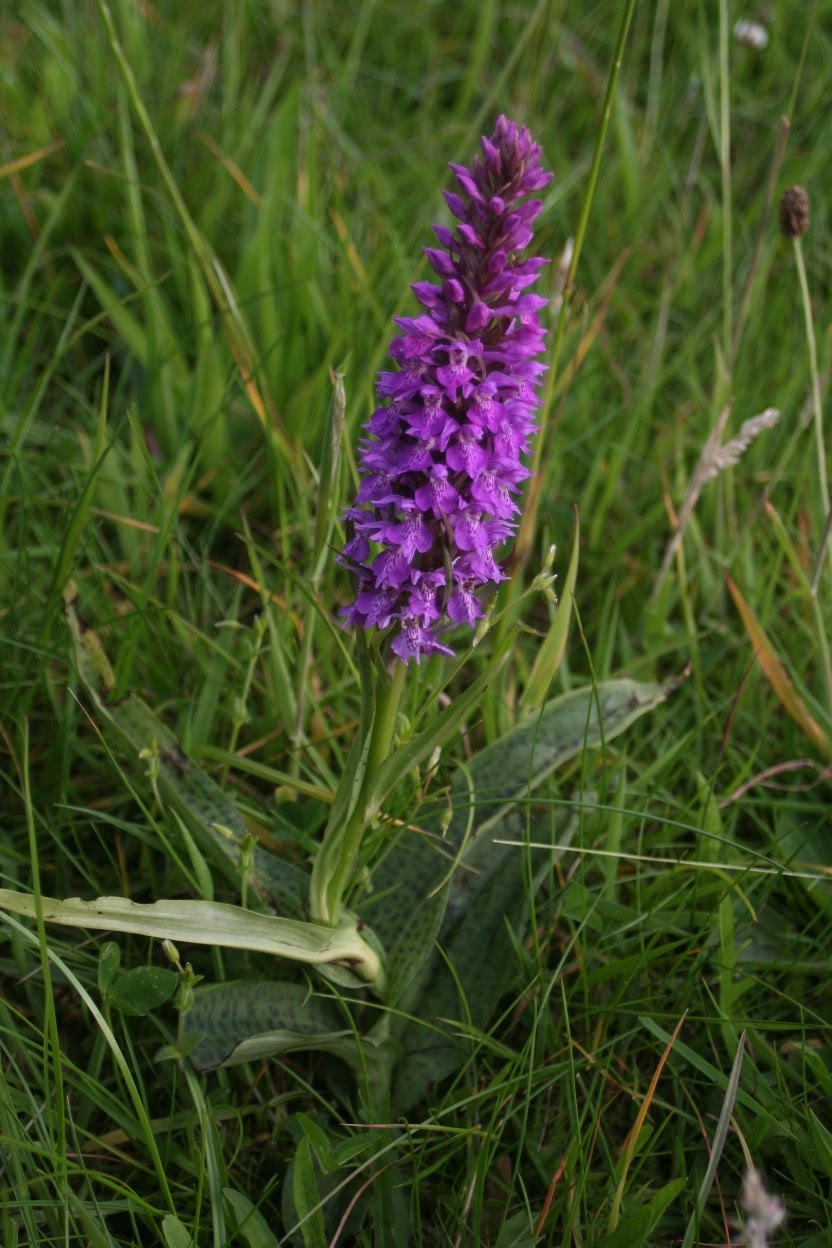
An exit to the right took us into Chorlton Water Park, where woodland fringed a pleasant, clear park lake. A flotilla of Canada geese occupied the open water. There were a couple of Great Crested Grebes about, a few coots, moorhens, mallards.  The water was quiet as would be expected at this time of year. The male mallards which were present had begun their transformation into camouflaged “eclipse” plumage, to hide them during their moult. The margins of the lake were intact, and, despite the obligatory passing idiots allowing their dogs into the water, management here was good. A walk round the lake, beer in hand, enjoying the rare burst of sunshine that afternoon, was lovely. Tadpoles, some almost developed into froglets swum, or clung to vegetation and stones, in the clear water. The margins at one corner of the lake were fringed with reeds, in which a Sedge Warbler sang frantically.   From the bushes whitethroats, too, could be heard. The banks were covered in wild flowers here, and Common Spotted Orchids grew among the usual clover and Ox Eye Daisies, attended by Silver Y Moths, and a couple of unidentified blue butterflies. They made a floral feast for the eyes. Common Spotted Orchids have spotted leaves and stunning purple inflorescences. 
Common Spotted Orchid

A few Swifts and Sand Martins whistled about in front of us over the water.  A kestrel hovered somewhere and a grey heron flew past on broad, slow wingbeats. On the water we could see a large, white looking duck. On closer inspection it proved to have a Green head and a narrow red beak. A male Goosander! Unfortunately he was too distant to give us a decent picture, but remarkable to encounter this species twice in  one day.

As we walked down to the river, in the fading light and heading towards the pub,  a large bird of prey rose up from in the nature reserve, pursued by a mobbing Carrion Crow. It was a Buzzard. Another bird of prey which was until so recently so scarce, is now thriving on the urban fringe. It felt like countryside here, so the bird did not look out of place, but at the water park nature reserve it was easy to forget how close we were to the city still.

Yeah, there’s a fair bit to see up in Manchester. An unlikely birding destination. We walked back to Chorlton and the bus stop through the woods, where well managed rides lined with silver birch took us to an old track which led back into town.

Friday, 22 June 2012

The Falcons of Manchester


Whilst my rant about the perilous situation facing many raptors in the UK at this stage, I have to write about my recent visit to Manchester where, in the heart of the city, I got some wonderful views of some wonderful birds of prey, and was a witness to their family life, on a ledge overhanging the river Irwell as it creeps sluggishly between the boroughs of Manchester and Salford.

On the day after my mate Tom’s birthday, we went over to the house of a pair of good friends of ours, a couple who live in one of the impressive, rather new “dual use” tower blocks in the city centre, overlooking the Irwell and the Arndale centre, as soulless a shopping centre as one could hope to find, and the wider city. From the 23rd floor the city spreads out before you, its smart, red brick buildings dating back to Industrial Revolution expansion sitting side by side with glass office blocks, the 47 story Beetham Tower and, in the distance, older tower blocks sitting on the outskirts of the city, with rolling hills to the horizon. From here, on a clear day, one can see the Jodrell Bank observatory, and a bridge in Runcorn, Liverpool.  As we disembarked from the lift, the window which faced us briefly framed the shape of a Peregrine, its buff coloured underside indicating it was a juvenile.  A couple of pigeons rocketed through our view, obviously recognising the threatening shape above them, changing direction and disappearing from sight. The Peregrine did not stoop after them.

We made our way in to our friends’ flat where we were made welcome, and we sat by the window. We were pointed to a mossy, dark patch, on a ledge beneath the roof of the smart, red brick building opposite. The ledge, on inspection with the binoculars, turned out to be covered in feathers. Many of these were white and our friend reported having seen the Peregrines taking Black-Headed Gulls back to the ledge.  We did not have to wait long for the birds to return. Reports from the RSPB online suggested four chicks had fledged and were being fed by two adults. An adult Peregrine, we assumed it must be the female, the larger of the sexes in this and most raptor species, landed on the ledge, holding in its talons the grey body of a feral pigeon.  The adult was a smart bird indeed, with a slate-black back, jet black crown and facial markings, and a yellow cere and eye ring giving a fierce expression. For a falcon it is broad bodied, chunky even, but lacks none of the grace of its smaller and slighter relatives. Two juveniles, one distinctly smaller than the other, follow their mother onto the ledge. The juveniles are greyer than their parents, with a hint of russet brown in the crown, and very much beige, rather than white undersides. In flight they already look like falcons, but when perching their youth is plain to see. The feathers on their undersides still look fluffy, and they lack the striking yellow facial features of the adults. For now she just stands over the pigeon, which appeared initially to be struggling, but quickly becomes still as she begins to pluck it. The youngsters look intrigued but wait patiently, occasionally reaching towards the female. Within a few minutes, she has cleared sufficient of the late pigeon’s feathers and begins to offer it, in small pieces as if to a nestling, to her offspring, amid a loud chorus of shrill begging calls from the youngsters. A male and female juvenile sit in front of her, and a few seconds later, another smaller juvenile arrives. The largest juvenile appeared to be receiving most of the food, but the others are fed too. The process of delicately removing small fragments of meat and passing them to members of her brood continues for several minutes, before she is off again, leaving the young to share the meat among themselves. The two larger siblings go in for the largest piece of meat, but a wing or some other substantial section of pigeon remains and, furtively, the smallest juvenile approached and dragged it away, feeding in peace a few metres from his siblings.  The process of breaking down and eating the pigeon has, rather to my surprise, taken the birds about an hour, an hour of squawking begging noises. Feathers from the pigeon are carried away on the breeze.


Another hour passes, and two of the youngsters remain on the ledge for some time, one of them, the smallest, laying down on it as if still in the nest. Raptors incubate their eggs as soon as they are laid, so the oldest chick gets a few days development in before the last youngster has hatched. The older chicks tend to dominate the younger ones, and in poor years, it is often just the oldest, or two oldest, chicks which survive. This juvenile though seemed strong enough, we’d seen him eating and holding his own, so, although some of us were concerned by his odd behaviour in lying around on his belly, wings hanging by his sides, I have no reason to believe his chances now are much slimmer than those of his siblings. Part of the difference in size at this stage could well be due to sexual dimorphism as much as age nutrition, and I do tend to think of what we saw as one female and two male youngsters.
An hour later the adult female returned with another pigeon for her hungry brood, two of which, the smaller youngsters, have waited patiently on the ledge for her. From somewhere, the large, and somewhat ungainly, female youngster appears as well.  Puffed up against the cold, she looks awkward, somewhere between being an adorable, fluffy chick and a streamlined, elegant, and deadly adult peregrine.  Her brothers, squawking, have no such pretences of adulthood about them. One could almost be forgiven for making “squee” noises in their presence. Almost.  The adult begins delicately feeding one of the young males, but their big sister barges them out of the way. At one point the cheeky youngster is engaged in a tug of war with her mother, apparently trying to wrestle the pigeon from her, or at least help to break it into more manageable chunks.   The adult female eventually turns her back on the youngster and covers the kill with her wings, offering a little to the smallest male who seems constantly to be standing behind her, keeping his distance from his siblings. Eventually the big juvenile works out what is going on and moves around to compete with her brother. The tug of war is briefly resumed, after which the female flies off, not to return that evening, leaving the youngsters to sort out the food between them. There is plenty left for the smaller juveniles once the young female is satisfied. Again, they make the meal last well over an hour, and they are still feeding after we’d had our dinner and Birthday Cake. When we look back the two little males are still there, but the young female has obviously left, perhaps to join her parents at a roosting site somewhere. We didn’t see the juveniles leave, but as the light faded, and the sunset shone off the glass Beetham Tower, they did leave the ledge, presumably to somewhere to roost and spend the night.  We took a taxi back to Tom’s flat in Hulme not long after.


The Peregrines in Manchester are not unique, a pair roost sometimes on the Tate Modern here in London, and Bath, Lincoln and several other cities also host breeding pairs. They are not harassed, the street pigeons are nobodies sport, and many welcome a bird which can, perhaps, manage their numbers, and volunteers are often forthcoming to watch the nests and guard against would-be egg collectors, or rescue the juveniles when they fall out. Their success is part of the partial recovery witnessed since the banning of DDT and protection from persecution, and Peregrines, which are cliff nesters, are well suited by towns which offer concrete substitutes for their natural nesting sites. Feral Pigeons, too, are descended from wild ancestors which bred on sea cliffs. Their iconic beauty makes them treasured, both by local experts and by nature-deprived urbanites, and cities offer something of a refuge from the human threats presented by the countryside.